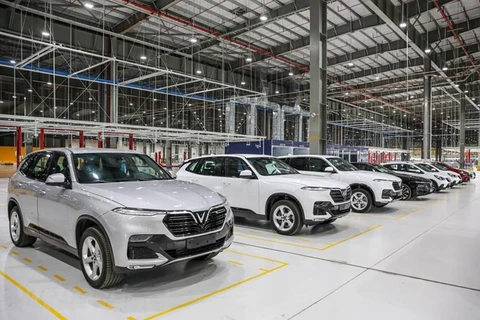
Illustrative image (Photo: vneconomy)
 The decline in the local auto market became evident in April 2023, with a 47% decrease in car sales compared to the same period in 2022. The situation worsened in May 2023, with a 52% decrease in car sales. This decline affected both domestically-produced and assembled vehicles, as well as imported vehicles, prompting car manufacturers to take action to reverse the trend.
To revive the market, car makers in Vietnam have offered significant discounts and incentives. Popular car manufacturers such as Toyota, Hyundai, Honda, Mitsubishi, Mazda, KIA and Nissan introduced various incentives from May 2023, including reductions in registration fees, free accessory sets, free insurance packages, and 0% loan interest for the first six months. These incentives allowed car buyers to save significant amounts of money.
The issuance of Decree 41/2023/ND-CP by the Vietnamese Government, which reduced registration fees by 50% for domestically-produced and assembled cars, aimed to support the domestic automobile industry. However, despite this policy and the continuation of incentive programmes by car manufacturers and distributors, the local automobile market did not fully recover as expected. There were two main contributing factors to the ongoing challenges.
First, although car inventory gradually decreased from July, it remained relatively high, resulting in an oversupply compared to demand. This imbalance in supply and demand affected the market's ability to fully recover.
Second, a significant number of consumers who relied on borrowing to purchase cars faced high floating interest rates compared to previous years. These elevated interest rates made it more difficult for consumers to afford car purchases, further impacting the recovery of the automobile market.
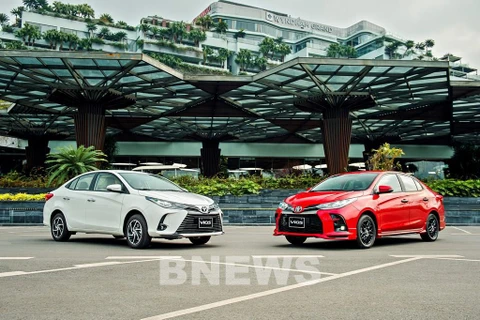
Despite these difficulties, automobile companies operating in Vietnam maintained their number of models and did not show signs of cutting back or stopping sales. Nearly 40 new car models were launched in 2023, primarily focusing on mid-range urban cars in the B and C segments. Some of these new models, such as the Toyota Vios and Mazda CX-5, benefited from the registration fee reduction policy and maintained their positions as best-selling cars of the month, receiving attention and orders from consumers.
Although there was a temporary decline in auto sales, car experts believe that the situation will gradually improve as the year ends.
According to the Vietnam Automobile Manufacturers Association (VAMA), auto sales in the first 11 months of the year reached 263,251 vehicles, a 28.72% decrease compared to the same period of the previous year. While this decline had an impact on the profits of car companies, it did not significantly damage the fundamentals of the market.
A notable exception to the overall market trend was the sales of electric cars, thanks to VinFast's new models. VinFast delivered 10,027 electric vehicles to customers in the third quarter of 2023, representing a 5% increase compared to the previous quarter.
According to a report by VAMA, SUV sales surpassed sedans for the first time in November 2023, becoming the most popular car model in Vietnam with 54,097 units sold. SUVs' sporty and strong design often appeals to the young consumer demographic, which has shown potential in recent years. This shift in consumer preferences indicates a clear change in the Vietnamese automobile market.
It seems that the economic challenges have influenced consumer preferences towards smaller cars in the B-class sedan segment. Popular models in this segment include the Toyota Vios, Hyundai Accent and Honda City.
Meanwhile, B-class SUVs such as the Hyundai Creta, Toyota Corolla Cross and Kia Seltos, are also preferred by consumers.
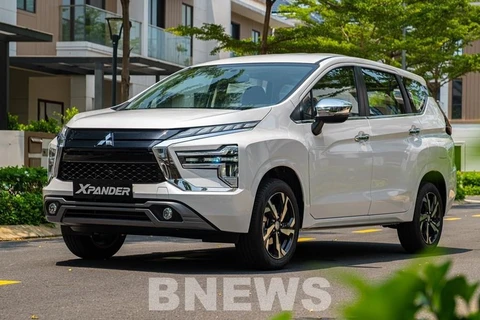
Transport car companies are prioritising the purchase of sedan and crossover/SUV models in Grades A and B such as Hyundai Grand i10, Kia Morning, Toyota Vios, Mitsubishi Xpander, and Honda City.
VinFast's electric SUVs, the VF E34 and VF 8, have gained popularity due to changing consumer preferences and favourable policies on Special Consumption Tax (SCT) for electric vehicles in Vietnam. These models have claimed the top-selling position in April and May 2023.
Additionally, the development of the Vietnamese automobile market in 2022 has also attracted great interest from leading Chinese car manufacturers. By the end of 2022 and early 2023, a series of Chinese car models were introduced in Vietnam. However, most Chinese car makers are still cautious and take every step carefully to avoid the same mistake as when they entered the Vietnamese market 15 years ago./.
VNA