Vietnam automobile market slides to fìfth in Southeast Asia

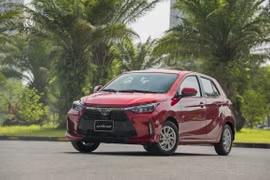
The recent decline in Vietnam’s automobile consumption and its drop to the fifth place in Southeast Asia can be attributed to both external and internal factors, car experts said.
Vietnam automobile market slides to fìfth in Southeast Asia ảnh 1A showroom displays new and used cars for sale in Long Bien district, Hanoi. — Photo courtesy of Anycar.vn
Hanoi (VNS/VNA)  — The recent decline in Vietnam’s automobileconsumption and its drop to the fifth place in Southeast Asia can beattributed to both external and internal factors, car experts said.

According to the Association ofSoutheast Asian Automobile Manufacturers (AAF), in the firstsix months this year, Indonesia took the lead in car sales with 505,000units, an increase of 6.3% over the same period last year. Thailand wasin second place with 406,000 units, a slight decrease of 5%while Malaysia came in third with 366,000 units, an increase of 10.3%.Notably, the Philippines rose from fifth position to fourth with 202,415 carssold, a sharp increase of 30.7%. Meanwhile, Việt Nam dropped to fifth placewith 137,327 units, a sharp decrease of 32% compared to the same period lastyear.

According to industry insiders,external factors such as the Russia-Ukraine conflict and global inflation havehad an impact on Vietnam’s automobile consumption, along with other adversedevelopments. These factors affected consumer confidence and purchasingpower, leading to a decrease in car sales.

Domestic auto sales in August plunged nearly 27% year-on-year to 22,540 unitsas consumers continued to tighten their spending amid economic difficulties.Sales in August were lower than in June and July.

Internally, Vietnam faces challenges in its economy and market conditions thathave contributed to the decline in automobile consumption. Compared to someSoutheast Asian countries, Vietnam’s economy is still developing, and theliving standards and purchasing power of its people may not be as high.

Pham Cuong, Chairman ofthe Vietnam Auto Motorcycle and Bicycle Association (Vamoba),said Vietnam’s car prices are relatively high compared to other countriesin the region, with a price policy that is considered unstable. This pricedisparity, along with limited choices in car models, can affect consumerpreferences and their ability to purchase cars.

Dao Cong Quyet of the Vietnam Automobile ManufacturersAssociation (VAMA), has pointed out that Vietnam was affected by theCOVID-19 pandemic later than other Southeast Asian countries, which resulted ina delay in its recovery. As a result, it may take more time for Vietnam to showsigns of improvement in general consumption of goods, includingautomobiles.

Other factors contributing to the decline in car consumption in Vietnam includehigh bank interest rates and liquidity issues in the real estate market.These factors can affect consumer financial capabilities and theirwillingness to invest in high-value goods like cars, Quyet added.

Car expert Nguyen Minh Dong said car prices in Southeast Asia countries are30-40% cheaper than in Vietnam. While, Vietnam’s price policy is not stable.Car markets in these countries also have more car models, therefore, consumershave more choices. Đồng said it is necessary to exempt and reduce specialconsumption taxes and some types of fees and charges for cars so as to createincentives for more people to buy cars.

Tran Thanh Tung, head of the Business Administration at Ho Chí Minh CityUniversity of Economics and Finance, said it is worth noting that thedecline in car sales in Vietnam is not necessarily viewed as a bad signal. Someexperts see it as a reflection of cautious spending in the context of slowingeconomic growth and high loan costs. In addition, it can help alleviatepressure on the country's road infrastructure, which is already burdened by ahigh number of personal vehicles.

To address the decline in automobile consumption, experts have suggestedmeasures such as exempting or reducing special consumption taxes and fees forcars, providing more car model options, and studying car loan policies fromother countries in the region. These measures aim to create better conditionsfor consumers and stimulate the market./.
VNA
See more

Minister of Industry and Trade Le Manh Hung holds working sessions with leaders of major Japanese corporations on November 10 to discuss investment cooperation opportunities in Vietnam’s mineral industry (Photo: Ministry of Industry and Trade)

Vietnam steps up cooperation with leading Japanese corporations

Minister of Industry and Trade Le Manh Hung spoke highly of economic, trade and investment ties between the two countries, highlighting the important role of Japanese businesses in developing production, transferring technology and strengthening supply chain linkages in Vietnam.

The MOU signing ceremony between Vietnam National University-Ho Chi Minh City and the Korea Institute for Robot Industry Advancement (KIRIA) on November 11, 2026 (Photo: tuoitre.vn)

Vietnam, RoK cooperate in robot industry

Vietnam National University-Ho Chi Minh City (VNU-HCM) and the Korea Institute for Robot Industry Advancement (KIRIA) will establish a cooperation framework based on their respective capabilities, strengths and networks in industry, academia, research and development (R&D).

The opening ceremony of the Vietnam International Food Industry Exhibition 2026 (Vietnam Foodexpo 2026) on November 11 (Photo: VNA)

Vietnam Foodexpo 2026 opens in Ho Chi Minh City

Vietnam Foodexpo 2026 brings together more than 500 leading enterprises from over 20 provinces and cities nationwide, alongside large national pavilions representing more than 20 countries and territories. Exhibitors are showcasing over 700 booths, creating a platform for leading technologies, products and solutions from the global food industry.

Vietnamese Finance Minister Ngo Van Tuan (right) meets with his Japanese counterpart Katayama Katsuki on November 10. (Photo: The Vietnamese Ministry of Finance)

Vietnam, Japan discuss cooperation in finance and strategic sectors

The two ministers exchanged views on the socio-economic development of their respective countries, as well as cooperation within the ASEAN-Japan framework and multilateral initiatives. They highlighted the importance of closer coordination to enhance their countries’ roles and voices at regional and international forums.

Processing frozen mangos for export in An Giang province (Photo: VNA)

Vegetable, fruit export boom hinges on technology

Pham Quoc Liem, General Director of U&I Agricultural JSC (Unifarm), said Vietnam needs chain-linked models for each key product, with clear roles for lead enterprises and clear responsibilities and benefits for stakeholders. The State should issue coordination policies and preferential credit support to build standardised raw material zones with stable productivity and quality. Research, development and commercialisation of competitive varieties will add further momentum.

At the rice handover record signing ceremony. (Photo: VNA)

Vietnamese company hands over 1,500 tonnes of rice to Cuban partner

Vietnamese rice producer AgriVMA has expanded its cultivation area from 1,000ha to more than 2,500ha across the provinces of Pinar del Rio, Granma, Sancti Spiritus and Villa Clara. Its CT16 hybrid rice variety has achieved yields of more than 7 tonnes of fresh paddy per hectare.

A ballpoint pen production line at Thien Long Group in Ho Chi Minh City. (Photo: VNA)

Ho Chi Minh City steps up efforts to unlock growth drivers

The municipal People's Committee has identified the year-end period as crucial to mobilising more than 1.2 quadrillion VND (46.7 billion USD) for development investment, boosting traditional and new growth drivers, and removing bottlenecks related to land, planning, site clearance, construction materials and investment procedures.

At the business networking programme between Vietnamese and Polish enterprises in Ho Chi Minh City on November 10. (Photo: sggp.org.vn)

Poland promotes trade, culinary culture in Ho Chi Minh City

The “Taste Europe!” programme is part of a series of promotional activities aimed at demonstrating that European food products represent not only high quality but also a commitment to environmental responsibility, Polish Ambassador to Vietnam Joanna Skoczek said.