E-commerce platforms disapprove of suggestion to pay tax on behalf of sellers

The Ministry of Finance has called on e-commerce platforms to pay tax on behalf of sellers, but online traders insist the suggestion is impractical.
E-commerce platforms disapprove of suggestion to pay tax on behalf of sellers ảnh 1

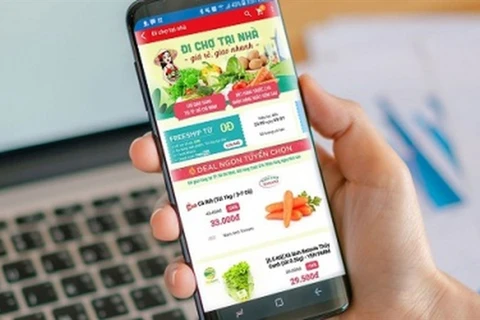
A customer shops on an e-commerce platform for Vietnamese products. (Photo: VNA)

Hanoi (VNS/VNA) - The Ministry of Finance has called on e-commerce platforms to pay tax on behalf of sellers, but online tradersinsist the suggestion is impractical.

A representative of the Vietnam E-Commerce Association revealedthree obstacles in the way of e-commerce platforms that make it impossible topay tax in sellers' stead.

The first obstacle is that e-commerce platforms, in most cases,have little knowledge of all the tax codes and tax rates applicable to sellers'items. The platforms cannot calculate sellers' taxes properly without this taxinformation.

The second obstacle involves the absence of a digital system thatenables e-commerce platforms to declare and pay tax on sellers'behalf and allows tax authorities to check whether a specific transactiongenerates revenues.

The third obstacle centres around the payment method that ispreferred by buyers in Vietnam - cash on delivery. Buyers paying in cashmake it difficult for e-commerce platforms to monitor the revenuesrealised by sellers, adding complexity to tax calculation.   

Nguyen Tran Hung, head of the Economic Information Systems andE-Commerce Faculty at the University of Commerce, remarked that it is noteasy to tax sellers who operate on multiple digital platforms.

If the sellers use sale management software on those platforms,the platforms could rely on revenue data stored in the software tocalculate sellers' taxes. Otherwise, tax authorities must make itmandatory for sellers to disclose their data to theplatforms to enable tax calculation.

"If sellers do not use sale management software, data sharingneeds to be made mandatory to enable tax calculation", said Hung.

According to Hung's suggestion, data disclosure shouldinclude sellers' revenue, profit, number of transactions, and items sold tohelp e-commerce platforms monitor sellers' cash flows more closely. 

Bui Ngoc Tuan, deputy director of the Tax Advisory Serviceat Deloitte Vietnam, held that tax deduction at source is only possible aslong as e-commerce platforms are given the authority to collect tax fromsellers.

The deputy director called for a digital system that allowse-commerce platforms to monitor sellers' sales on a real-time basis to checktheir taxable income better. He also urged tax authorities to tighten the legalframework to prevent new tax avoidance and evasion practices. 

Nguyen Minh Cuong, chief economist of the Asian DevelopmentBank, shared Tuan's view, saying that digital technology holds the key toeffective e-commerce taxation.

He took the search engine for tax classification asan example. The engine enables tax authorities to quickly detectfraudsters online, effectively curbing illegal practices among e-commercetaxpayers.

He also said Vietnam could learn from the Republic of Korea'sexperience before developing their e-commerce taxation.

The RoK has established an independent department incharge of e-commerce tax, tasked with collecting and analysingrevenue data declared by e-commerce enterprises andimposing fines on those involved in tax frauds.

On December 15, 2022, the General Department of Taxation launcheda national portal through which e-commerce taxpayers are required todisclose their data to the tax authority.

By 13 February, 258 e-commerce platforms, 14,883organisations, and 53,212 individuals have registered on the portal tocomply with the requirement./.
VNA

See more

According to Fortune’s latest list, Vinachem ranks 148th among Southeast Asia’s top 500 companies in 2026. (Photo: vinachem.com.vn)

Vinachem makes Fortune Southeast Asia 500 for the first time

According to Fortune’s latest list, Vinachem ranked 148th among Southeast Asia’s top 500 companies in 2026. The ranking is compiled using key financial indicators including revenue, profit and total assets, and covers enterprises from seven regional economies, namely Vietnam, Indonesia, Thailand, Malaysia, Singapore, Philippines and Cambodia.

Lien Khuong International Airport in the central province of Lam Dong (Photo: VNA)

Lien Khuong Airport expected to reopen in August

The project is invested by ACV, with a total investment of over 1 trillion VND (38 million USD), including the repair of the entire runway, taxiways, safety strips, and technical infrastructure and equipment to ensure flight operations.

Representatives of Ho Chi Minh City's tax agency address concerns and clarify tax-related issues raised by the FDI business community. (Photo: VNA)

Ho Chi Minh City moves to ease tax hurdles for FDI firms

The Ho Chi Minh City tax agency said it will maintain regular dialogue with businesses, push ahead with administrative reform and digital transformation, and identify implementation bottlenecks to recommend policy adjustments, facilitating investment and business activities for FDI enterprises.

A workshop on the Halal market is held in Ho Chi Minh City on June 16, 2026. (Photo: VNA)

Growing Halal market offers opportunities for Vietnamese businesses

The Halal market is becoming a promising avenue for businesses in Ho Chi Minh City. With its well-developed manufacturing, trade and service ecosystem and dynamic business community, the city is well positioned to strengthen its role in regional and global Halal supply chains.

Wistron Infocomm Vietnam Co., Ltd, an FDI enterprise, has invested in Dong Van III Industrial Park of Ninh Binh province since 2021, creating jobs for more than 12,800 workers. (Photo: VNA)

Vietnam seeks to position itself as leading destination for foreign investment

A significant shift in the recently issued Resolution 10 is the move from a strategy of attracting “more capital” towards attracting “higher-quality FDI”. The objective is no longer limited to investment volume but extends to absorbing advanced technologies, increasing domestic value creation, strengthening innovation capacity and accelerating modernisation in the economy.

Enterprises must disclose to investors the issuance plan, legal and investment risks and the rights and obligations of issuers and bondholders. (Photo: VNA)

Vietnam tightens rules on corporate bond issuance

Under Decree No 200/2026/ND-CP, enterprises issuing bonds will continue to operate under the principle of self-borrowing, self-repayment and self-responsibility, meaning issuers are fully accountable for the efficiency of capital use, debt repayment capacity and any disputes arising from bond issuance, use of funds, and payment of principal and interest.

A performance on The Huc bridge of the temple as part of a nighttime tourism programme to discover the Ngoc Son temple on Hoan Kiem Lake, downtown Hanoi. (Photo: VNA)

Hanoi adopts framework to boost night-time economy development

The resolution encourages a wide range of cultural, artistic and tourism activities, including performances, exhibitions, film screenings, presentations of traditional and intangible cultural heritage, and other programmes held in public spaces, pedestrian streets, heritage sites, theatres, cinemas and cultural venues.

A cargo port in Thiruvananthapuram city, India (Photo: ANI/VNA)

Ample room remains for Vietnam–India logistics cooperation

The GTTCI expert noted that alongside logistics and integrated warehousing, e-commerce is expected to be a particularly high-growth sector in the coming years. He described it as a multi-billion-dollar market with significant untapped opportunities for cooperation between Vietnam and India.

The meeting between Minister of Finance Ngo Van Tuan and Ambassador Julien Guerrier, head of the EU Delegation to Vietnam, on June 15. (Photo: thoibaotaichinhvietnam.vn)

Vietnam, EU enhance cooperation in green finance

Minister of Finance Ngo Van Tuan called on the EU to help facilitate Vietnamese firms' access to green finance, expand technical and financial assistance for green transition, and enhance cooperation in strategic technologies, innovation, digital finance and high-tech human resources development.

An overview of the working session between Deputy Finance Minister Tran Quoc Phuong and Kim Dongil, Director of ADB representing the Republic of Korea, Papua New Guinea, Sri Lanka, Taipei (China), Uzbekistan, Vanuatu and Vietnam. (Photo: Ministry of Finance)

Vietnam, ADB to advance strategic projects with strong economic impact

ADB has identified a pipeline of 27 projects for Vietnam through 2029, with total planned financing of approximately 4.6 billion USD. The projects focus on sectors that are among Vietnam’s priorities, including infrastructure, energy, urban development, agriculture and public sector management.