Satellite internet services such as Starlink are expected to complement existing fixed and mobile networks, particularly in remote, border and island areas, as well as during natural disasters when terrestrial infrastructure may be disrupted.
When knowledge is digitalised and spread from school to community, escaping from poverty will be more sustainable.
Unlike conventional internship or management trainee schemes, both programmes are designed and implemented directly by Viettel, integrating training with real-world work in a global technology group. Participants are entrusted with solving major challenges that directly impact Viettel’s research, production and business operations.
The event marked the debut of the country’s first cross-sea unmanned postal route, representing a pioneering step in smart mobility solutions aimed at boosting the digital economy and easing pressure on road transport infrastructure in Ho Chi Minh City.
Vietnam is well positioned to become a leading digital tourism destination in the region. By capitalising on current growth momentum and implementing targeted support measures for small and medium-sized enterprises, the country can build a smart and sustainable tourism ecosystem aligned with global digital transformation trends.
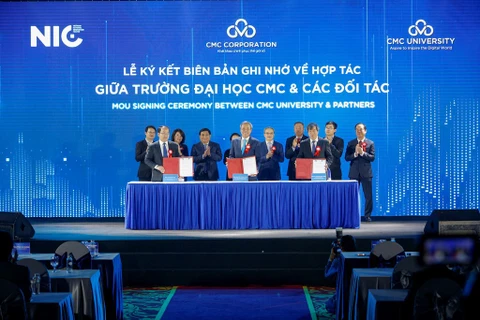
The Vietnamese Government commits to working with leading technology corporations, fostering innovation, developing human capital and positioning Vietnam as a regional hub for innovation and high technology.
Resolution No. 57-NQ/TW of the Politburo defines fund-based mechanisms as the core financial tool for advancing science, technology and innovation. Under the resolution, State budget funding for research and development is prioritised for allocation through funds, alongside reforms in financial management, expanded autonomy, streamlined procedures, and acceptance of the risks and time lags inherent in research activities. It also calls for the establishment of venture capital funds and science and technology development funds to steer, mobilise and unlock social resources for innovation.
With an increasingly complete policy framework, expanding investment inflows and a structured human resource development strategy, the semiconductor industry is expected to become a strategic technological pillar of Vietnam in the coming period.
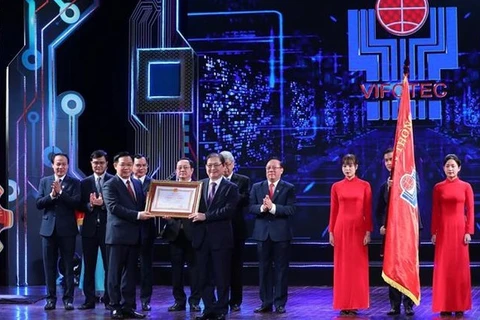
The selected achievements and events reflect the increasingly important role of science, technology, innovation and digital transformation in improving institutions, promoting socio-economic development, ensuring national defence and security, and enhancing Vietnam’s position amid deep international integration.
The platform represents the world’s most advanced high-performance computing infrastructure, designed to support research and development of next-generation artificial intelligence (AI) models.
The application of digital technologies, big data, artificial intelligence, e-commerce and digital platforms is creating new opportunities for businesses and citizens across production, business activities and social governance. Sectors such as e-commerce, digital finance, smart logistics and digital platform-based services are generating significant added value, while online public services, cashless payments, digital education and digital healthcare are increasingly improving quality of life and the transparency and efficiency of state management.
The Ministry of Science and Technology has sought feedback on a draft decree amending the Government's Decree No. 76/2018/ND-CP, aiming to strengthen the legal framework for technology appraisal and transfer, improve support policies for participating entities, and enhance risk management to ensure sustainable development, environmental protection and public health.
With the Politburo's rollout of Resolution No. 57-NQ/TW on breakthroughs in science, technology, innovation, and national digital transformation, along with Resolution No. 68-NQ/TW on developing the private economic sector, a key focus is on applying scientific and technological advances to produce essential consumer goods.
The technology exchange and digital transformation marketplace are not meant to showcase technologies, but to ensure that technology delivers real economic value, with effectiveness and scalability as the key criteria.
A key highlight was the official announcement of the establishment of the AFOB liaison office in Vietnam, based at the International Centre for Interdisciplinary Science and Education (ICISE) in Gia Lai’s Quy Nhon Nam.
Discussions at the event underscored support from Vietnamese intellectuals in France to the Party and State’s strategic vision, particularly the view that science – technology, innovation and digital transformation are key breakthroughs and primary drivers of fast and sustainable growth.
The move aims to promptly combat, curb, and minimise IP violations; safeguard the legitimate rights and interests of citizens and businesses; build a transparent and healthy business environment; spread the nation’s image and prestige to advance rapid and sustainable development.
Held amid the nationwide efforts to implement the Resolution of the 14th National Party Congress and the Politburo’s Resolution No. 57-NQ/TW on breakthroughs in science, technology, innovation, and national digital transformation, the seminar served not only as an academic forum but also as a platform reflecting the sense of responsibility, intellectual engagement and aspiration to contribute among overseas Vietnamese intellectuals in the nation’s new development era.
The programme connected three sites in Hanoi, Nguyen Hue High School in Lao Cai, and Chau Thanh High School in Ho Chi Minh City, bringing together educators, students, representatives of businesses, and industry–energy engineers, and those directly supporting schools in implementing STEM (science, technology, engineering, and mathematics) education in practice.
The selected projects share a strong technology-driven orientation, particularly in artificial intelligence (AI), digital solutions and advanced materials. Their innovations address large-scale, real-world issues across sectors including healthcare, education, legal services, agriculture, energy, environmental protection and public governance.