Enterprises have two years to prepare for FTAs

Businesses in the agriculture sector, especially breeding, will be most vulnerable to the effects of Free Trade Agreements (FTAs) and Trans-Pacific Partnership (TPP) with bigger partners.
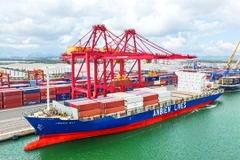
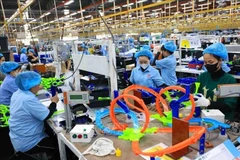
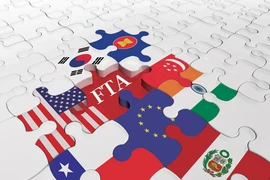
Enterprises have two years to prepare for FTAs ảnh 1Illustrative image (Source: VNA)

Hanoi (VNA) - Businesses in the agriculture sector, especially breeding, will be most vulnerable to the effects of Free Trade Agreements (FTAs) and Trans-Pacific Partnership (TPP) with bigger partners.

However, the firms have two years left for restructuring and improving their competitiveness after the signing of the FTAs and TPP, said Luong Hoang Thai, head of the Multilateral Trade Policies Department under the Ministry of Industry and Trade.

Thai told a conference to provide information on some new FTAs, in Hanoi on December 18 that the TPP has been in the last period for legal review before the official signing. The TPP has high standards in the open market which could bring in opportunities for participating countries.

In particular, Vietnam could have access to leading partners in the bloc such as the European Union, Japan and the Republic of Korea. However, the opportunities could only be obtained if Vietnam meets the requirements of origin in the garment and textile sector, for example.

It is for this reason that the country should review all sectors to take advantages of the pacts. In addition, Vietnam should also make changes to meet commercial standards under the TPP, thus creating a facilitated business environment.

Sharing the ideas, Deputy Minister of Industry and Trade Tran Quoc Khanh said a range of FTAs which Vietnam has signed with big countries will have a huge impact on the country's export structure and macro-economic control. It will be an opportunity for the country to complete and improve mechanisms as well as enhancing transparency.

Khanh said the pacts will bring considerable challenges to State management agencies and enterprises.

He emphasised that policymakers should change their way of thinking as all of the management will be based on these committed pacts.

However, recent statistics from the Ministry of Planning and Investment showed that around 75 percent of local businesses do not have knowledge about the FTA.

The Deputy Minister said the rate is normal as Vietnamese firms have been operating in several sectors which will not be affected by the pacts. The companies have not participated in export activities but have been content to produce for the local market.

The reality has not been seen in Vietnam but other countries. In the European Union, around 50 percent to 60 percent of businesses in the region do not pay attention to signing of international trade pacts, he added.

"Local enterprises should have time and pay attention to FTAs as the country has deeply integrated into the world economy. This could help them take advantages of the FTAs," he said.

The conference attracted participation of representatives from 10 cities and provinces as well as businesses.

In 2015, Vietnam signed four important pacts with big markets, including TPP, FTAs with the EU and the Eurasian Economic Union (EEU) and the Republic of Korea.-VNA
VNA

See more

Vietnamese, Chinese enterprises exchange experience at the networking and exchange programme in Da Nang city on January 13, 2026 (Photo: VNA)

Da Nang promotes logistics cooperation with Chinese businesses

With the goodwill and active engagement of partners, particularly the Chinese business community, the cooperation is expected to generate concrete and long-term opportunities, contributing to the development, deeper integration and sustainability of Da Nang’s startup and innovation ecosystem, said Le Son Phong, Deputy Director of the municipal Department of Science and Technology.

SCAVI Hue Co., Ltd. (100% invested by Financière B’Lao Group, France), specialising in garment manufacturing at Phong Dien Industrial Park in Hue. (Photo: VNA)

Business Confidence Index reaches seven-year high: EuroCham Vietnam

After several years affected by global volatility and disruptions, the Q4/2025 BCI indicates that European business sentiment in Vietnam has returned firmly to positive growth territory, surpassing levels seen prior to US tariff announcements and even before the COVID-19 pandemic. Specifically, 65% of surveyed companies assessed their current business conditions as positive in Q4/2025, with the figure rising to 69% when looking ahead to Q1/2026, suggesting that optimism is set to strengthen further as the new year begins.

Prime Minister Pham Minh Chinh chairs the 5th meeting of the Central Steering Committee on Housing Policy and the Real Estate Market in Hanoi on January 13, 2026. Photo: VNA

PM chairs meeting on housing policy, real estate market

The right to housing is a fundamental right of citizens, and housing is an essential need of every person. Housing development is an important pillar of social welfare policy, while also serving as a driving force for economic growth, labor market stability, and sustainable socio-economic development, said Prime Minister Pham Minh Chinh.

Hanoi to host Thailand Week 2026 in late January

Hanoi to host Thailand Week 2026 in late January

Visitors to Thailand Week 2026 will be able to enjoy a variety of attractive promotional programmes, lively trade promotion activities and daily lucky draws offering numerous quality Thai products.

Illustrative image (Photo: VNA)

German media group releases Vietnam outlook report 2026

The Germany-based international media group specialising in economic, financial and political coverage of emerging markets IntelliNews on January 11 published its annual Vietnam Outlook report 2026, highlighting prospects for economic growth and what problems lie in store.

PM Pham Minh Chinh speaks at the meeting (Photo: VNA)

PM pushes five strategic breakthroughs to fuel digital economy

Addressing the first meeting of the National Steering Committee on Data linked virtually with all 34 cities and provinces nationwide, PM Pham Minh Chinh, who is also head of the committee, stressed that the Party’s policies and guidelines and the State’s laws have long articulated a strategic vision for data development. He cited Resolution No. 57-NQ/TW and the recently enacted Law on Data, both of which designate data as a “new means of production” and a strategic resource that must be transformed into high-value assets.

A customer conducts transactions at the Vietnam Joint Stock Commercial Bank for Industry and Trade (VietinBank). (Photo: VNA)

Central bank aims for 15% credit growth in 2026

In 2026, monetary policy will continue to be implemented in a proactive, flexible, timely and effective manner to help stabilise the macroeconomy, keep inflation under control, support economic growth and advance the restructuring of banks under compulsory transfer.