Environmental protection law promotes waste sorting at source

The 2020 Law on Environmental Protection stipulates that before December 31, 2024, all households must sort domestic waste prior to discharge.
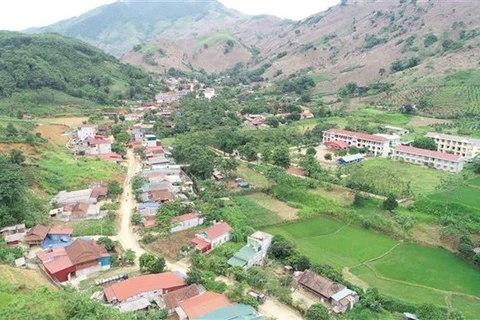
Environmental protection law promotes waste sorting at source ảnh 1Households and individuals should sort their domestic waste into groups. (Photo: suckhoedoisong.vn)
Hanoi (VNA) – The 2020 Law on EnvironmentalProtection stipulates that before December 31, 2024, all households must sort domestic waste prior to discharge.

The work has been piloted in HoChi Minh City over the past 10 years, and officially rolled out in southerneconomic hub since 2018.

Nguyen Hung Thinh, deputy head of the VietnamEnvironment Administration under the Ministry of Natural Resources andEnvironment (MONRE), pointed out limitations in solid waste managementregarding policies, infrastructure and implementation.

The high rate of solid domestic waste buried ispartially due to the lack of attention to the waste sorting, he said, addingthat poor infrastructure has also affected the efficiency of small-scale wasteseparation models in localities.

To deal with these shortcomings, the 2020 Law onEnvironmental Protection prescribes volume-based fees on collecting,transporting and treating domestic solid waste.

This is an amendment of the new law, requiringhouseholds and individuals to sort their domestic waste into three groups:recyclable, food, and others.

The amended law also stipulates that domestic solid waste which has been recycled is not subject to waste collection,transportation and treatment fees.
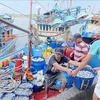
Environmental protection law promotes waste sorting at source ảnh 2Illustrative image (Photo: baotainguyenmoitruong.vn
Food waste and waste classified as other types must beput in packages and transferred to treatment establishments.

Provincial People's Committees have the right todetermine the fees, while the unit that collects and transports solid waste eachday has the right to refuse to collect and transport the waste of householdsand individuals that is not sorted, according to the new law.

Detailed plans for waste sorting at source andvolume-based waste collection must be completed by local authorities no laterthan December 31, 2024.

The MONRE has learned from the models and experiencesof other countries while studying amendments to laws./.
VNA
See more

A rare turtle is transported to Cuc Phuong National Park for care and rehabilitation ahead of its eventual release back into the wild. (Photo published by VNA)

Rare turtles returned to Vietnam under CITES

The shipment includes several endangered Vietnamese species such as the Indochinese box turtle (Cuora galbinifrons), Bourret’s box turtle (Cuora bourreti), keeled box turtle (Cuora mouhotii), and black-breasted leaf turtle (Geoemyda spengleri), all considered highly endangered and increasingly threatened in the wild by habitat destruction, poaching, and illegal trade.

Representatives of the Ngoc Lam Border Guard Station under the Nghe An Border Guard Command and Son Lam commune's police hand over a pangolin voluntarily surrendered by a local resident to the wildlife conservation centre at Pu Mat National Park. (Photo: VNA)

Nghe An residents voluntarily hand over rare pangolins for conservation

On May 11, the Quy Chau Forest Protection Department, along with local police and authorities, took in a critically endangered pangolin, handed over by a resident. The animal was discovered a day earlier by Thai Doan Tuan, from Viet Huong village in Quy Chau commune, after it wandered into his garden. Recognising it as a protected Sunda pangolin, he contacted authorities for assistance.

A 2kg pangolin is released back into the wild at the Pu Huong Nature Reserve on May 6, 2026. (Photo published by VNA)

Nghe An releases rare pangolin back to the wild

Pangolins, scaly mammals capable of curling into a ball for self-defence, are classified as critically endangered and are strictly protected under both Vietnamese and international law.

At the working session (Photo: Vietnam Meteorological and Hydrological Administration)

Vietnam, Sri Lanka share experience in hydrometeorology

Both sides expressed confidence that continued dialogue and knowledge-sharing will deepen cooperation in hydrometeorology, helping enhance disaster response capacity and climate change adaptation in the years ahead.

Chac Den Cave was recently discovered in Phong Nha - Ke Bang National Park in Quang Tri province. (Photo: VNA)

26 new caves discovered in Phong Nha – Ke Bang National Park

The new findings comprise several large caves with complex structures and high scientific value, including Thien Cung Cave, measuring 4,206 metres – the longest cave identified during the survey, Nuoc Lan Cave (2,721 metres), Ma Dom Cave (1,257 metres) and Cha Ngheo Cave (583 metres).

Nine Sunda pangolins (Manis javanica) have been released back into the wild at the Bach Ma National Park. (Photo: VNA)

Nine endangered Sunda pangolins returned to nature in Hue

Before their release, the animals had undergone quarantine, care, rehabilitation and close monitoring by technical staff and veterinarians to ensure they were in good health and capable of returning to their natural habitat.

Thailand ready to share experience with Vietnam in green urban development: officials

Thailand ready to share experience with Vietnam in green urban development: officials

Thailand is ready to share its experience and successful models in green urban development with Vietnam, as the two countries share many similar characteristics, including rapid urbanisation, traffic congestion, flooding, canal networks and growing demand for greener public spaces, Thai officials have said in recent interviews with the Vietnam News Agency.

This May marks the third time the country’s largest wildlife bird photography competition has been held. (Photo: Vietnam BirdRace 2026 organising committee)

Vietnam BirdRace 2026 to attract hundreds of photographers worldwide

Participating teams, each comprising three to four members, are tasked with photographing as many wild bird species as possible within the official competition period. While artistic quality is not mandatory, images must be clear enough for species identification, ensuring authenticity and avoiding any disturbance to natural habitats.