An exhibition titled “The silence” kicked off on December 9 at the Hoa Lo Prison relic site in Hanoi to help the public gain an insight into the fierce 12-day-and-night struggle of Vietnamese soldiers and people against US airstrikes in late 1972 to defend the Hanoi capital.
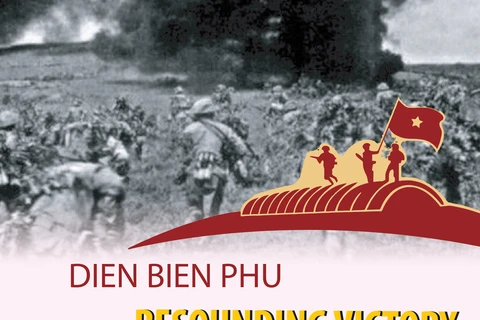
The exhibition was held on the occasion of the 50th anniversary of the “Dien Bien Phu in the air” victory (December 1972 - 2022) and 50 years since the release of American pilots imprisoned in the North (1973 - 2023).
 Mr. Thomas Eugene Wilber (centre), son of US pilot Walter Eugene Wilber visits the exhibition. (Photo: VNA)
 The international community has long known that American prisoners were treated with kindness and humanity in Vietnam. However, the image of American prisoners celebrating Christmas at Hoa Lo Prison, listening to Vietnamese soldiers play the lute is not widely known.
The exhibition themed “The silence”, hence, revealed many untold stories about the life of American pilots imprisoned in the north of Vietnam.
It is reminiscent of the silence after carpet bombings, fierce battles and the losses and sacrifices that each soldier and citizen experienced in the 12-day-and-night battle at the end of 1972. Hanoi and Hai Phong suffered most from carpet bombing of B52 aircraft.
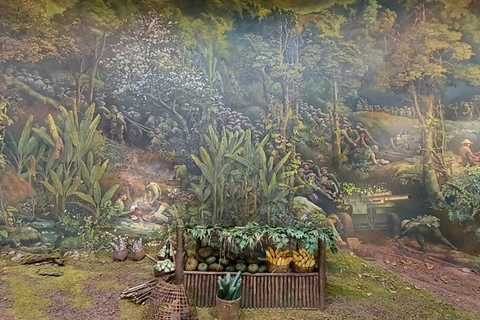
 The display area of American pilot's memorabilia at Hoa Lo Prison Relic (Photo: Minh Thu/Vietnam+)
 The documents and artifacts also evoke the silence behind the stone wall of Hoa Lo Prison, also known as "Hilton-Hanoi" in the 1964-1973 period, where pilots and technical staff from the US Air Force and Navy were detained after being captured in the two wars that sabotaged the North of Vietnam. Most of the arrestees were pilots who fought in the "Dien Bien Phu in the air" battle in 1972.
When the Paris Agreement on ending the war and restoring peace in Vietnam was signed, all American pilots detained in prison camps in the North of Vietnam were gathered in Hoa Lo Prison for return to the US government.
Veteran Robert Chenoweth shared that before the handover day, the Vietnamese government prepared a number of souvenirs. He selected the flag of Vietnam because it was a special symbol of Vietnam. He said the flag reminded him of the long struggle of Vietnamese soldiers and people to defend their nation.
Talking to a reporter from VietnamPlus, Mr. Thomas Eugene Wilber, son of pilot Walter Eugene Wilber said that during his five-year detention at Hoa Lo prison, his father received humane treatment from getting three meals a day to getting medical care and being provided with essential supplies even when at that time people in the north of Vietnam were experiencing extremely difficult lives. To that end, Thomas’ father realized that the war in Vietnam needed to end soon. That’s why upon return to the US in 1973, he actively participated in anti-war movements, Thomas said.
During the rest of his life, Thomas said his father repeatedly told his family about Vietnam. Therefore, Thomas has been to Vietnam more than 30 times and donated many of his father's memorabilia to Vietnamese museums and monuments.
Thomas shared that every time he came to Vietnam, he had a better understanding of the country and also realized its changes. He said he was touched when seeing his father’s pictures and belongings, which are still preserved at Hoa Lo prison relic site.
Visiting the exhibition, Mr. Chuck Searcy, Vice Chairman of the US Veterans for Peace (VFP) group stayed for a long time at the display area of US soldiers' memorabilia.
He said that it would take a lot of time to heal from war and it requires the sincerity from both sides.
He shared that he feels fortunate that Vietnam has opened its door to the Americans and is willing to put the past behind and establish friendly relations with the US. This means a lot to the next generations of both peoples, he said./.