Expert highlights Vietnam-Cambodia cooperation prospects

Cambodia’s victory over the Pol Pot genocidal regime (January 7, 1979) demonstrates the solidarity between Vietnamese and Cambodian peoples and armies, opening up a new page for the bilateral friendship and neighbourliness, according to an article published on the website of the Royal Academy of Cambodia (RAC).
Expert highlights Vietnam-Cambodia cooperation prospects ảnh 1All of the Vietnamese volunteer soldiers return home from Cambodia in September 1989. (Photo: VNA)
Phnom Penh (VNA) – Cambodia’s victoryover the Pol Pot genocidal regime (January 7, 1979) demonstrates the solidaritybetween Vietnamese and Cambodian peoples and armies, opening up a new page forthe bilateral friendship and neighbourliness, according to an article publishedon the website of the Royal Academy of Cambodia (RAC).

The article, issued on the occasion of the 45th anniversary of the victory, highlighted the role of Vietnamese volunteersoldiers in the event, achievements the neighbour has recorded in developmentand peacekeeping, and cooperation between the two countries.

Its author Uch Leang, a researcher at RAC, said afterthe victory, the Vietnamese soldiers continued helping the Cambodian army in personneltraining and strengthening combat capacity to avert the return of the genocidalregime.

All of the Vietnamese soldiers returned home inSeptember 1989. Since then, the bilateral relationship has been constantlydeveloping across spheres, benefiting people of both nations.
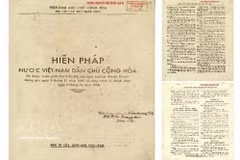
Expert highlights Vietnam-Cambodia cooperation prospects ảnh 2The article is published on the occasion of Cambodia's 45th anniversary of the victory over the the Pol Pot genocidal regime. (Photo: VNA)
The relationship is not only the neighbourliness butalso the fraternity as the two countries have stood side by side in their paststruggles for national liberation and reunification, and the present cause ofnational construction and development, the expert said.

The article also reviewed the official visit toVietnam by Prime Minister Hun Manet on December 11-12, 2023, which hascontributed to consolidating and deepening the friendship and cooperation inall areas on the basis of good neighbourliness, solidarity, and mutualunderstanding.

Regarding the bilateral trade, Uch Leang said itgrew more than 20% annually during the 2015-2020 period, and reached 10.57billion USD in 2022, up nearly 11% year-on-year. It is expected to stand at 20billion USD in the time ahead.

The article quoted a report by the VietnameseMinistry of Planning and Investment as saying Vietnam had, as of 2023, run 206projects in the neighbouring country with a total registered capital of 2.94billion USD, ranking fifth among the countries and territories investing inCambodia.

The researcher held that economic, trade andinvestment cooperation will create momentum for the good neighbourliness,traditional friendship, comprehensive cooperation and long-term sustainability to move forward in the time ahead./.
VNA
See more

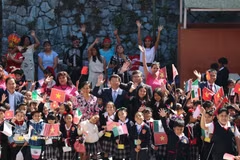
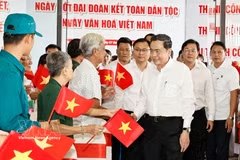
The Vietnamese delegation takes photo with students at the primary school named after the Socialist Republic of Vietnam (Photo: VNA)

CPV values traditional friendship with Mexican Labour Party

Deputy head of the CPV Central Committee’s Commission for Publicity Tran Thanh Lam proposed deeper theoretical exchanges and sharing of experience in Party building and national development; stronger cooperation in education, science, culture, external information, press, publishing and traditional medicine.

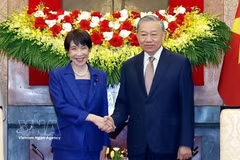
General Secretary of the Communist Party of Vietnam (CPV) Central Committee and President To Lam and Japanese Prime Minister Sanae Takaichi during her official visit to Vietnam in May, 2026. (Photo: VNA)

Top Vietnamese leader’s Japan visit to open up new space for bilateral cooperation

The visit is expected to further deepen ties through Party, State, parliamentary and people-to-people channels, while creating breakthroughs in economic, financial, scientific and technological cooperation, innovation, education and training, digital and green transformation, and supply chain diversification, thereby contributing to a peaceful and stable environment for development in both countries.

Politburo Member and Head of the Party Central Committee’s Commission for Publicity Trinh Van Quyet (R) meets with Jiri Mäntysalo, Vice Chairman of the Communist Party of Finland. (Photo: VNA)

Vietnam, Finland move to strengthen political trust, expand cooperation

Politburo Member and Head of the Party Central Committee’s Commission for Publicity Trinh Van suggested that Finland further promote its role as a bridge between Vietnam and the European Union (EU), while Vietnam could serve as a bridge between Finland and the Association of Southeast Asian Nations (ASEAN). He called for effective utilisation of the EU-Vietnam Free Trade Agreement (EVFTA) and urged Finland to encourage the remaining EU member states to ratify the EU-Vietnam Investment Protection Agreement (EVIPA) at an early date.

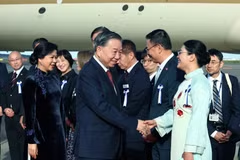
Representatives of the Japanese State and the Embassy of Vietnam in Japan welcome General Secretary of the Communist Party of Vietnam Central Committee and President To Lam and his spouse at Haneda International Airport in Tokyo. (Photo: VNA)

Top Vietnamese leader begins official visit to Japan

The visit is expected to further translate the potential and achievements of bilateral cooperation into concrete outcomes, strengthen the longstanding bonds between the two countries and ensure that the friendship nurtured across generations continues to deliver lasting benefits to both peoples.

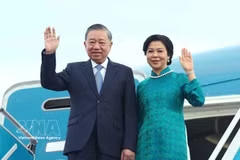
General Secretary of the Communist Party of Vietnam Central Committee and President To Lam, his spouse Ngo Phuong Ly and a high-ranking Vietnamese delegation leave Hanoi on November 8 for a four-day official visit to Japan at the invitation of the Japanese State. (Photo: VNA)

Top leader and spouse depart for official visit to Japan

General Secretary of the Communist Party of Vietnam Central Committee and President To Lam, his spouse Ngo Phuong Ly and a high-ranking Vietnamese delegation left Hanoi on November 8 for a four-day official visit to Japan at the invitation of the Japanese State.

Toshiro Nishizawa, a Senior Fellow at Graduate School of Public Policy under the University of Tokyo in an interview with the Vietnam News Agency (VNA)'s correspondent in Japan (Photo: VNA)

Top leader’s visit to deepen Vietnam-Japan strategic cooperation: expert

The upcoming visit to Japan by General Secretary of the Communist Party of Vietnam Central Committee and President To Lam is expected to give fresh impetus to the Vietnam-Japan Comprehensive Strategic Partnership, reflecting the strategic priorities of both countries, according to a Japanese expert.

WTO Director-General Ngozi Okonjo-Iweala speaks at the event (Photo: VNA)

WTO hails Vietnam’s 20-year journey since accession

Joining the WTO was a strategic choice for Vietnam, closely associated with its Doi Moi (Renewal) process, opening-up policy and international economic integration. Over the past two decades, international economic integration has become a driving force for institutional reforms, trade expansion, foreign investment attraction and enhancement of the country's international standing.

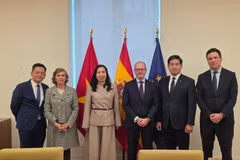
Vietnamese Deputy Minister of Foreign Affairs Le Thi Thu Hang (third, left) and other delegates at the political consultation (Photo: The Ministry of Foreign Affairs)

Vietnam, Spain seek to deepen Strategic Partnership

Vietnam asked Spain to continue voicing its support for and urging the European Commission (EC) to swiftly lift the IUU “yellow card” imposed on Vietnamese seafood, while actively encouraging EU member states to ratify the EU-Vietnam Investment Protection Agreement (EVIPA) at an early date.

Standing Deputy Minister of Foreign Affairs Nguyen Minh Vu (Photo: Ministry of Foreign Affairs)

Top leader's official visit to Japan carries three major strategic implications: Deputy FM

The visit, the first to Japan by the leader in his new capacity and the first visit to Japan by a General Secretary of the Communist Party of Vietnam in 11 years, will first set the overall strategic direction for bilateral relations in the new period, enabling leaders of the two countries to identify long-term cooperation orientations and priority areas that meet the development needs of both sides.