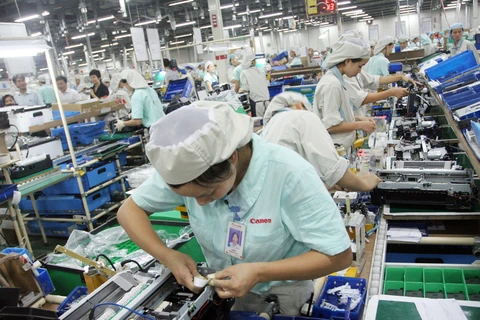
Workers make electronic components at Manutronic Vietnam JSC in Bac Ninh province's Tien Son industrial park (Photo: VNA)
 Hanoi (VNA) – The inflow of foreign direct investment (FDI) has helped Vietnam access advanced technology in the world, said Director of the Foreign Investment Agency (FIA) under the Ministry of Planning and Investment Do Nhat Hoang.
The official said the entry of FDI has stimulated domestic investment, and the development of foreign –invested firms along with other economic sectors has enabled Vietnam to perfect its socialist-oriented market economy and integrate deeper into the world economy.
The FDI inflow also assisted Vietnam in restructuring its economy, accessing and applying modern technology and advanced business administration.
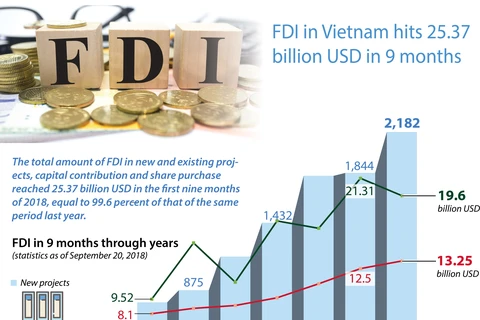
So far, a total of 334 billion USD has been committed for 26,500 projects in Vietnam of which 184 billion USD has been disbursed. Vietnam’s economic structure has also shifted from mainly backward agriculture to advanced industrial production.
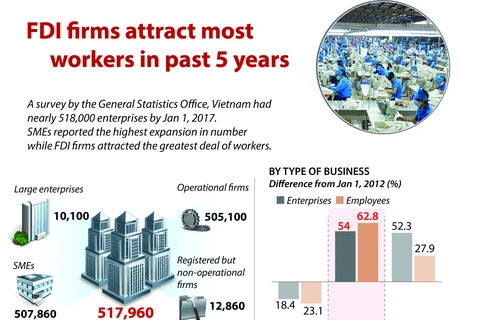
The foreign-invested sector contributed 58.2 percent of the processing-manufacturing industry and 50 percent of the country’s total production value, while creating direct employment for 3.6 million workers and indirect jobs for more than 5 million others.
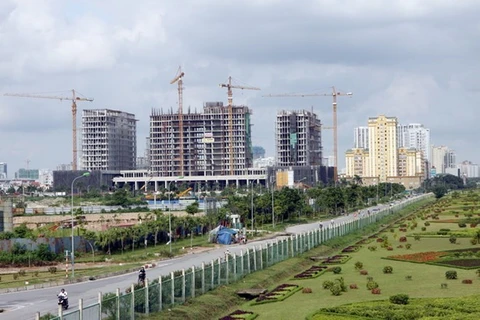
The presence of FDI firms has changed the landscape in many regions. For example, the southern provinces of Dong Nai and Binh Duong, previously poor agricultural areas, have turned into industrial hubs thanks mainly for FDI firms. Those two provinces are also among the leading localities in attracting FDI.
However, despite its positive influence, the FDI sector has not met expectations in technology transfer for their local counterpart. The sector also contains problems such as transfer pricing and tax frauds. A number of FDI enterprises still use backward technology and cause environmental pollution.
“I think the lesson here is to attract investment in a selective way, choosing projects using modern and high technology, consuming less energy, optimizing natural resources and not causing pollution,” Hoang said.
He added that Vietnam needs to make optimal use of foreign capital and technology by adopting appropriate policies to facilitate linkages between foreign-invested and domestic enterprises.
In the context of the fourth industrial revolution, in order to attract leading investors in the field of information technology, Vietnam should review its legal framework, especially regulations on the hi-tech sector, while taking measures to assist domestic firms in upgrading their technology, the FIA director said.
According to Hoang, his agency has been assigned by the Ministry of Planning and Investment to review the Investment Law and the Law on Enterprises, with the aim of removing overlapping between the Investment Law and other laws, and abolishing unnecessary conditions in accessing market and doing business.-VNA
The official said the entry of FDI has stimulated domestic investment, and the development of foreign –invested firms along with other economic sectors has enabled Vietnam to perfect its socialist-oriented market economy and integrate deeper into the world economy.
The FDI inflow also assisted Vietnam in restructuring its economy, accessing and applying modern technology and advanced business administration.
So far, a total of 334 billion USD has been committed for 26,500 projects in Vietnam of which 184 billion USD has been disbursed. Vietnam’s economic structure has also shifted from mainly backward agriculture to advanced industrial production.
The foreign-invested sector contributed 58.2 percent of the processing-manufacturing industry and 50 percent of the country’s total production value, while creating direct employment for 3.6 million workers and indirect jobs for more than 5 million others.
The presence of FDI firms has changed the landscape in many regions. For example, the southern provinces of Dong Nai and Binh Duong, previously poor agricultural areas, have turned into industrial hubs thanks mainly for FDI firms. Those two provinces are also among the leading localities in attracting FDI.
However, despite its positive influence, the FDI sector has not met expectations in technology transfer for their local counterpart. The sector also contains problems such as transfer pricing and tax frauds. A number of FDI enterprises still use backward technology and cause environmental pollution.
“I think the lesson here is to attract investment in a selective way, choosing projects using modern and high technology, consuming less energy, optimizing natural resources and not causing pollution,” Hoang said.
He added that Vietnam needs to make optimal use of foreign capital and technology by adopting appropriate policies to facilitate linkages between foreign-invested and domestic enterprises.
In the context of the fourth industrial revolution, in order to attract leading investors in the field of information technology, Vietnam should review its legal framework, especially regulations on the hi-tech sector, while taking measures to assist domestic firms in upgrading their technology, the FIA director said.
According to Hoang, his agency has been assigned by the Ministry of Planning and Investment to review the Investment Law and the Law on Enterprises, with the aim of removing overlapping between the Investment Law and other laws, and abolishing unnecessary conditions in accessing market and doing business.-VNA
VNA