Foreign experts give advice for effective, sustainable blue economy development

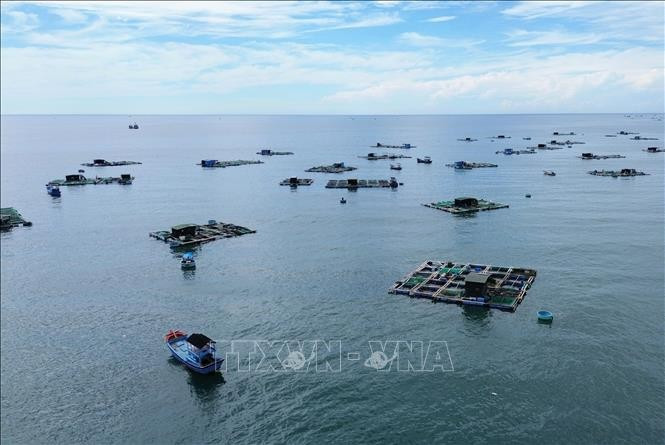
In Vietnam, aquaculture is highly developed, and related practices can be further improved, for example, by reducing the use of antibiotics, minimising pollution and waste discharge into the sea, including wastewater containing microplastics and other pollutants.

Model of farming in cages in Ninh Thuan. (Photo: VNA)

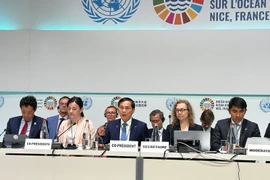
Paris (VNA) – Foreign experts who attended the third United Nations Ocean Conference (UNOC 3) in Nice, France, gave recommendations to help Vietnam develop the blue economy effectively and sustainably.

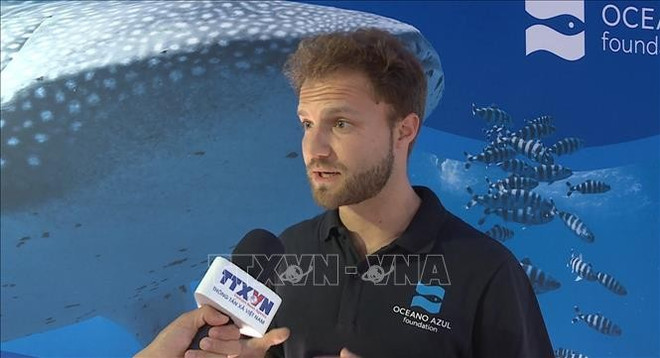
Expert Louis Lambrechts on international ocean advocacy at the Oceano Azul Foundation stated Vietnam is a country with vast marine areas and a thriving fishing industry, which enable it to grow further.
chuyen-gia-chinh-sach.jpg
Expert Louis Lambrechts on international ocean advocacy at the Oceano Azul Foundation (Photo: VNA)

The specialist emphasised the need to establish marine protected areas, as creating marine protected areas, especially one with a high level of protection, serves as a reserve that allows fish populations to recover and then spread to other marine areas of Vietnam. As a result, fishing activities will improve, even if the volume of fish caught initially decreases. But this brings abrout two key benefits. First, it helps restore the marine environment, which is highly beneficial for tourism, such as developing scuba diving or sea-based tourism. Second, it clearly benefits the fishing industry, especially small-scale or coastal fisheries, which rely on healthy fish stocks to thrive, Lambrechts stated.

Bruno Bodard, Director General of the Most Beautiful Bays in the World Club (World-Bays Club), who frequently engages in business cooperation activities in Vietnam, highlighted the need for Vietnam to build a sustainable blue economy. He encouraged Vietnam to continue efforts in preserving and promoting the value of its coastlines and natural resources.

Isabelle Milhomme from the non-governmental organisation Objectif Sciences International (OSI), said that countries still boasting development potential like Vietnam are fortunate to possess an important traditional fishing industry, and potentially a fast-growing sustainable tourism sector, which, she suggested, should be preserved and maintained over the long term.

She also advised Vietnam to strengthen environmental protection regulations, move toward a regenerative economy, and encourage greater public participation, so that everyone can contribute to this regenerative economy.

Sharing a similar perspective with Milhomme, João Rito, a biologist, guest professor at the Polytechnic University of Leiria, and founder and CEO of SEAentia - a startup focusing on sustainable aquaculture based in Peniche, Portugal, stressed the importance of protecting oceans by establishing strictly protected areas.

This will allow countries to further develop the fisheries sector, particularly sustainable fisheries, and at the same time enable tourism to grow more effectively by improving the quality of activities. It will also allow people to enjoy the beaches safely and interact respectfully with surrounding marine life, he said.

In Vietnam, aquaculture is highly developed, and related practices can be further improved, for example, by reducing the use of antibiotics, minimising pollution and waste discharge into the sea, including wastewater containing microplastics and other pollutants, he stated, adding that nowadays, many new technologies can be applied, such as sensors that help ensure the welfare of farmed species while also protecting the environment where aquaculture takes place./.

VNA

See more

Vietnam will host the 21st Asian-Australasian Association of Animal Production Societies (AAAP) Animal Science Congress (AAAP 21) from October 28 - 31 in Hanoi. (Photo: aaap2026.org)

Vietnam to host 21st AAAP animal science congress

According to the Animal Husbandry Association of Vietnam (AHAV), the event is expected to gather between 1,300 - 1,500 delegates, including around 500 leading international scientists, experts and businesses in the livestock sector.

Yen Huong Xua company introduces solutions to combat counterfeit and imitation goods (Photo: VNA)

Fight against counterfeit goods fostered amid rising digital-era fraud

Dr. Bui Van Quyen, Director of the Anti-Commercial Fraud and Counterfeiting Institute, warned that counterfeit goods have become a global challenge, exacerbated by the rise of online platforms and digital technologies. While these innovations drive economic growth, they also create fertile ground for fraudulent activities.

The fuel storage tank area of the Nghi Son Refinery and Petrochemical Plant is located in the Nghi Son Economic Zone in Nghi Son ward, Thanh Hoa province. (Photo: VNA)

Nghi Son refinery receives over 950,000 barrels of Congo crude oil

Diversifying crude oil supply sources is considered crucial for Nghi Son Refinery and Petrochemical LLC (NSRP) in ensuring stable feedstock supplies and safeguarding domestic fuel supply, particularly as traditional crude imports from Kuwait have been affected by tensions in the Middle East.

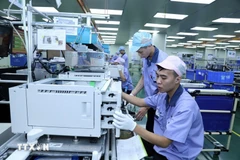
Production of electronic components at Star Engineers Vietnam Co., Ltd. in Binh Xuyen I Industrial Park, Phu Tho province (Photo: VNA)

Vietnam looks to expand fiscal space to support double-digit growth

Experts emphasise that fiscal policy should move beyond a supportive role to actively lead growth. Continued and selectively expanded tax and fee reductions could directly ease cost pressures on businesses, enabling them to sustain operations and expand investment.

Ngo Quang Hung, representative of the Vietnam Trade Office in Malaysia, introduces Vietnamese products at the Melaka International Halal Fair, held from May 16-19, 2026. (Photo: VNA)

Vietnam, Malaysia promote smart business connectivity

Malaysia is paying close attention to Vietnam’s Doi Moi (Renewal) reforms, particularly in land policies, rice production technologies and seafood industry development, as both sides seek to expand practical cooperation.

The exchange of greenhouse gas emission quotas and carbon credits is conducted on the domestic carbon credit exchange through the carbon trading system, which is interconnected with the national registration system. (Photo congly.vn)

Ministry establishes monitoring framework for carbon market

Under a new circular, the exchange of greenhouse gas emission quotas and carbon credits is conducted on the domestic carbon credit exchange through the carbon trading system, which is interconnected with the national registration system.

Le Son Phong, Deputy Director of the Da Nang Department of Science and Technology, speaks at the press conference announcing the Da Nang Venture and Angel Summit 2026. (Photo: VNA)

Da Nang to host international venture capital forum later this month

Le Son Phong, Deputy Director of the Da Nang Department of Science and Technology, said DAVAS 2026 is not merely an investment-matching event for startups, but also demonstrates the city’s commitment to promoting innovation, developing the knowledge-based economy and creating a favourable environment for technology enterprises and startups.

Visitors explore southern Vietnam's products (Photo: vNA)

Vietnam, Cambodia boost supply chain connectivity

Total two-way trade neared 10.1 billion USD in 2024, up 17.5% year-on-year and jumping to more than 11 billion USD in 2025. Vietnam’s key exports to Cambodia include apparel, iron and steel, petroleum, machinery and equipment, chemicals, and processed food. Its main imports are cashew nuts, rubber, farm produce, and industrial raw materials.

Cao Thanh Dinh, founder and CEO of ANPz Co., Ltd (All Nippon Partners) in Japan (Photo: VNA)

Resolution 68 boosts investor confidence in Vietnam’s long-term outlook

Cao Thanh Dinh, Founder and CEO of ANPz Co., Ltd (All Nippon Partners) in Japan, said that after one year of implementation, Resolution No. 68-NQ/TW of the Politburo on private sector development has sent a positive signal to investors by affirming the private sector as a key driver of sustainable and long-term development.