Foreign tourists return to My Son Sanctuary after pandemic hiatus

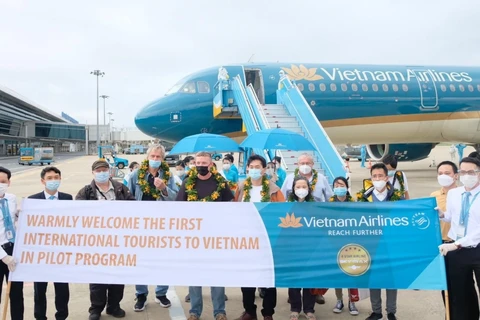
More than 40 international tourists visited My Son Sanctuary, a UNESCO-recognised world heritage site in Quang Nam province's Duy Xuyen district on November 22 after a long hiatus due to the COVID-19 pandemic.
Foreign tourists return to My Son Sanctuary after pandemic hiatus ảnh 1More than 40 international tourists visited My Son Sanctuary, a UNESCO-recognised world heritage site in Quang Nam province's Duy Xuyen district on November 22. (Photo: VNA)
Quang Nam (VNA) – More than 40international tourists visited My Son Sanctuary, a UNESCO-recognised worldheritage site in Quang Nam province's Duy Xuyen district on November 22 after along hiatus due to the COVID-19 pandemic.

During their trip, the holidaymakers enjoyed specialart performances and festivals featuring the culture of Cham people, andparticipated in folk games. They were also treated to traditional dishes.

Phan Ho, director of the management board of theheritage site, said during the suspension, Vietnamese and Indian experts, andhundreds of skilled workers had restored Tower A in the sanctuary, which is nowready to welcome visitors.

Aleksei Fanberow, a tourist from Israel, said after atwo-year pandemic hiatus, he has returned to Vietnam that is now safe withbeautiful landscapes, and friendly and hospitable people.

Apart from foreign tourists, domestic vacationers havealso registered for tours to My Son in the coming days.

Once the religious and political capital of the ChampaKingdom, the My Son Sanctuary is located within a hilly landscape in Duy Phucommune, Duy Xuyen district, about 70 km southwest of central Da Nang city and40 km from Hoi An ancient town.

It is comprised of eight groups of 71 monuments builtfrom the 7th to 13th centuries.

The sanctuary was recognised as a world culturalheritage site by UNESCO in 1999./.
VNA

See more

The “Vietnam Pavilion” at Aldea Global 2026 (Photo: VNA)

World Cup 2026: Vietnam leaves distinct mark at global cultural showcase

The “Vietnam Pavilion” at Aldea Global 2026 offers Mexican visitors and international guests an opportunity to explore the country’s rich cultural heritage, history and people through exhibitions, tourism promotion activities, traditional arts presentations and displays of representative cultural products.

Michelin Guide Vietnam recognises 11 one-Michelin star restaurants (Photo: Michelin Guide Vietnam)

Local ingredients, cultural roots propel Vietnam’s Michelin journey

One of the clearest examples is Hieu Luc, a modest fish soup eatery on Hai Ba Trung Street in Hanoi, which has been included in the Michelin Selected category for the second consecutive year. Known for its clear, delicately sweet broth made from freshwater perch and mustard greens, the restaurant serves a traditional specialty from Hung Yen province.

Delegates attending the ASEAN City Leaders Conference 2026 visit the Imperial Citadel of Thang Long on June 9. (Photo: VNA)

ASEAN city leaders explore Hanoi’s heritage sites

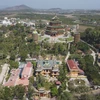
At the Imperial Citadel of Thang Long, delegates visited the Doan Mon Gate and learnt about the formation and development of the ancient capital through different historical periods at display spaces. They also explored the Kinh Thien Palace’s Dragon Steps (large stone steps with dragon carvings), regarded as the political and ceremonial centre of the imperial citadel during successive Vietnamese dynasties.

Ly Hoang Nam is Asia's No. 1 pickleball player. (Photo: webthethao.vn)

Ly Hoang Nam tops Asian pickleball rankings

Vietnam boasts five players in the DUPR Asian top 10, with Nam leading the rankings on 6,267 points ahead of competitors from the Philippines, India, Hong Kong (China) and Chinese Taipei.

Visitors to the booth of the Vietnamese Embassy at the Embassies Food and Culture Festival held in Prague, the Czech Republic, on June 6 (Photo: VNA)

Vietnamese culture, cuisine leave lasting impression in Czech Republic

Featuring more than 100 booths representing diverse cultures from around the world, the festival transformed the heart of Prague into a vibrant multicultural space where visitors could sample traditional dishes, enjoy folk performances, listen to traditional music and experience unique cultural showcases from different continents.

Vietnamese artists play traditional musical instruments at the festival held in Karlovy Vary city, the Czech Republic, on June 5. (Photo: VNA)

Vietnam culture, cuisine showcased in Czech Republic

The festival featured more than 20 booths offering traditional Vietnamese dishes, including "pho" and spring rolls, alongside activities promoting Ao Dai (Vietnamese traditonal long dress). One of the highlights was the presentation of complimentary Ao Dai to Czech residents and international visitors.

The Nguyen Dynasty (1802-1945) imperial throne, a recognised national treasure of Vietnam, officially returns to public display at Thai Hoa Palace in Hue Imperial Citadel on June 4 (Photo: VNA)

Nguyen Dynasty throne returns to Hue Imperial Citadel after restoration

The throne has been reinstated at its original central position inside Thai Hoa Palace, the ceremonial heart of the former imperial court. Its return has attracted significant interest from visitors and heritage enthusiasts eager to see one of Vietnam’s most important royal artefacts back on display.

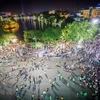
People join the “Ho Van Lantern Festival Night” programme at the special national relic site of the Van Mieu–Quoc Tu Giam (Temple of Literature) in Hanoi. (Photo: VNA)

Night-time economy drives growth of Hanoi’s cultural industries

Under the Politburo’s Resolution No. 80-NQ/TW on the development of Vietnamese culture, Hanoi has been given fresh opportunities to leverage its cultural, historical, tourism and creative assets. The city’s recently approved project on developing the night-time economy for 2026–2030, with a vision to 2045, is expected to create momentum for cultural industry growth while enhancing Hanoi’s standing as a creative and modern city with a distinctive identity.