Vietnamese fruits capture attention at Asia Fruit Logistica in Hong Kong
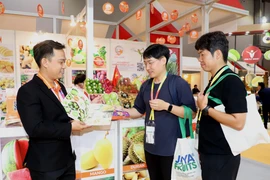
Vietnamese fruits drew significant international interest at Asia Fruit Logistica 2025, taking place from September 3–5 at the AsiaWorld-Expo in Hong Kong, China.
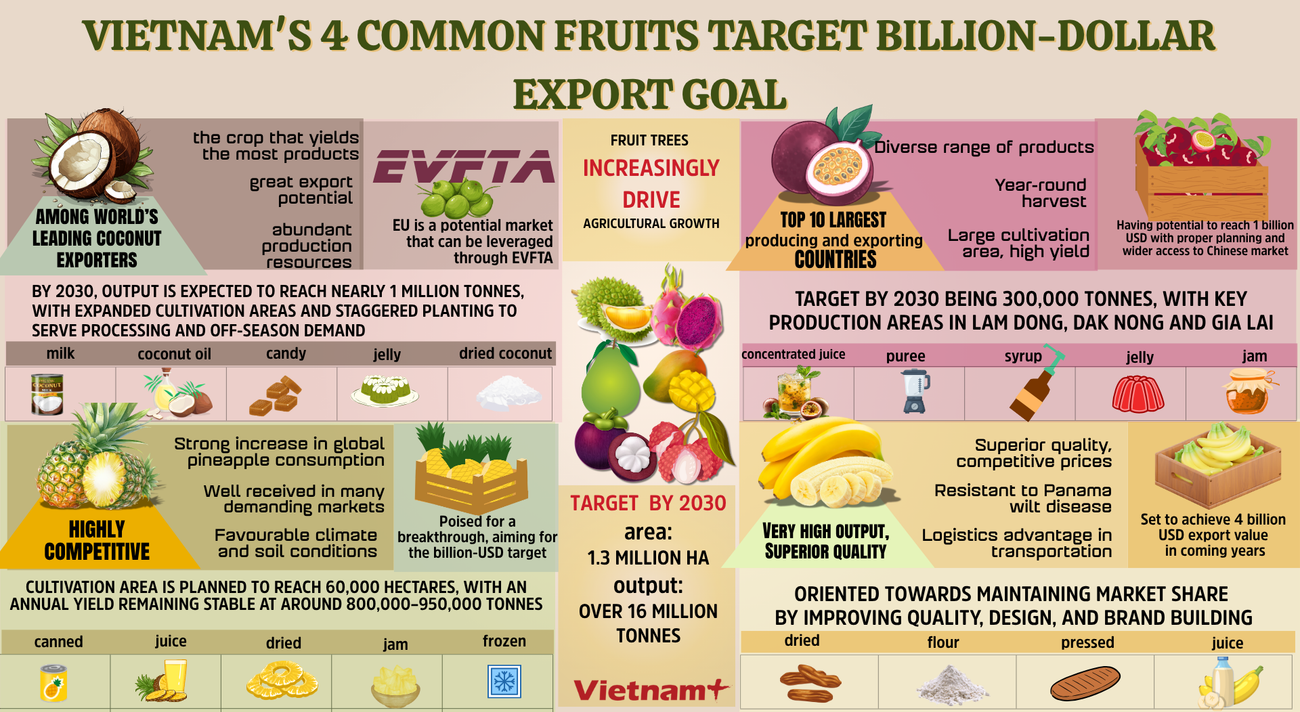
Passion fruit, banana, pineapple, and coconut are expected to become the country’s next strategic export items as they not only have substantial production capacity but also align with global consumption trends and increasingly strict import requirements.
Vietnamese fruits drew significant international interest at Asia Fruit Logistica 2025, taking place from September 3–5 at the AsiaWorld-Expo in Hong Kong, China.
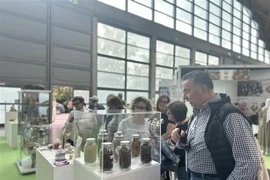
The Vietnamese booth attracted participation from 10 domestic agribusinesses, with each contributing an assortment of products on display to introduce to the Italian market.
Each displayed product will have a QR code which helps visitors easily access detailed relevant information, such as product origin, growing area, production and preservation processes, and official sales addresses.

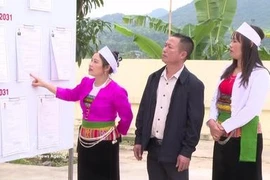
Election day for deputies to the 16th National Assembly and People’s Councils at all levels for the 2026–2031 tenure has been set for March 15, 2026. Under the regulations, voting takes place from 7.00 a.m. to 7.00 p.m. on the same day. Depending on local conditions, the Election Committee may decide to start voting earlier, but not before 5.00 a.m., or end later, but no later than 9.00 p.m. on the same day.

Decision No. 173/QD-TTg dated January 27, 2026, issued by the Prime Minister approving the strategy for promoting Vietnam’s image abroad for 2026–2030 with a vision to 2045, identifies international communication as a strategic soft-power tool serving national development. The strategy aims to position Vietnam among Asia’s leading countries in terms of national brand and image by 2045, while striving to rank in the top three in ASEAN and top 30 in the Global Soft Power Index.

The Resolution of the 14th National Party Congress sets several environmental targets for the 2026–2030 period, including maintaining forest coverage at 42 percent, cutting greenhouse gas emissions by 8–9 percent, treating and reusing 65–70 percent of wastewater in river basins, and expanding marine and coastal protected areas to at least 6 percent of Vietnam’s maritime area.

The Resolution of the 14th National Party Congress sets a target for the 2026–2030 period to achieve average annual GDP growth of at least 10%, raising GDP per capita to about 8,500 USD by 2030.

The Resolution of the 14th National Party Congress sets out key economic, social and environmental development goals and targets for the 2026–2030 period. Key social targets include raising the Human Development Index (HDI) to around 0.8; increasing life expectancy at birth to 75.5 years, with healthy life expectancy reaching at least 68 years.

The Resolution of the 14th National Party Congress outlines Vietnam’s development goals towards rapid and sustainable growth, improved living standards, and the vision of becoming a developed, high-income country by 2045.

In 2025, Vietnam performed around 1,368 organ transplants – the highest number ever recorded – making the country the leading nation in Southeast Asia in terms of the number of transplants performed each year.

Over the past 71 years of development, Vietnam’s healthcare sector has made remarkable progress, promoting scientific research, applying modern technologies, and building a comprehensive healthcare system to better meet the growing demand for medical care and treatment among the population.

Party General Secretary To Lam stressed that the principle “Culture must light the way for the nation” underscores a people-centred culture as the spiritual bedrock, endogenous strength, and embodiment of Vietnamese brainpower, propelling national development toward independence, self-reliance and self-strengthening.

Women account for 63% of the labour force and are involved in the ownership of 51% of businesses, underscoring their growing role in Vietnam’s socio-economic development and global integration.
National Tourism Year – Gia Lai 2026 will be held in Gia Lai under the theme “Gia Lai – Where the great forests meet the blue sea”, featuring a series of 244 cultural, sports and tourism events taking place throughout the year.

The Government’s action programme to implement Politburo Resolution No. 80-NQ/TW on the development of Vietnamese culture sets out specific tasks for ministries, sectors and localities to ensure coordinated implementation, monitoring and evaluation. It aims to make culture a solid foundation and an intrinsic strength of the nation.

Nine Vietnamese companies have been included in TIME magazine’s list of the 500 Best Companies in Asia–Pacific for 2026, highlighting the country’s growing corporate presence across multiple industries.

The science and technology sector posted 464,116 billion VND (17.6 billion USD) in revenue in January, up 23% year on year. According to the Ministry of Science and Technology, the sector’s contribution to GDP growth for the month was estimated at 124,065 billion VND (4.7 billion USD), up 33.3% compared with January 2025.
The National Election Council has issued a resolution announcing a list of 864 candidates running for 500 seats in the 16th National Assembly across 182 constituencies nationwide.
The latest annual survey by InterNations revealed strong satisfaction levels among expats in Vietnam, with 89% expressing contentment with the local cost of living and 87% reporting that their income supports a very comfortable lifestyle. It highlighted Vietnam's particularly competitive pricing across food, housing, transport and leisure activities.
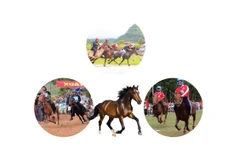
Vietnam’s traditional festivals and horse races are rooted in communal folk life, evolving as forms of wholesome recreation and sport that vividly reflect the customs and distinctive cultural identity of local communities. What distinguishes Vietnam’s traditional horse racing festivals from those elsewhere in the world is that they feature farmer “jockeys” competing on pack horses.

It has become a cherished cultural tradition that, at the beginning of each spring, the entire country enthusiastically responds to the “Tree-planting Festival in eternal gratitude to President Ho Chi Minh”, stepping up tree planting and afforestation efforts. These activities contribute to socio-economic development, disaster mitigation, greenhouse gas emission reduction, environmental improvement, and climate change adaptation.

Vietnam’s tourism sector recorded a strong surge during the nine-day 2026 Lunar New Year (Tet) holiday, welcoming an estimated 14 million visitors — up 12% year on year — with Ho Chi Minh City leading the nation in both arrivals and revenue.
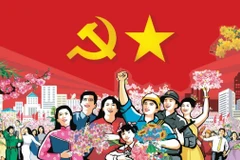
The Communist Party of Vietnam’s 100-year leadership of the Vietnamese revolution can be divided into four periods, each marking a distinct era and a crucial turning point in the country’s revolutionary journey.