Gov't asks Hanoi, HCM City to act towards safe air quality levels within 5 years

The Government has instructed the People's Committees of Hanoi and HCM City to urgently implement measures aimed at achieving safe Air Quality Index (AQI) levels within five years.

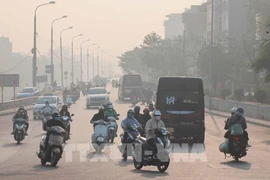
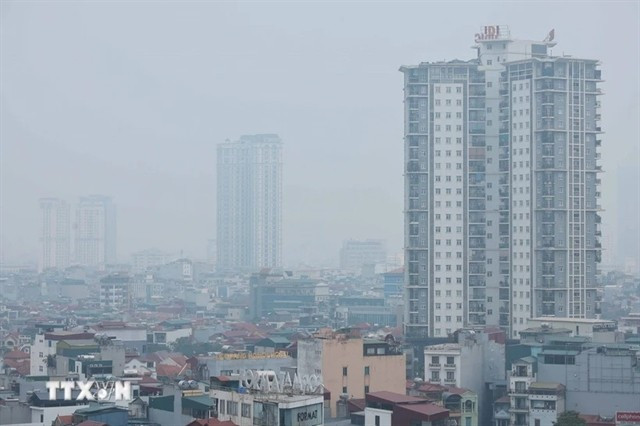
Air pollution seen in Hanoi recently. (Photo: VNA)

Hanoi (VNS/VNA) - The Government has set a goal for Hanoi and Ho Chi Minh City to bring air pollution levels within the safe threshold for human health within the next five years.

A recent notice from the Government Office, issued by Deputy Prime Minister Tran Hong Ha, details urgent measures to tackle the growing air pollution in these major cities.

The notice highlights that managing air quality is a complex, cross-sectoral challenge, requiring coordinated efforts.

Despite the Government’s ongoing focus on controlling air pollution, levels continue to rise, particularly in the two biggest cities of the country, posing significant risks to public health and economic development.

The primary sources of pollution are emissions from transport, construction, industrial activities, and agriculture, all of which contribute large amounts of pollutants. These emissions are not effectively controlled and the enforcement of environmental regulations remains inconsistent.

To address this growing crisis, the Deputy PM has called on relevant ministries and agencies to implement specific, actionable solutions, with a clear roadmap for improvement.

The Government has instructed the People's Committees of Hanoi and HCM City to urgently implement measures aimed at achieving safe Air Quality Index (AQI) levels within five years.

These measures include conducting emissions inventories and assessing air quality, developing five-year and annual action plans with clear targets, assigning responsibilities to relevant sectors and setting annual emission reduction quotas.

The plans also aim to encourage public transport use, transition to low-emission, green vehicles and strengthen local emission standards, with stricter policies expected to take effect by May.

Additionally, the measures focus on improving urban waste management, particularly controlling pollution from construction and development activities, phasing out outdated, high-emission vehicles and establishing low-emission zones.

The government is prioritising stricter monitoring of industrial emissions. Authorities in Hanoi and HCM City are tasked with tightening environmental compliance checks and enforcing penalties for violations. There are also plans to relocate and upgrade industrial clusters into more sustainable industrial zones.

The expansion of air monitoring stations will provide real-time data, ensuring transparency for both authorities and the public. Government agencies will also ramp up public awareness campaigns to foster environmental responsibility among individuals and businesses.

The Ministry of Agriculture and Environment, along with relevant agencies, has been tasked with developing technologies for recycling rice straw and other agricultural by-products, while promoting low-emission farming models. It is expected to issue new vehicle emissions standards by the end of this month.

Ministries are required to review policies to support the recycling of construction waste into raw materials for other industries, helping reduce landfill.

A joint task force from the Ministry of Agriculture and Environment and the Ministry of Industry and Trade will begin inspecting high-pollution industrial clusters and craft villages in Hanoi, HCM City and other affected regions. The inspections, set to be completed by July, are aimed at major polluters and will enforce stricter regulations.

Local authorities will be required to update emissions databases and connect them to national monitoring networks.

There will also be tougher enforcement of laws against illegal waste dumping and burning, with increased penalties for serious violations./.

VNA
See more

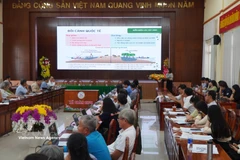
Tram Chim National Park and the Mekong Conservancy Foundation (MCF) organise the workshop on sustainable restoration of wetland ecosystems in the Mekong Delta on March 24. (Photo: VNA)

Solutions sought to restore Mekong Delta wetland ecosystems

Experts at the workshop described wetlands as the “ecological heart” of the Mekong Delta, playing a vital role in water storage and regulation, climate moderation, carbon sequestration, biodiversity conservation, and livelihoods for millions of people through aquaculture, agriculture, and ecotourism. These ecosystems also help reduce disaster risks and enhance climate resilience.

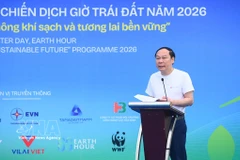
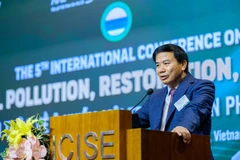
Deputy Minister of Agriculture and Environment Le Cong Thanh speaks at the ceremony to launch major environmental campaign. (Photo: VNA)

Vietnam calls for collective action on water, air, climate and sustainable future

Deputy Minister of Agriculture and Environment Le Cong Thanh underscored that water, climate, and energy are fundamental pillars of sustainable development. In Vietnam, water resources and weather patterns influence every aspect of life, from food and water security to livelihoods, ecosystem stability, and economic growth.

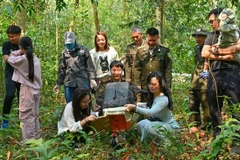
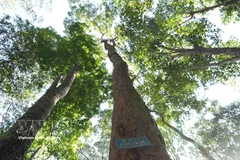
The population of trac (Dalbergia cochinchinensis) trees is strictly protected in the Dak Uy special-use forest. (Photo: VNA)

Vietnam highlights forests’ role in sustainable growth on International Day of Forests

According to Director of the Forestry and Forest Protection Department Tran Quang Bao, forests hold a strategic position in Vietnam’s development. They provide livelihoods for millions of people, particularly ethnic minorities and communities living in mountainous and forested areas, while contributing to environmental protection and disaster prevention.

The World Meteorological Day 2026 carries the theme “Observing Today, Protecting Tomorrow”. (Photo: VNA)

Ministry guides response to World Meteorological Day, World Water Day 2026

The Ministry of Agriculture and Environment urged ministries, agencies, local authorities, embassies, and international organisations to hold practical and effective activities aligned with the themes. Suggested activities include displaying eco-friendly banners, posters, and billboards in public spaces, streets, government offices, and other suitable venues to raise public awareness of the events’ importance.

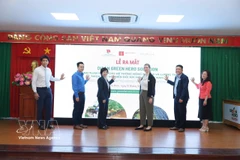
Delegates launch the Green Hero Solution project in Ho Chi Minh City on March 12, 2026. (Photo: VNA)

Vietnam, Denmark cooperate to pilot circular food model

Under the “Green Hero Solution” project, organic food waste will be collected from partner organisations and businesses and processed into compost. The compost will then be used at two Food Bank community gardens, where fresh vegetables will be grown to support disadvantaged households.

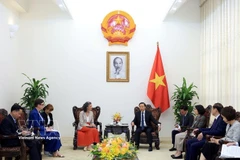
Deputy Prime Minister Tran Hong Ha meets with UNDP Resident Representative Ramla Khalidi and WHO Representative in Vietnam Angela Pratt in Hanoi on March 11. (Photo: VNA)

Vietnam steps up partnership with UNDP, WHO in tackling air pollution

Highlighting Vietnam’s close partnership with the two UN agencies, Deputy PM Ha highly appreciated their important contributions to the country’s development over the years, particularly in policy consultation, institutional reform and promoting sustainable development initiatives.

The groundbreaking ceremony for the Phu Cu waste-to-energy plant project in Doan Dao commune, Hung Yen province, on March 6 (Photo: VNA)

Hung Yen breaks ground on 4 trillion VND waste-to-energy plant

With a population of about 3.5 million, Hung Yen generates around 1,850 – 2,000 tonnes of household waste each day, along with about 1,000 tonnes of waste from production and business establishments, posing a major challenge for the locality.