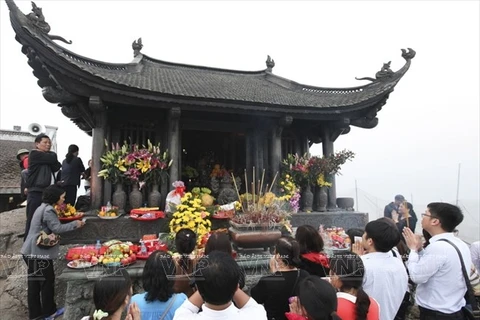
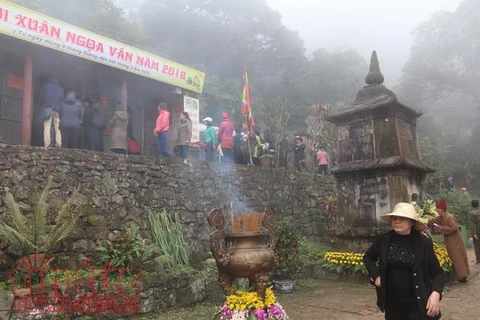
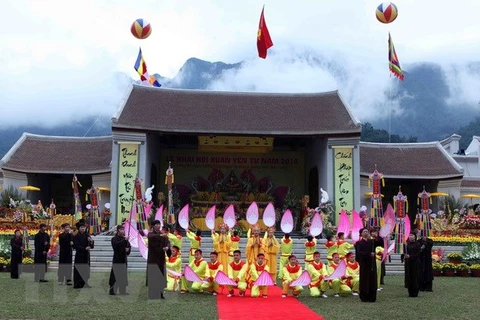
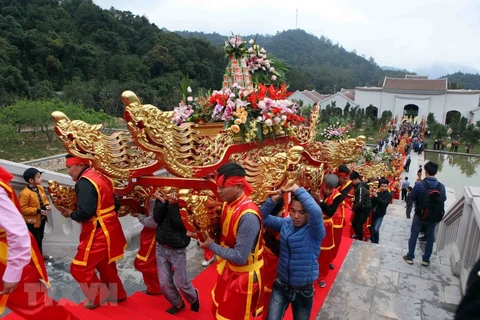
In the first two months of 2026, Ninh Binh welcomed over 5.4 million visitors, up 9.9% year-on-year, generating nearly 5.84 trillion VND (221 million USD) in tourism revenue, up 15.9%. During the 2026 Lunar New Year holiday alone, the province received 2.38 million visitors, an 81.4% increase from the previous year, ranking second nationwide.
In 2025, Vietnam’s tourism sector recorded its highest-ever number of visitors, welcoming more than 21.5 million international arrivals, up more than 20% from 2024, and serving over 135.5 million domestic travellers. Tourism revenue also surpassed 1 quadrillion VND (nearly 38 billion USD). The sector has become a bright spot of the economy, with Vietnam ranking among the world’s fastest-growing tourism destinations.
With 28 nationally-recognised intangible cultural heritage elements, Thanh Hoa province has prioritised integrating conservation with tourism development. Digital transformation, in particular, is seen as a crucial bridge connecting tradition with innovation, helping heritage sites become more accessible and engaging.
Mui Ne was selected among the global top 10 destinations for its ability to deliver highly personalised travel experiences, from leisure retreats to adventure-based activities.
Located at the gateway linking the northern midland and mountainous region with Hanoi, Phu Tho benefits from convenient transport infrastructure, enabling the development of interregional and international tourism routes.
Quang Ninh province aims to build culture as a core driving force of development, with cultural industries and the creative economy contributing around 9% of GRDP by 2045.
Despite global tourism headwinds linked to geopolitical conflicts, transport disruptions and surging travel expenses, Vietnam’s tourism sector has sustained strong growth, underscoring the destination’s resilience and rising international profile.
Quang Ninh province targets 22 million visitors in 2026, including 5.2 million international arrivals, with projected tourism revenue of around 55 trillion VND (2.09 billion USD)
Despite encouraging progress, experts note that clearer strategies are needed to substantively attract a higher proportion of international buyers, shifting the focus from increasing numbers to targeting the right markets and segments.
During the programme, participants will attend intensive courses delivered by AI technology experts, China–ASEAN policy researchers, and tourism specialists. The curriculum focuses on the application of big data in tourism policy planning, the development of cross-border tourism products, and the building of joint tourism brands.
Sales of tours, services and tourism products at the 22nd Ho Chi Minh City Tourism Festival 2026, held in early this month by the municipal Department of Tourism and the city’s Tourism Association, generated around 120 billion VND in revenue.
Phu Quoc is positioned as a compelling alternative – even a potential rival to Phuket – for travellers seeking authenticity in Southeast Asia. Its appeal lies not only in scenic beauty and fresh seafood, but also in the harmonious coexistence of modern tourism and enduring local culture.
Vietnam has in recent years undergone a notable transformation in its tourism development strategy, placing a strong emphasis on nature-based and eco-tourism. This shift is not merely aligned with global trends, but represents a necessary step towards safeguarding valuable natural resources, while appealing to a growing segment of environmentally conscious travellers.
Vietnam’s tourism sector has set an ambitious target of welcoming between 45-50 million international visitors by 2030, under an adjusted national tourism development plan for the 2021–2030 period with a vision to 2045.
The moves come as the carrier deepens ties with local authorities to fuse rail transport with tourism and lift overall service quality.
China and the Republic of Korea (RoK) continued to lead as Vietnam’s largest source markets in the quarter, with 1.4 million and 1.3 million visitors respectively, accounting for around 40% of total arrivals.
Nestled in the remote border area of Nghe An province, Huoi Man hamlet is often affectionately referred to by local residents and visitors as the “hamlet at the top of the sky.”
Cua Tung, Cua Viet and Con Co special zone are identified as three key destinations of marine tourism, and to transform this “tourism triangle” into premium and peaceful resorts, a new strategy is needed to enhance attractiveness to high-end travellers seeking private spaces as the strength of these places lies in their pristine and tranquil beauty.
Under a resolution of the provincial Party Congress for the 2025–2030 term, the locality prioritises spatial planning of the marine economy, focusing on emerging sea-based industries linked with environmental protection and national defence. Located 56 nautical miles offshore, Phu Quy is a central pillar of this vision.