Hanoi’s Hang Luoc Flower Market beckons with nostalgic charm

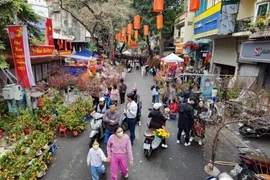
The first whispers of Tet can be felt on Hang Luoc Street well before the 15th day of the lunar December.

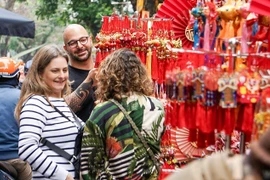
On Hang Luoc street (Photo: VNA)

Hanoi (VNA) – Nestled in the heart of Hanoi’s Old Quarter, Hang Luoc Flower Market is an iconic destination where the festive spirit of the Lunar New Year (Tet) first takes flight.

This century-old market preserves the enchanting allure of old Hanoi, evoking cherished memories of a bygone era for locals and visitors alike.

A blossoming tradition

Long before Hang Luoc Flower Market gained fame, Tet flower markets were an intrinsic part of Hanoi's cultural fabric. The residents of Thang Long, both past and present, are renowned for their discerning tastes, particularly their love for flowers and ornamental plants. This appreciation transformed into an indispensable Tet custom - adornment of homes with vibrant blooms - giving birth to special markets dedicated to Tet flowers.

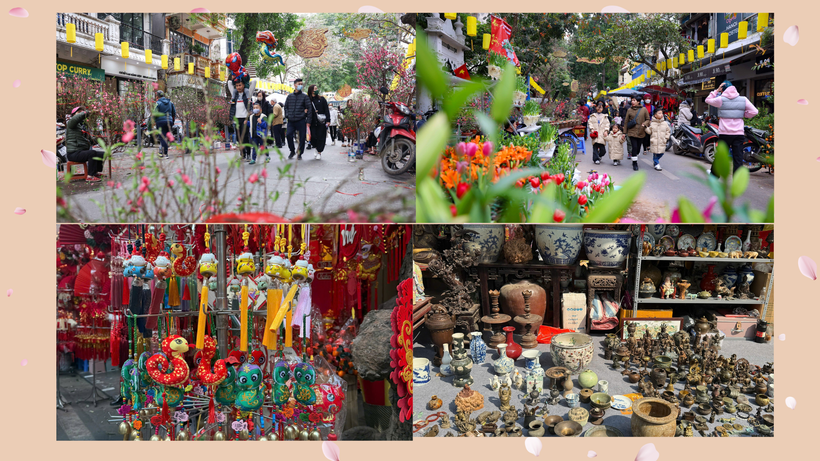
Historian Nguyen Cong Uan, in his book “Hanoi in the First Half of the 20th Century”, noted that the original Tet flower market was held in the courtyard and outside the triple-arched gate of Huyen Thien pagoda next to Dong Xuan Market. Later, it found a new home on Hang Luoc Street, stretching from the iron bridge to the Hang Ma intersection. Annually, from the 20th day of the last lunar month, flower growers from suburban areas like Ngoc Ha, Huu Tiep, Nghi Tam, Quang Ba, and Nhat Tan converge, painting the streets with a vivid tapestry of peach blossoms, kumquat trees, chrysanthemums, camellias, gladiolus, and dahlias. The bustling crowds of shoppers and sightseers create a scene uniquely Hanoian, heralding the arrival of spring.

Nostalgic charm of the past

The first whispers of Tet can be felt on Hang Luoc Street well before the 15th day of the lunar December. Early-blooming peach blossoms from Nhat Tan and golden kumquats from Tu Lien begin to appear. Their colours, pink, green, and gold, resemble tiny flames that warm the crisp, chilly air of the Old Quarter.

As the countdown to Tet nears completion, the Hang Luoc Flower Market bursts into life. Flower and plant vendors fill every nook and cranny, transforming the bustling commercial street into a small, vibrant forest.

Traditional Tet decorations such as lanterns and folk paintings from Dong Ho, Hang Trong, and Kim Hoang add to the festive atmosphere.

Ceramic pots and vases from Bat Trang, transported across the Red River, await their roles in the flower arrangements that will adorn Hanoi's homes.

A market for all generations

Today, Hang Luoc Flower Market stretches beyond its namesake street to include Hang Chai, Hang Ruoi, Hang Ma, and Hang Dong. While it retains its nostalgic charm, the market has also embraced modernity, offering a wider variety of flowers and colourful Tet decorations.

Beyond flowers and ornamental plants, young visitors can browse handcrafted souvenirs, zodiac animal figurines, and other Tet-themed items. Meanwhile, older generations may find joy in the antique stalls selling nostalgic artifacts such as opium pipes, lime pots, bronze statues, oil lamps shaped like the 12 zodiac animals, incense, and ancient coins.

During its busiest days, the market opens from early morning until late at night, only closing when New Year's Eve arrives.

For over a century, the market has rarely seen a dull moment. Despite the proliferation of Tet flower markets across Hanoi, it remains uniquely captivating, holding a charm impossible to replicate./.
VNA

See more

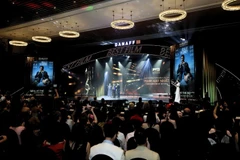
A performance at the opening ceremony of the Hung Kings Temple Festival and the 2026 Ancestral Land Culture and Tourism Week on late April 17 (Photo: VNA)

Hung Kings Temple Festival, associated tourism week kick off

The annual festival serves as a major national cultural event, offering an opportunity for people across Vietnam and overseas Vietnamese communities to pay tribute to their ancestors, express gratitude, and strengthen the great national solidarity.

A ritual at Hue Nam Temple Festival (Photo: VNA)

Hue Nam Temple Festival: From imperial relic to distinctive cultural celebration in Hue

Historically known as Ngoc Tran Son Tu, the temple was renamed Hue Nam during the reign of King Dong Khanh in the late 19th century, symbolising royal gratitude to the Mother Goddess. It is also the only temple in Hue that harmoniously combines royal ceremonial elements with folk religious practices, creating a distinctive blend of court ritual and popular belief.

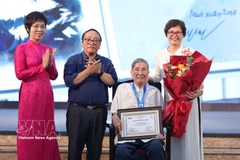
Participants in the 20th Cong hien (Devotion) Awards presentation ceremony in Hanoi on April 15 (Photo: VNA)

Devotion Awards mark two decades of honouring excellence in music, sports

Nguyen Thien Thuat, Editor-in-Chief of the The Thao & Van Hoa newspaper and Head of the organising board of the awards, said, noting that their achievements reflect the spirit of the Politburo’s Resolution No. 80, which emphasises preserving national cultural values while selectively absorbing the essence of world culture.

Artisans and students take part in cultural activities and exchanges in the Xoan singing performance space at Hung Lo ancient communal house in Phu Tho province (Photo: VNA)

Ancestral legends revived through contemporary performance

Beyond cultural value, well-organised festival programmes linked with tourism and media can contribute to the development of cultural industries and enhance Vietnam’s cultural soft power, positioning heritage-based events as distinctive national cultural brands in the international arena.

Khue Van Cac (Khue Van Pavilion) stands as a defining cultural symbol of Hanoi, closely associated with Vietnam’s long-standing tradition of valuing education and honouring knowledge. (Photo: VNA)

Greater efforts needed for heritage to shape Hanoi’s identity

As suggested by UNESCO experts, heritage should be approached as an integrated system encompassing space, people and everyday life. This perspective can inform urban planning, cultural tourism development and the creation of clear economic drivers.

Participants at the gathering (Photo: VNA)

Lao, Cambodian students welcome traditional New Year in Ho Chi Minh City

In his speech, Vice Chairman of the municipal People’s Committee Nguyen Manh Cuong said the municipal Party organisation, authorities and people always value the close ties and solidarity among Vietnam, Laos and Cambodia. He described the three nations’ longstanding ties, forged through shared hardships, as an invaluable spiritual asset and a bedrock for sustainable development.

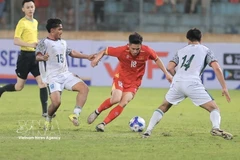
Vietnamese kickboxers win 32 gold medals at the Kickboxing World Cup 2026. (Photo: Vietnam Kickboxing Federation)

Vietnam finish third at Kickboxing World Cup 2026

According to Vu Duc Thinh, President of the Vietnam Kickboxing Federation, the strong results reflected careful preparation by local training centres and the determination of Vietnamese fighters. The team’s participation, funded largely through socialised and local resources, also demonstrated growing support for the development of kickboxing in Vietnam.