HCM City’s sea dyke aims to stop waterlogging

The Ministry of Agriculture and Rural Development is seeking approval from the Government to build a Vung Tau – Go Cong sea dyke in an effort to combat waterlogging in Ho Chi Minh City.
HCM City’s sea dyke aims to stop waterlogging ảnh 1Construction of the Vung Tau - Go Cong sea dyke is expected to help HCM City cope with waterlogging, according to experts. (Photo courtesy of sggp.org.vn)

HCM City (VNS/VNA) - The Ministry ofAgriculture and Rural Development is seeking approval from the Government tobuild a Vung Tau – Go Cong sea dyke in an effort to combat waterlogging in HoChi Minh City.

In recent years, the city has spent a great dealof money to prevent waterlogging, which occurs when the soil is saturated withwater.

However, rapid urban development, together withpoor management and inefficient urban planning, has reduced the city’s waterstorage space and limited water transport capacity of the city’s canal system.

The impact of climate change and rising sealevels have also increased flooding and salt intrusion in the Dong Thap Muoiarea and HCM City, according to experts.

Heavy rains along the Dong Nai – Sai Gon River,together with high tides, have placed pressure on the city’s drainage system,worsening waterlogging.

The city is a flood-prone spot as it is locateddownstream of the Dong Nai River system, and has low-lying terrain, accordingto Dr Tran Ba Hoang at the Southern Institute of Water Resources Research.

The proposed Vung Tau – Go Cong sea dyke wouldbe extended from Tien Giang province’s Go Cong commune to a point 5km from BaRia - Vung Tau province’s Vung Tau city, where it would connect with anotherdyke 13km long extending to Can Gio Biosphere Reserve in HCM City.

The main dyke would be 28km long and 25m wide,with an average water depth of 6.5m. The dyke scale would be 600m to 2,000mwide.

In addition to the main dyke, the projectincludes construction of multiple drainage ditches, a Long Tau sluice, and damsalong Dong Tranh and Soai Rap rivers.

The project is based on a regional irrigationmaster plan, the technological capacity of Vietnam, and similar projectexperiences from the Netherlands, the Republic of Korea and Japan.

Total investment of the Vung Tau – Go Cong seadyke project would be about 74 trillion VND (3.2 billion USD).

To be implemented in three phases, it would alsocontribute to socio-economic development in the region, experts said.

In addition to preventing floods and salineintrusion in HCM City, the project would bring other benefits.

Professor Nguyen Quang Kim, president of WaterResources University, said that even if the sea level increases by 75cm by2100, the Vung Tau – Go Cong sea dyke would still prevent floods across thedownstream of the Dong Nai –Sai Gon River and canal system.

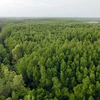
The project would help conserve the Can Giomangrove forest ecosystem, since it would leave an open space at the Ganh RaiGulf, allowing a natural exchange of fresh and salt water in Can Gio.

Compared to other projects, this proposal wouldbe less harmful to the environment.

Meanwhile, Dr Nguyen Ba An from the DevelopmentStrategy Institute under the Ministry of Planning and Investment said HCM Cityand neighboring areas would see less damage if the sea dyke was completed.

As it does not require land clearance, the dykeis expected to be completed within two to three years and the ditches within threeto four years.

In general, construction progress would notaffect the Can Gio forest and traffic to Cai Mep – Thi Vai deep-water port,while in the next 70 years, it would not affect water traffic to HCM City.

For locals who now grow clams at the river gateand outside Can Gio forest, authorities will help them find jobs in travel orservice industries.

The Vung Tau – Go Cong sea dyke project is alsoexpected to lead to the formation of new urban areas along the river and seacoasts.-VNS/VNA
VNA
See more

Vice Chairman of the Hanoi People’s Committee Nguyen Manh Quyen receives Sylvain Ouillon, Chief Representative of the French National Research Institute for Sustainable Development (IRD) in Vietnam (Photo: Hanoi Moi)

Hanoi strengthens ties with IRD to tackle air pollution

Vice Chairman of the Hanoi People’s Committee Nguyen Manh Quyen on November 6 received Sylvain Ouillon, Chief Representative of the French National Research Institute for Sustainable Development (IRD) in Vietnam, to discuss potential cooperation in air quality monitoring and pollution reduction in the capital city.

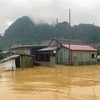
Houses inundated by storm-triggered flooding. (Photo: VNA)

Central, Central Highlands localities race to recover from Storm Kalmaegi

According to Vietnam Disaster and Dyke Management Authority (VDDMA), the storm left five people dead and six injured. As of 7 a.m. on November 7, 52 houses had collapsed and 2,593 others were damaged or unroofed, including 2,412 in Gia Lai province. Nine fishing vessels were reported sunk.

High waves in Ly Son island, Quang Ngai province due to Typhoon Kalmaegi. (Photo: VNA)

Central, Central Highlands localities respond to Typhoon Kalmaegi

As Typhoon Kalmaegi, the 13th storm to hit the East Sea this year, intensifies and heads toward Vietnam’s central coast, localities across the central and Central Highlands regions, including Dak Lak, Lam Dong, Da Nang and Quang Ngai, have activated their highest-level disaster response measures to ensure the safety of people and property.

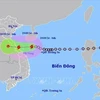
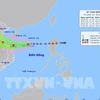
A map released at 2pm on November 4, tracking the path of Typhoon Kalmaegi (Source: National Centre for Hydro-Meteorological Forecasting)

PM urges proactive measures in response to Typhoon Kalmaegi

As Typhoon Kalmaegi is expected to enter the East Sea on the morning of November 5, with sustained winds of level 13–14 and gusts reaching level 17, Prime Minister Pham Minh Chinh has ordered ministries, sectors, and local authorities to implement the highest-level response measures to protect lives and minimise damage.

Residents in the buffer zone of the UNESCO-recognised Western Nghe An Biosphere Reserve (Photo: VNA)

Vietnam's World Biosphere Reserves eye to become ideal destinations

Vietnam's World Biosphere Reserves have truly become a rendezvous for integration, cooperation, and the exchange of information and experiences among countries and international organisations in the field of conservation and sustainable development, as well as an ideal destination for domestic and international tourists, heard a conference in the central province of Khanh Hoa on November 3.

Heavy rain and prolonged flooding have caused deep inundation, making transportation difficult. (Photo: VNA)

Heavy downpours, floods leave 37 dead, five missing

In addition, floods have submerged and damaged 7,897 hectares of paddy and crops, and 64,356 livestock and poultry have died or been swept away. Across the nation, 103 houses have collapsed or been washed away, 451 others damaged, and 12,676 flooded.

Heavy rain causes severe flooding on many roads across Nghe An province on November 3. (Photo: VNA)

Storm Kalmaegi intensifies, authorities warn of flooding and landslides

From early November 3 to late November 4, areas from Ha Tinh to Da Nang and eastern Quang Ngai are expected to experience very heavy rainfall — 200–300mm on average, and up to 600mm in some places. Areas in Ha Tinh province, the northern part of Quang Tri province, and the eastern part of Quang Ngai province may see 100–200mm of rain, with localised totals exceeding 350mm.

Farmers harvest rice in the Mekong Delta. (Photo: VNA)

Agricultural sector to cut at least 15% greenhouse gas emissions by 2035

The project on low-emission crop production for the period for 2025-2035, with a vision extending to 2050, focuses on high-emission crops such as rice, cassava, sugarcane, coffee, and bananas. It aims to pilot at least 15 farming models nationwide that are ready for carbon credits and meet international standards.

Soldiers transport rice to distribute to flood-hit residents on October 31. (Photo: VNA)

PM orders urgent support for flood-hit localities

To ensure residents' safety and prevent hunger and disease outbreaks, the PM asked the Minister of Finance to immediately allocate rice from national reserves to flood-hit communities, based on requests from provincial authorities, including Quang Ngai. Implementation results should be reported to the PM by October 31.

High tides hit many areas in Can Tho city. (Photo: VNA)

JICA provides over 9 billion VND to help Can Tho improve drainage system

Japan's Fukuoka city will share its experience and advanced technologies to help Can Tho tackle three major issues: flood damage and untreated wastewater discharge, inefficient management of wastewater treatment plants, and low public awareness about connecting private drains to public systems.