National environmental protection planning project for 2021-2030 adopted

Deputy Prime Minister Tran Hong Ha on July 8 signed a decision approving the national environmental protection planning project for the 2021 – 2030 period, with a vision to 2050.

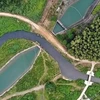
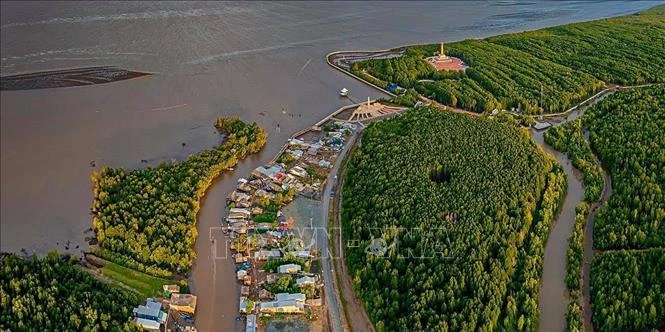
Ca Mau Cape seen from above (Photo: VNA)

Hanoi (VNA) – Deputy Prime Minister Tran Hong Ha on July 8 signed a decision approving the national environmental protection planning project for the 2021 – 2030 period, with a vision to 2050.

The planning project’s objectives are to proactively prevent and control environmental pollution and degradation; to restore and improve environmental quality; and to prevent decline and enhance biodiversity in order to ensure the people's right to live in a healthy environment on the basis of rational spatial arrangement and management zoning of environmental quality.

It also aims to direct the establishment of nature reserves and biodiversity conservation areas; form centralised waste treatment zones at the national, regional, and provincial levels; orient the development of national and provincial environmental monitoring and warning networks; and promote sustainable socio-economic development towards green economy, circular economy and low-carbon economy, which is harmonious with nature, and environmentally friendly, and actively responds to climate change.

Specifically, the direction of environmental zoning will be uniformed on a national scale based on criteria of environmental sensitivity, which are prone to damage from pollution impacts. This aims to minimise negative impacts on the lives and normal development of human and creatures.

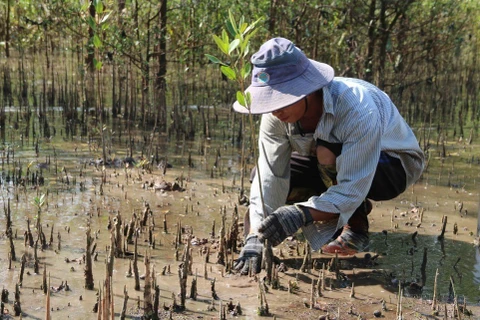
Meanwhile, natural values, biodiversity and natural heritage will be preserved to restore and maintain natural ecosystems, and prevent the trend of biodiversity loss on the basis of consolidating, expanding, establishing and effectively managing nature reserves, biodiversity corridors, high biodiversity areas, important natural landscapes, important wetlands and conservation facilities to store, conserve and develop endemic, endangered and rare genetic resources, and plant and animal varieties.

By 2030, the total area of the protected nature reserves nationwide is expected to reach about 6.7 million hectares.

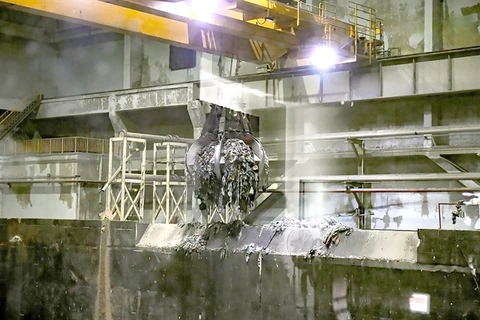
Centralised waste treatment zones at the national, regional, and provincial levels will be formed with suitable capacity scales and treatment technologies, thus meeting the requirements of receiving and processing the entire amount of domestic solid waste, normal industrial solid waste and hazardous waste generated nationwide, minimising the amount of solid waste directly buried, classifying waste at source, and promoting recycling and reuse of waste.

Accordingly, by 2030, at least two national-level centralised waste treatment zones and at least seven regional-level ones in socio-economic regions during the planning period will be set up, and at least one provincial-level in each province or centrally-run city.

As for the national environmental monitoring and warning network, environmental monitoring and warning stations will be built at inter-regional, inter-provincial, and cross-border areas, and those of important significance for the country’s nature conservation and socio-economic development.

Under the planning project, by 2050, Vietnam aims to achieve good environmental quality, ensure a healthy living environment for its people, effectively conserve biodiversity and maintain ecological balance. It will also actively respond to climate change, and advance towards sustainable development through a green transition based on the development of circular economy, green economy, and low-carbon economy, with goals of achieving net-zero emissions by 2050 and ensuring environmental security associated with rapid and sustainable socio-economic development.

To that end, actions will be taken to improve public awareness; perfect mechanisms, policies and laws relating to environmental protection; speed up administrative procedures; increase the application of scientific-technological advances and digital transformation, and enhance international cooperation in this field./.
VNA

See more

A stump-tailed macaque (Macaca arctoides) is handed over to the Cam Lo–Dong Ha forest ranger station in Quang Tri province on January 27, 2026 (Photo: VNA)

Rare primate handed over to Phong Nha - Ke Bang National Park

A stump-tailed macaque (Macaca arctoides) was handed over to the Centre for Rescue, Conservation, and Development of Creatures under the Management Board of Phong Nha - Ke Bang National Park in Quang Tri province on July 21, for rehabilitation and eventual release into the wild.

Two Red Lories (Eos rubra) found among the 104 wild animals being kept without documentation proving their lawful origin in Phuoc Thanh commune, Tay Ninh province. (Photo published by VNA)

Criminal proceedings launched against case of illegal keeping, trading of 104 wild animals

They recorded a total of 104 wild animals, comprising 92 African spurred tortoises (Geochelone sulcata) of various sizes, six Red Lories (Eos rubra) and six Green-cheeked Parakeets (Pyrrhura molinae). Authorities said the animals are subject to management under Vietnam's forestry legal regulations and are listed in Appendix II of the Convention on International Trade in Endangered Species of Wild Fauna and Flora (CITES).

BUYO Bioplastics' biodegradable plastic products are made from brewer's grains and sugarcane bagasse. (Photo: nhandan.vn)

Vietnam urged to shift from plastic waste treatment to full life-cycle management

For years, efforts to tackle plastic pollution in Vietnam have focused mainly on waste collection, recycling and disposal. However, as sustainable development and green trade standards become increasingly important, specialists argued that a broader approach is needed, covering everything from product design and material selection to production, consumption and recycling.

Bang Mo volcano in Lam Dong province (Photo published by VNA)

Lam Dong optimises value of UNESCO Dak Nong Global Geopark

Alongside conservation, Lam Dong aims to tap the geopark's tourism potential through geological, ecological and community-based tourism. Infrastructure and tourism development projects must ensure that heritage values, landscapes and the natural environment are preserved.

Dr. Dang Trung Phuoc (left) is introducing the history and origin of the Pinhey sand dunes (Photo: VNA)

Vietnamese Canadian scientist revives forgotten ecosystems

From restoring an ancient sand dune ecosystem in Canada to promoting the conservation of Vietnam's coastal dunes, native forests and ecological corridors, Vietnamese-born scientist Dang Trung Phuoc has remained committed to using science to revive ecosystems long misunderstood or neglected. His quiet but sustained efforts reflect both a scientist's responsibility to the communities he serves and the enduring commitment of a Vietnamese expatriate to his homeland.

Police and military forces work together to rescue people and assist local residents in affected areas. (Photo: VNA)

PM orders proactive response to heavy rainfall in northern mountainous region

To minimise casualties and damage to public and private property, the PM instructed ministries, sectors and local authorities to strictly implement directions issued by Party General Secretary and State President To Lam, as well as the Government's directives on strengthening disaster prevention and response in 2026.

A view of the Ea So Nature Reserve in Dak Lak province (Photo: VNA)

Rare wild animals released into natural habitat in Dak Lak

Among them are two species classified under Group IB of Vietnam's protected wildlife list, namely the Bengal slow loris (Nycticebus bengalensis) and the Sunda pangolin (Manis javanica). Both are endangered forest species protected under Vietnamese law and are prohibited from commercial exploitation or use.

A large-timber plantation model in Gia Lai province (Photo: VNA)

96-million-USD project promotes agroforestry to cut emissions

The Reduction of Emissions in the Central Highlands and South Central Coast of Vietnam (RECAF) project will run from 2026 to 2031 across the provinces of Dak Lak, Gia Lai, Lam Dong, and Khanh Hoa covering about 145,000ha, according to the International Fund for Agricultural Development (IFAD).

Crested goshawks are handed over by the People's Committee of Dong Le commune, Quang Tri province. (Photo: VNA)

Quang Tri rescues six rare wild animals

The animals are now receiving quarantine, treatment and specialised care. Once recovering their physical condition and wild behaviour, they will be reassessed for release back into the wild.

The Ministry of Industry and Trade has reported initial signs that the fuel is helping reduce emissions and protect the environment. (Photo: VNA)

E10 biofuel shows initial environmental benefits: Ministry

An official said the initial results indicate the nationwide rollout has begun to achieve its intended objectives, but more comprehensive monitoring over a longer period, with a wider observation network and more frequent measurement, is needed for a precise and objective assessment.

Forest development in Phan Son commune, Lam Dong province. (Photo: nhandan.vn)

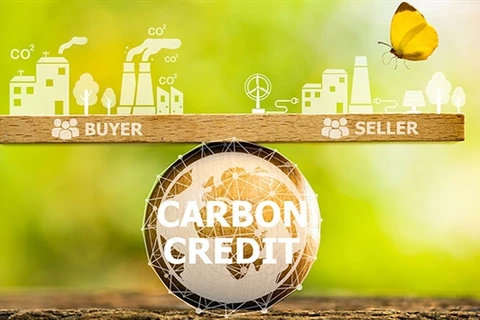
Vietnam lays groundwork for transparent carbon market

Experts say the launch of the trading platform is only the first step. The long-term success of the market will depend on a transparent system backed by robust measurement, reporting and verification (MRV) standards to ensure every transaction reflects genuine emissions reductions.