Hanoi (VNS/VNA) - Vietnam is highly committed to transforming towards green practices across various industries, including the car industry.
After Prime Minister Pham Minh Chinh made commitments at COP26, the government has implemented strong and drastic measures, such as Decision 876 in July 2022, which outlines a roadmap for the transportation sector to achieve net-zero emissions by 2050.
So far, 57 out of 63 localities in the country have issued action plans to implement Decision 876, and two out of five ministries have also developed their own action plans. The remaining government entities are in the process of developing their own plans as well.
This indicates a widespread and coordinated effort by the Vietnamese government at both the national and local levels to drive the green transition, especially in the critical transportation sector.
Green transformation is a global imperative, but Vietnam is still in the early stages of implementation compared to other countries. This means the country has a lot of work ahead to build the necessary legal, institutional and policy frameworks.
In the transportation sector, road transport is the largest contributor to greenhouse gas emissions, responsible for around 85% of the total emissions from the sector or approximately equivalent to 32 million tonnes of CO2. This makes the transition to clean energy sources in road transport a critical priority.
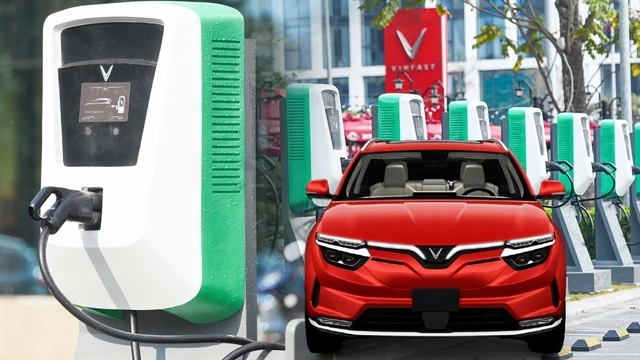
The Government has demonstrated strong and clear policies supporting the energy transition and the shift to electric vehicles (EVs). A roadmap for this transition already exists, primarily employing support measures like special consumption tax and registration fee reductions for the EV sector.
However, for the green transformation to succeed, the cooperation of the people is essential. Therefore, it is crucial for the Government to announce a clear roadmap to phase out the production and circulation of fossil fuel vehicles. Furthermore, the Government should provide comprehensive information on the effectiveness and benefits of pure electric vehicles, enabling citizens to make informed decisions about their future transportation choices.
For businesses, the Government needs to establish specific policies that facilitate their participation in energy transition. These policies should include access to loans, favourable financial conditions and incentive mechanisms, creating a level playing field at the national level. Specific circulars and guidelines are necessary to enable businesses to contribute effectively.
Currently, there are various incentive regulations, such as those in the carbon market. However, businesses will feel more secure in investing when they see clear mechanisms and frameworks in place.
The trend of converting to EVs
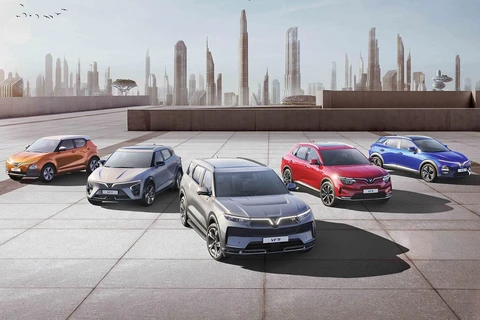
To effectively promote the electric vehicle (EV) industry in Vietnam, it is essential to implement policies that encourage manufacturers, especially domestic ones and conduct awareness campaigns to inform the public about the benefits of EVs.
The Government should conduct campaigns through media, social platforms and community events to educate the public about the environmental and economic benefits of EVs.
Former Director of the Vietnam Institute of Economics, Dr. Tran Dinh Thien's perspective underscored the importance of robust support policies for Vietnam's electric vehicle industry.
Thien advocates for measures like guarantees and capital loans to enhance competitiveness through economies of scale. Government support in areas such as interest rates, deadlines and taxes is crucial to bolster Vietnamese EVs on the global stage, promoting national benefits aligned with environmental sustainability. This approach, he emphasised complements rather than contradicts market principles, fostering a competitive domestic industry with global reach.
In agreement, Hoang Duong Tung from the Vietnam Clean Air Network and the Vietnam Association for the Protection of Nature and Environment advocates for the electrification of all public transport, not limited to taxis, as a means to reduce noise and pollution.
His advocacy extends to promoting cleaner and quieter transportation options across various sectors to enhance environmental sustainability in Vietnam./.
See more
UNESCO, Japan sign deal to bolster Vietnam’s disaster early warning
Climate change adaptation remains a top priority in Vietnam’s development strategy and national security outlook through 2050. Vietnam will maintain close cooperation with Japan, UNESCO and other partners to guarantee the project’s effectiveness and advance common goals.
250kg unexploded wartime bomb safely detonated in Nghe An province
Verification confirmed that the object was an MK82 bomb with its detonator still intact. Buried at a depth of around 3.5m, the bomb measured 40cm in diameter, 140cm in length and weighed approximately 250kg.
Vietnam, Germany step up collaboration on energy transition, green hydrogen
Schäfer-Gümbel praised the strong commitment of Vietnamese partners to sustainable energy goals. He noted that the long-standing development cooperation between Germany and Vietnam is evolving, with energy transition emerging as a strategic area of collaboration in addressing global challenges.
Belgian TV spotlight: Vietnam's wild nature reborn
Through the lens of “Le Jardin Extraordinaire”, Vietnam was portrayed not simply as a travel destination but as a still-emerging realm of discovery: a nation whose nature, though heavily wounded in the past, demonstrates extraordinary powers of recovery, quietly upholding its pristine essence against the pressures of time.
Carbon credits - New resource for forest protection
With more than 841,000 hectares of forest and a forest coverage rate exceeding 61%, Quang Tri is among the provinces with the largest forested areas and carbon stocks in the north central region.
Quang Tri receives endangered stump-tailed macaque
The Cam Lo-Dong Ha forest protection unit in the central province of Quang Tri has received a rare stump-tailed macaque, a species listed as endangered, precious and rare in the Vietnam Red Data Book.
Natural gas emerges as key bridge to Net Zero ambitions by 2050: Workshop
Gas output from Vietnam's 26 producing fields hit its peak between 2010 and 2015, followed by a steep fall-off after 2016. During 2021-2025, annual volumes hovered between around 5.95 and 8.08 billion cu.m.
Vietnam, Netherlands join forces to tackle saltwater intrusion in Mekong Delta
Dutch and international experts agreed that rather than attempting to completely prevent salinity, a smarter strategy is to manage it and learn to live with it. Areas that successfully develop profitable farming systems under saline conditions will gain a long-term competitive advantage.
14th National Party Congress: Environmental protection – driver of sustainable development
A notable new feature in the draft documents of the 14th National Party Congress is that environmental protection is no longer treated as an auxiliary task, but increasingly regarded as a foundation for the country’s sustainable development in the coming period.
PM chairs sixth meeting of COP26 National Steering Committee
Prime Minister Pham Minh Chinh stressed that climate action remains a global movement and trend, in which Vietnam is actively engaged.
Eight rare animals released into the wild in Dong Nai province
The species include three Macaca fascicularis (long-tailed macaques), three Nycticebus pygmaeus (pygmy slow lorises), one Python reticulatus (reticulated python) and one Manis javanica (Javan pangolin).
Tree planting programme spreads green momentum in islands
The Ho Chi Minh City Association for Conservation of Nature and Environment (HANE) on January 11 announced 10 outstanding green programmes and activities carried out in 2025, including a programme to plant 1 million trees in Vietnam’s island areas.
Wildlife conservation creates green livelihoods at Ben En National Park
Ben En National Park in the central province of Thanh Hoa has implemented a wide range of scientific studies and conservation projects aimed at safeguarding biodiversity, particularly rare and endangered wildlife species.
Ca Mau strives to put coastal, riverbank erosion under control by 2030
Solutions have been designed to suit local geological and hydrological conditions, combining traditional hard engineering works such as dykes and revetments with soft, nature-based and ecological solutions, including mangrove restoration.
Lam Dong releases hundreds of wild animals back into the wild
According to the Ta Dung National Park Management Board, the park has for years served as a trusted destination for authorities and residents to hand over and release wildlife. Such actions not only contribute to biodiversity conservation but also help reduce illegal hunting and captivity of wild animals.
Hanoi pilots early air quality forecasting system
The system can forecast air quality trends over time and across locations, helping authorities guide and implement pollution control measures.
Recycling fly ash into valuable resource: sustainable path towards circular economy
The rate of fly ash utilisation has steadily increased over the years, to 84% in 2021 from 37.5% in 2018. During 2022–2023, many plants managed to consume 100% of the daily fly ash produced while also processing a significant portion of long-stored stockpiles.
Hanoi targets 20% reduction in PM2.5 levels
Hanoi has affirmed its commitment not to trade environmental protection for economic growth. The city is moving to establish low-emission zones (LEZs) as a core measure to control emissions and promote green, sustainable urban development.
Forest protection, development stepped up from start of 2026
Localities are requested to encourage the participation of mass organisations, schools, businesses, armed forces and communities, while enhancing public responsibility for caring for and protecting trees after planting.
Vietnam takes actions to combat desertification, ensure sustainable land, resource management
Preventing and combating desertification is identified as a key task, helping with nature and biodiversity conservation, sustainable management of forests, water and land resources, and improvement of people's incomes and life quality.