Health ministry seeks feedback in preparation for 2025 e-cigarette ban

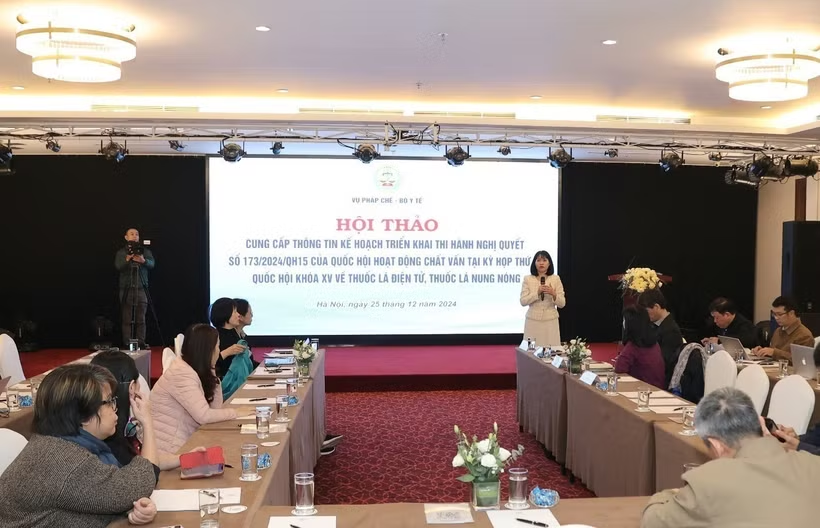
The Ministry of Health’s Department of Legal Affairs held a workshop in Hanoi on December 25 to provide information about a plan to implement the National Assembly (NA)'s resolution involving the ban of e-cigarettes and heated tobacco products.

The workshop held by the Ministry of Health’s Department of Legal Affairs in Hanoi on December 25 to provide information about a plan to implement the National Assembly's resolution involving the ban of e-cigarettes and heated tobacco products. (Photo: VNA)

Hanoi (VNA) – The Ministry of Health’s Department of Legal Affairs held a workshop in Hanoi on December 25 to provide information about a plan to implement the National Assembly (NA)'s resolution involving the ban of e-cigarettes and heated tobacco products.

Dinh Thi Thu Thuy, deputy director of the department, stated that Resolution No. 173/2024/QH15, issued on November 30, mentions the NA's decision to prohibit the production, trade, import, storage, transport, and use of e-cigarettes, heated tobacco products, and addictive or harmful substances starting in 2025. The decision aims to safeguard public health and ensure social order and safety, with the Government tasked to lead the perfomance.

The Ministry of Health has been assigned by the Government to build a decreed to amend and supplement its Decree No. 117/2020/ND-CP, which governs administrative penalties in the health sector. The new decree will introduce sanctions on the "storage" and "use" of e-cigarettes, heated tobacco products, and harmful substances, as well as the authorities to address these violations.

Nguyen Tuan Lam, a representative of the World Health Organisation (WHO) in Vietnam, suggested the ministry curb supply chains, particularly by targeting smuggling, illegal sales, and advertising of these goods.

Lam said stronger enforcement should be implemented at border checkpoints and retail outlets, along with significant fines to deter violations. He also proposed organising public awareness campaigns akin to helmet-wearing or anti-drunk driving efforts, as well as regular surveys to assess usage rates and the effectiveness of the regulations.

Currently, Article 190 of Vietnam's Penal Code stipulates penalties ranging from fines of 100 million VND (3,932 USD) to 1 billion VND or imprisonment of 1 to 5 years for producing or trading banned goods. Article 191 imposes fines from 50 million VND to 300 million VND or imprisonment of 6 months to 3 years for storing or transporting them. However, there are no specific regulations yet for penalising the use of e-cigarettes or heated tobacco products./.


VNA

See more

Male plastic surgery: Why masculine aesthetics require a different approach

Male plastic surgery: Why masculine aesthetics require a different approach

Plastic surgery has long been associated with procedures for women, but men also seek treatment for abdominal fat, enlarged breasts and age-related changes around the eyes and face. The American Society of Plastic Surgeons (ASPS) includes liposuction, gynecomastia surgery and eyelid surgery among procedures performed on male patients.

A speaker delivers presentations at the conference (Photo published by VNA)

Vietnam, Denmark expand cooperation in high-tech healthcare

Ambassador Nguyen Le Thanh called on Vietnamese and Danish partners to identify priority areas and promote research and training programmes, knowledge transfer and technology application in line with Politburo's Resolution No. 57-NQ/TW on breakthroughs in science – technology development, innovation and national digital transformation.

Ho Chi Minh City has favourable conditions for developing the ecosystem, including a large population, diverse healthcare needs and an extensive public and private medical network. (Illustrative photo: VNA)

Ho Chi Minh City develops multi-tier elderly care network amid population ageing

Dr. Huynh Minh Chin, Deputy Director of the department, said rising elderly care needs are putting pressure on traditional family-based care, as older people increasingly face multiple chronic illnesses, mobility problems, malnutrition, dementia and depression, requiring continuous support and closer coordination among hospitals, grassroots healthcare facilities, families and social support institutions.

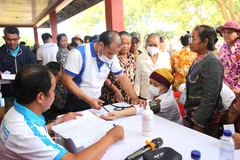
Local residents in Mondulkiri province, Cambodia, receive free medical check-ups and health consultation. (Photo: VNA)

Free medical examinations provided to remote communities in Cambodia

Vietnamese Ambassador Nguyen Minh Vu said the programme has been jointly organised by the embassy and the hospital annually in various Cambodian localities to provide healthcare support to disadvantaged households and contribute to the Cambodian Government’s efforts to improve public health. The initiative also reflects close cooperation in healthcare and the strong bonds between the people of Vietnam and Cambodia.

With the assistance of robotic-assisted laparoscopic surgery, doctors successfully perform a complex operation (Photo: VNA)

Vietnam advances towards high-quality, specialised healthcare

Recent developments in Hanoi and other localities highlight efforts to develop specialised treatment, standardise professional practices and apply artificial intelligence (AI) and advanced medical techniques, towards a more modern healthcare system.

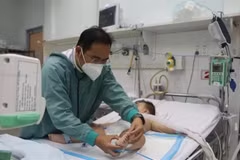
Collecting a sample from a pediatric patient for influenza testing (Photo: VNA)

Ho Chi Minh City acute respiratory infections surge over 64%

According to the Ho Chi Minh City Centre for Disease Control (HCDC), influenza viruses are are among the fastest-rising pathogens, with 151 positive samples in a single week. Influenza A is the dominant strain, with A/H1N1pdm09 in 116 samples, or nearly 77%.