HIV/AIDS patients’ treatment now covered by insurance

HCM City is expected to treat nearly 4,000 people with HIV/AIDS who have health insurance cards in the first quarter of next year, following the cessation of free treatment for all such patients in the country, according to the city HIV/AIDS Prevention Centre.
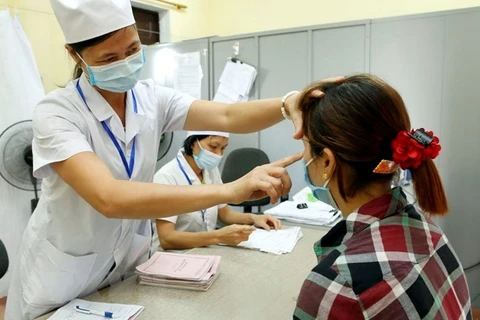
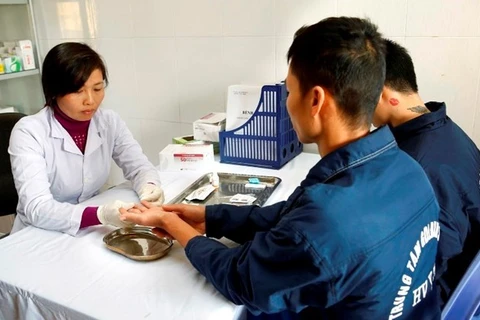
HIV/AIDS patients’ treatment now covered by insurance ảnh 1A woman with HIV receives antiretroviral drugs at a Health Centre in District 11’s community counselling and support division. (Photo: VNA)

HCM City (VNS/VNA) - HCM City is expected to treat nearly 4,000people with HIV/AIDS who have health insurance cards in the first quarter ofnext year, following the cessation of free treatment for all such patients inthe country, according to the city HIV/AIDS Prevention Centre.

For patients who do not have health insurance, they will continue to receivefree medicine at health facilities where they are being treated, said Dr Van Hung,the centre’s Deputy Director.

Forty health facilities that provide HIV treatment have signed contracts withthe city-based Vietnam Social Security to accept health insurance.

These facilities belong to city- and district-level hospitals, as well ashealth centres’ community counselling and support divisions.

Dr Nguyen Trung Hoa, Director of the Go Vap district Health Centre, said thatit would be providing counselling and tests as well as treatment for peoplewith HIV/AIDS.

In the first quarter of the year, the centre conducted 14,981 examinations forpeople with HIV/AIDS, including 8,614 exams for people who had health insurancethis year.

The centre has provided antiretroviral drugs to 1,481 people with HIV. More than 1,300 people with HIV/AIDS treated at the centre have healthinsurance, accounting for 88.5 percent of the total.

Dr Kim Chi Na, head of the Health Centre in District 11’s community counsellingand support division, said that it was now treating more than 2,700 people withHIV/AIDS.

The division admits 70 new cases with HIV each month, Na said, adding that mostof them are from other provinces. The division has only two doctors, but onlyone doctor is allowed to examine 65 people per day under national healthcareregulations.

The division needs to employ more doctors so that it will comply with theregulation next year when it begins providing treatment to people with HIV/AIDS.

However, because of a shortage of funds, more doctors cannot be hired, Na said.

HCM City has one private general clinic, Galant, in District 5, to treat peoplewith HIV/AIDS under health insurance coverage.

Charity health facilities which provide treatment to people with HIV/AIDS havebeen upgraded to meet the insurance coverage criteria of the Vietnam SocialSecurity.

Nearly 10 per cent of people with HIV/AIDS do not have health insurance.

The municipal People’s Committee plans to use its budget to help them buyhealth insurance cards as soon as possible.

“The city aims to treat all people with HIV/AIDS under health insurancecoverage by the end of 2019,” Hung said.

Luu Thi Thanh Huyen, Deputy Director of the Vietnam Social Security’s HCM Citybranch, said the agency would closely work with the city’s Department of Healthto ensure health care services for people with HIV/AIDS during the change oftreatment from free coverage under a national programme (that received fundsfrom international donors) to health insurance coverage.

The Ministry of Health said that insured people who use health care servicesrelated to HIV/AIDS will receive antiretroviral drugs, HIV tests and otherservices, and insured pregnant women with HIV will also receive treatment.-VNS/VNA
VNA
See more

The number of foreign tourists coming to Ho Chi Minh City for travel combined with medical check-ups is increasing. (Photo: VNA)

Vietnam looks to unlock medical tourism potential with national strategy

The draft strategy aims to position Vietnam as a trusted healthcare destination in Southeast Asia by 2030 and eventually among Asia's leading medical tourism hubs. The plan marks a shift from viewing medical tourism as an untapped opportunity to making it a national development priority.

Delegates at the conference. (Photo: VNA)

Vietnam to produce first homegrown next-generation vaccines from 2028

Under the agreement, Sanofi will transfer technology to VNVC to manufacture selected high-demand vaccines for children and adults at VNVC Vaccine and Bioproduct Plant. The first next-generation vaccines produced in Vietnam are expected to roll off production lines in 2028.

Eric and Alysha joyfully welcome their baby through Mini IVF after more than 10 years of waiting. (Photo: Hong Ngoc Phuc Truong Minh General Hospital)

Vietnam - a destination for journeys to parenthood

An increasing number of international families are choosing Vietnam for infertility treatment, embarking on journeys to parenthood that transcend geographical distance and differences in nationality.

Prime Minister Le Minh Hung delivers remarks at the inauguration ceremony for Viet Duc University Hospital's second campus in Ninh Binh province. (Photo: VNA)

PM urges modern restructuring of healthcare network

The PM stressed that throughout the country’s development process, people have consistently been regarded as the centre, the driving force, the objective and the most important resource for national development. Sustainable and rapid development requires not only a healthy, knowledgeable and skilled population but also a modern, equitable, efficient, sustainable and accessible healthcare system.

Thu Duc General Hospital, with a capacity of 1,000 beds, was inaugurated and put into operation in April 2025 (Photo: VNA)

Ho Chi Minh City moves to expand robotic surgery to gateway hospitals

According to the municipal Department of Health, developing gateway hospitals is a key pillar of the city's strategy to establish a regional specialised healthcare system. The network is designed to permanently relieve overcrowding at major downtown hospitals while strengthening strong inter-regional emergency care and treatment network.

Doctors conduct health screenings for children in Tru Van Tho commune, Ho Chi Minh City. (Photo :VNA)

Ho Chi Minh City moves closer to universal health check-ups

Achieving universal health check-ups in 2026 will lay the foundation for a new healthcare model in which every resident has an electronic health record, receives regular screenings, benefits from lifelong health management and gains access to early intervention through primary healthcare services.

Illustrative photo: Internet

Dengue cases rise, outbreaks become more unpredictable

Vo Hai Son, Deputy Director of the ministry's Administration of Disease Prevention, said dengue fever is no longer following previous epidemiological trends. In 2025, infections remained elevated through November and December rather than declining at the end of the year as had traditionally been the case, indicating a shortening outbreak cycle.