How labour safety is regulated amid pandemic

Under the Law on Labour, in what cases will employees have the right to take leave or work from home for disease prevention? How will they be paid during their absence in such cases?
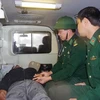
How labour safety is regulated amid pandemic ảnh 1Checking and sending Chinese workers to quarantine to contain the spread of COVID-19. (Photo: VNA)

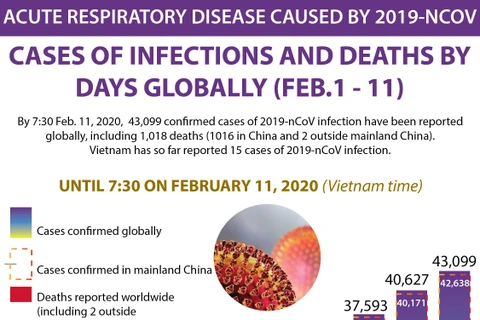
Hanoi (VNA) - As of February 11, of the 15 cases tested positive for coronavirus (nCoV) in Vietnam, five were workers of a Vinh Phuc-based company who returned home after their training in Wuhan, the capital of China’s Hubei province, and five were their relatives.

VietnamPlus had an interview with Nguyen Anh Tho, deputy head of the Department of Work Safety under the Ministry of Labour, Invalids and Social Affairs (MoLISA), on work safety and disease prevention and control in enterprises, particularly those hiring thousands of labourers, including Chinese nationals.

Question: What impact is the disease having on firms’ production and business?

Nguyen Anh Tho: Under the Government’s direction as well as enterprises’ active compliance to disease prevention regulations, domestic production and business remain stable. Currently, only the education system is temporary shutdown, affecting workers’ care for their children.

Question: At industrial parks, there are hundreds, even thousands, of workers, so it is hard to follow the recommendation on public gathering restriction. What are preventive measures enterprises should follow to ensure both workers’ health and production?

Nguyen Anh Tho: Many agencies and enterprises are preventing the disease using heat sensor devices, hand wash bottles, and face masks. Workers themselves are well aware of preventative measures to perform at home, during their traffic, and at work.

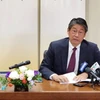
How labour safety is regulated amid pandemic ảnh 2Nguyen Anh Tho, deputy head of the Department of Work Safety (Photo: VietnamPlus)

Apart from following regulations on labour safety and hygiene outside working hours, firms should instruct their workers not to gather in groups and avoid unnecessary conversations to limit contacts.

We have to pay attention to cases with symptoms of the disease, particularly via increasing the spirit of self-declaration.

Question: In businesses hiring Chinese nationals with higher risk of infection, what preventative measures should be carried out to keep workers’ anxiety at bay?

Nguyen Anh Tho: The Ministry of Labour, Invalids, and Social Affairs has established regulations on monitoring people returning from disease-hit areas, particularly Chinese managers coming back to Vietnam.

The Government’s instruction on nCOV prevention and control clearly identifies people whose entries to Vietnam will not be allowed and those to be quarantined upon arrival. Those completely following regulations and tested negative for the virus can join the workforce as normal.

I think workers should be updated on the situation to work at ease of mind and cooperate with one another more effectively.

Question: According to the Law on Labour, in what cases will employees have the right to take leave or work from home for disease prevention? Will they be paid as normal during their absence in such cases?

Nguyen Anh Tho: In fact, under the current regulations of the Government and the Law on Labour, workers are working as normal.

In case transmission sources or outbreaks are found, in line with the regulations, chairmen of centrally-run municipal and provincial People’s Committees will decide the operation of which enterprises and organisations will be stopped.

On the other hands, according to Point Đ, Clause 1, Article 5 of the Law on Labour Safety and Hygiene, employees have the right to refuse to work or leave their working places, but still receive their full salaries and are not considered violating the labour discipline when they clearly detect labour risks that severely threaten their lives and health. They should also promptly notify their managers of these risks.

According to Point Đ, Clause 1, Article 7 of the law, employers cannot force employees to continue doing their jobs or return to work when there are risks that severely threaten their lives and health.

Clause 3, Article 98 of the 2012 Labour Law regulates that with objective reasons like natural disasters, fire, diseases, relocation of working areas as required by competent agencies, or economic reasons, the salaries paid for workers to quit their job cannot be lower than the minimum wage under the Government’s regulation.

Accordingly, if workers have to take leave due to the disease, they will still receive salaries they had negotiated with their employers, and the salaries must not be lower than the minimum wage.


Thank you!
VNA

See more

Khmer people celebrate the New Year at Sro Lon Pagoda, My Xuyen ward, Can Tho city. (Photo: VNA)

PM Le Minh Hung extends Chol Chnam Thmay greetings to Khmer community

Prime Minister Le Minh Hung stressed the need for ministries, sectors and localities to fully and promptly implement social welfare policies, improve living conditions, and provide care for policy beneficiaries, disadvantaged households and vulnerable groups, while ensuring that the Khmer community celebrates Chol Chnam Thmay in a spirit of unity, joy, safety and thrift, in line with civilised practices and traditional cultural values.

Participants at the Vietnam–Western Australia Education Dialogue note that there remains ample room to further expand education and training cooperation. (Photo: VNA)

Vietnam, Western Australia deepen substantive education cooperation

Dang Thuy Chi, First Secretary in charge of education at the Vietnamese Embassy in Australia, outlined Vietnam’s strategic directions in education development, highlighting the roadmap for international integration under Decision No. 1600/QD-TTg, which focuses on expanding internationally accredited programmes, strengthening ties with reputable global institutions and promoting two-way student exchanges. S

Vietnamese Ambassador to Germany Nguyen Dac Thanh (Photo: VNA)

Germany eyes stronger labour cooperation with Vietnam

The two sides discussed measures to deepen bilateral cooperation in workforce development and skills training, and enhanced coordination between management agencies of Vietnam and Germany in the time to come.

A ritual involving a procession and offering of sticky rice cakes to the Hung Kings at the Hung Kings Temple Festival in Phu Tho province (Photo: VNA)

Phu Tho makes thorough preparations for Hung Kings’ Commemoration Day

The Hung Kings’ Commemoration Day, Hung Kings Temple Festival and Ancestral Land Culture–Tourism Week 2026 will run from April 17–26 (the first to 10th days of the third lunar month) at the Special National Historical Relic Site of Hung Kings Temple and other localities in the province, with the opening ceremony set for 8pm on April 17.

Deputy Minister of Public Security Senior Lieutenant General Le Van Tuyen (standing) speaks at the press conference on April 9. (Photo: VNA)

State President’s amnesty decision in 2026 announced

In 2025 alone, more than 22,000 inmates were granted early release, while political security and social order remained firmly maintained. Most beneficiaries have successfully reintegrated into society, earning public support and international recognition.

Delegates attend the launch ceremony of the 2026 Press Awards on promoting energy efficiency and conservation (Photo: VNA)

Media promotes culture of efficient energy use

The Ministry of Industry and Trade, in coordination with the Vietnam Journalists Association, on April 8 launched the 2026 Press Awards on promoting energy efficiency and conservation, aiming to raise public awareness and encourage responsible energy consumption.

A civil servant in Mao Khe ward, Quang Ninh province, guides a resident in submitting notarisation applications via the National Public Service Portal. (Photo: VNA)

Quang Ninh digitises entire administrative process

The effective implementation of the Politburo’s Resolution No. 57-NQ/TW on breakthroughs in science, technology, innovation and national digital transformation, coupled with strong public engagement, is providing new impetus for Quang Ninh to accelerate administrative reform and advance toward a transparent, modern and sustainable public governance model in the years ahead.

Delegates at the Hanoi ceremony marking Laos' traditional New Year festival Bunpimay (Photo: VNA)

Lao traditional New Year Bunpimay celebrated in Hanoi

The Vietnamese and Lao leaders’ agreement to incorporate the concept of “strategic cohesion” into the bilateral relationship framework marks a historic milestone, reflecting a long-term vision, deep political trust and shared determination to elevate bilateral ties to a new stage of development.

The wrist-tying ritual during Bunpimay is believed to bring peace and good fortune (Photo published by VNA)

Congratulatory message sent to Lao front leader on Bunpimay festival

Bui Thi Minh Hoai, Politburo member, Secretary of the Party Central Committee and President of the Vietnam Fatherland Front’s Central Committee, sent a congratulatory letter to Kikeo Khaykhamphithoune, Politburo member, and President of the Lao Front for National Development’s Central Committee, on the occasion of Laos’ traditional New Year festival Bunpimay (Buddhist Era 2569).