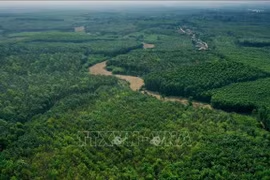
At a seminar held in Da Lat city, nearly 200 experts and coffee farmers look into the compliance with the EU Deforestation Regulation. (Photo: VNA)
He made the remarks while addressinga seminar held in Da Lat city, the Central Highlands province of Lam Dong, onAugust 24 to discuss the role of community-based agricultural extension indeforestation-free coffee production. The Central Highlands is the biggestcoffee cultivation hub of Vietnam.
Thanh noted that community-basedagricultural extension has a crucial role to play in helping promote the industry’stransparency and compliance with the EU Deforestation Regulation (EUDR).
This is also an occasion to identifychallenges and build an action plan to address shortcomings before the EUDR isofficially applied, he went on.
At the event, nearly 200 experts andcoffee farmers looked into the compliance with the EUDR, which was adopted bythe European Parliament in April 2023, entered into force in June 2023, andwill be applied to major companies from December 2024.
A number of exports to the EU aresubject to the EUDR, including coffee, and the regulation is applied to all theimporters or exporters of related products to the bloc.
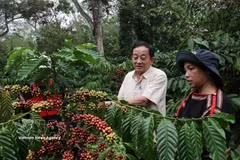
 Illustration image (Photo: VNA)
Nguyen Phi Hung, a specialist fromthe Sustainable Trade Initiative (IDH), stressed that the EUDR adherence needs theconnectivity of relevant parties. Among them, state agencies likeprovincial-level departments of agriculture and rural development, sub-departmentsof forestry protection, and local People’s Committees need to share forest andland registry data, basing on which agricultural extension centres andcommunity-based agricultural extension groups would carry out communications andtraining in deforestation-free production for farmers.
The NAEC said it has formed fivematerial supply zones meeting the EUDR, including 11,200ha of coffee cultivationin the Central Highlands./.
VNA