Innovation – key for unlocking door to growth: insiders

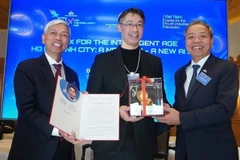
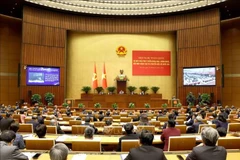
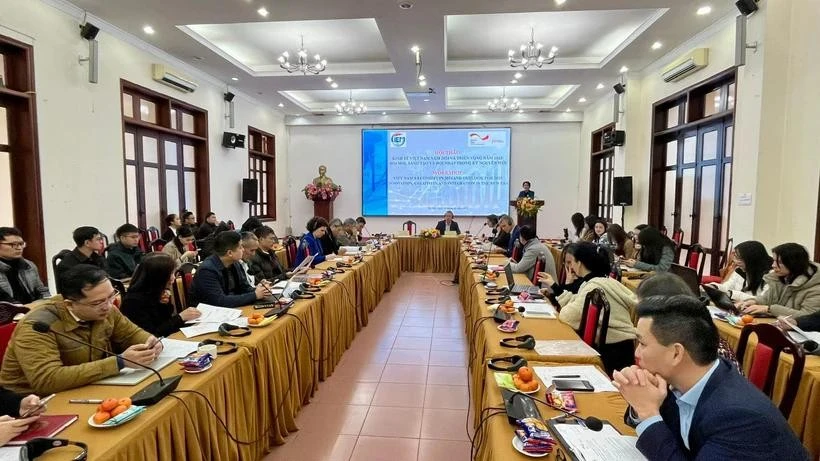
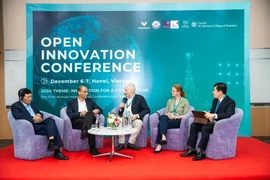
Participants at the seminar (Photo: VNA)

Hanoi (VNA) – Innovation is not just a slogan but a "key" to help unlock Vietnam's growth, especially in 2025, a year considered a test for the country's ability to break through in economic development, said insiders.

A report reviewing Vietnam's macro-economic performance in 2024 announced at a recent seminar hosted by the Central Institute for Economic Management (CIEM) showed that Vietnam witnessed a remarkable economic recovery in 2024.

Challenges in 2025 will serve as a positive “pressure” for Vietnam to intensify fundamental economic reforms, focusing on innovation and integration, it said.

Positive “pressure” for decisive reforms

Science and technology are developing rapidly, creating alternatives to human labour, CIEM Director Tran Thi Hong Minh said, adding that the international labour distribution is becoming increasingly apparent.

In this context, she emphasised that maintaining macroeconomic and social stability is a necessary requirement, but "not easy" and "not enough."

This uncertain backdrop is not solely negative as it also presents numerous development opportunities for middle-income countries, she said, noting that Southeast Asia, in particular, holds significant potential for rapid growth.

The key lies in fully tapping these opportunities through timely economic institutional reforms and improving the capacity of agencies, businesses, and labourers, she added.
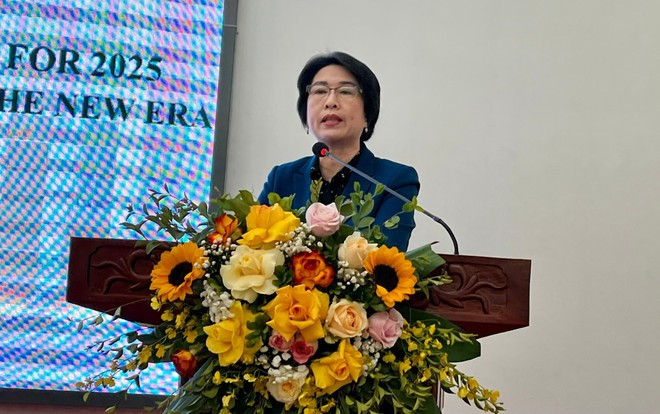
hong-minh.jpg
CIEM Director Tran Thi Hong Minh said Vietnam continues to be a destination with strong connections to many markets. (Photo: VietnamPlus)

In 2024, Vietnam recorded impressive economic results, with a clear recovery in economic growth, expanding by 7.09% year-on-year. In addition, inflation was kept in check at 3.63%, significantly lower than the target set by the National Assembly. More importantly, business confidence went up, reflected in figures such as the disbursement of foreign direct investment (FDI) reaching 25.35 billion USD, and remittances estimated at 16 billion USD.

Minh stressed that the Party and State have proactively worked to refine the policy framework for innovation, especially Resolution No.57-NQ/TW dated on December 22, 2024 by the Politburo on breakthroughs in science and technology development, innovation, and national digital transformation.

This has created an inspiring atmosphere for the scientific community in recent times, she said.

With timely policies to develop new technologies, Vietnam has become a 'new home' for many great investors, Minh said, adding that there is still a lot of policy room for innovation, which needs to be connected with the development of new economic models (digital economy, circular economy, creative economy).

Minh also pointed out numerous challenges, such as the risk of falling into the middle-income trap, factors to create new drivers for growth model innovation and enhancing competitiveness.

With this mindset, she expressed her belief that these difficulties can become positive “pressure” for Vietnam to intensify fundamental economic reforms. These reforms will focus on innovation and integration, stressing that this serves as the foundation for the country to realise its growth goal for 2025 and the following decades.

Deep integration and value chain

Nguyen Anh Duong, Director of CIEM’s Department for General Economic Issues and Integration Studies stressed that alongside its economic achievements, Vietnam continues to establish itself as a destination with deep connectivity to global markets. Therefore, effectively implementing signed free trade agreements (FTAs), as well as advancing FTAs with new partners (and supporting other countries' participation in the Comprehensive and Progressive Agreement for Trans-Pacific Partnership (CPTPP), showcase Vietnam's proactive approach to international economic integration.
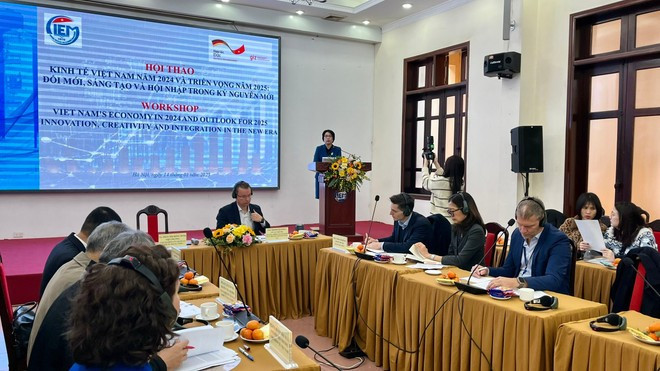
3-8962.jpg
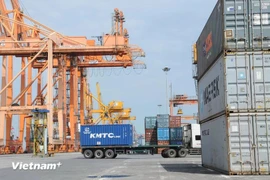
Vietnam continues to solidify its position as a destination with deep connectivity to global markets. (Photo: VietnamPlus)

However, the report also highlights challenges in fully capitalising on integration advantages, particularly concerning the global value chain, Duong said.

With the ongoing economic integration, Vietnamese businesses are increasingly recognising the importance of more active participation in regional and global supply chains. In this regard, the report highlights the commendable efforts of many domestic firms to innovate and enhance their capabilities, regardless of their position—whether low or high—in the value chain.

Many Vietnamese businesses have strived to innovate and enhance their capabilities, both in production organisation and the application of science and technology, to be able to integrate into supply chains, Duong said.

Additionally, the report notes a new challenge in the global shift towards sustainable development—specifically green regulations and the trend towards green exports.

Green regulations will become mandatory rules of “the game” in the international market starting in 2025, and could potentially act as non-tariff barriers for Vietnamese exports, he said./.
VNA

See more

Visitors to UBTECH, a company major in the research and development of humanoid robots (Photo: VNA)

Sci-tech diplomacy: A new mission for diplomatic sector

The directive by General Secretary and State President Lam reflects a shift in Vietnam’s development mindset, in line with the Politburo’s Resolution 57-NQ/TW dated December 22, 2024 on breakthroughs in sci-tech, innovation and national digital transformation. For the first time, sci-tech has been placed at the very centre as a driver of growth model.

Prof. Nghiem Duc Long from University of Technology Sydney (UTS), who is also Chairman of the Vietnam-Australia Scholars & Experts Association (VASEA) (Photo: VNA)

Science, technology to become new pillar of Vietnam-Australia ties: expert

The visit to Australia by Party General Secretary and State President To Lam will open a new chapter of cooperation, enabling Vietnamese intellectuals and experts in Australia to contribute more effectively to national development and helping science, technology and innovation become an important driver of the Comprehensive Strategic Partnership.

Deputy Director of the Vietnam National Innovation Centre (NIC) Do Tien Thinh speaks at the launch of RE:ACT in Hanoi on August 7. (Photo: NIC)

Youth innovation challenge for sustainable communities launched

Unlike conventional idea-based competitions, RE:ACT focuses on deploying solutions that have already reached the minimum viable product stage through Living Labs – community-based pilot environments where innovations are tested under real-world conditions.

The special national science, technology and innovation programme on strategic technologies targets mastery of at least four strategic technologies for 2026-2030. (Photo: baochinhphu.vn)

Vietnam approves national programme on strategic technologies

The programme seeks to master, develop, perfect and commercialise highly competitive strategic technology products, with priority given to core technologies. It also aims to build a strategic technology ecosystem and strengthen linkages among the State, businesses and science and technology organisations.

FPT Group headquarters ( Photo courtesy of FPT)

FPT named an OpenAI Select Partner

Under the partnership, FPT and OpenAI will work together to help businesses develop AI transformation roadmaps, build AI platforms, strengthen workforce capabilities and deploy responsible AI solutions tailored to their operational needs.

Dak Lak province's Smart City Monitoring and Operations Centre manages and operates the provincial data centre, as well as shared digital platforms and software systems used across the province. (Photo: VNA)

Vietnam draws hyperscalers, cloud titans, AI players

These developments highlight growing confidence in Vietnam as a destination for hyperscale, cloud, and AI infrastructure. The broader digital infrastructure ecosystem also strengthened during the period.

 Da Nang seeks to become a strategic investment destination

Da Nang seeks to become a strategic investment destination

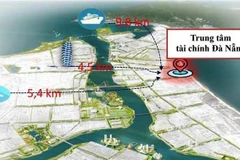
Da Nang is accelerating efforts to attract investment and mobilise social resources for new development models, leveraging expanded development space, special policy mechanisms and institutional reforms to position itself as a strategic investment destination and a pioneer in Vietnam's economic growth in the new era.

PM Le Minh Hung chairs the second meeting of the National Cybersecurity Steering Committee on August 6. (Photo: VNA)

PM urges stronger coordination in cybersecurity response

PM Le Minh Hung pushed for the Regional Counter Cybercrime Hub for Asia-Pacific to be put into operation in 2027, a “Cybersecurity Economy” initiative to be prepped for APEC 2027, stronger specialised cybersecurity agencies, and an expansion of the national cybersecurity operations centre by the second quarter of 2028.

An overview of BSides Hanoi 2026 on August 5 (Photo: baodautu.vn)

Trust emerges as one of modern cybersecurity’s biggest challenges

Speaking at the event, VSEC Chairman Truong Duc Luong said this was the second time BSides has been held in Hanoi, continuing to attract strong interest from the cybersecurity community. BSides Hanoi 2026 was designed as a platform connecting Vietnam’s cybersecurity community with international networks, encouraging knowledge sharing and contributing to the sustainable development of the cybersecurity ecosystem.

AI Day 2026 product showcase area. (Photo: VNA)

Vietnam positioned to harness AI wave, World Bank report says

The WB report identifies Vietnam as one of the few economies outside the European Union (EU) to have adopted a comprehensive AI regulatory framework as early as 2025. Vietnam applies a risk-tiered approach similar to that of the EU AI Act, imposing different obligations depending on whether an AI system poses “unacceptable,” “high,” “low” or “minimal” risks. The approach is viewed as a strategic step towards ensuring safe and transparent AI governance.

Thai Binh Seed Group JSC is one of Vietnam’s leading crop seed producers, holding rights for 30 varieties and operating three globally certified plants. (Photo: VNA)

Politburo’s Resolution 57-NQ/TW powers new growth momentum

NSO Director Nguyen Thi Huong said alongside foreign investment and the green economy, science – technology, innovation, the digital economy and digital transformation are the new drivers that can can pack a serious second-half punch.

Research lab of the Vietnam National University Ho Chi Minh City. (Illustrative photo published by VNA)

Drastic measures taken to turn Resolution 57 into action

A recent meeting of the Central Steering Committee on science, technology, innovation and digital transformation, chaired by Party General Secretary and State President To Lam, marked a new phase in implementing Resolution 57 following the committee’s restructuring.

A view of Kinh Bac Ward in Bac Ninh Province. (Photo: VNA)

Bac Ninh targets world's top 50 smart cities by 2030

According to Chairman of the provincial People's Committee Pham Hoang Son, the province will pursue a people-centred smart city model driven by science, technology, innovation and digital transformation to improve public services, urban management and competitiveness.