Intellectual property court on way in Vietnam

The establishment of an intellectual property court in Vietnam is in sight but has yet to be completed, a deputy chief inspector of the Ministry of Science and Technology (MOST) has said.
Intellectual property court on way in Vietnam ảnh 1A customer browses a Vietnamese online shopping site (Photo: VNA)

Hanoi (VNA) - The establishment of an intellectualproperty court in Vietnam is in sight but has yet to be completed, adeputy chief inspector of the Ministry of Science and Technology (MOST) has said.

Unlike in foreign countries where the court plays a major role in handlingviolations of intellectual property rights, Vietnam’s court system has notasserted its power strongly on the matter, according to Nguyen Nhu Quynh,MOST’s deputy chief inspector.

“About 98.4 percent of the violations in Vietnam in the 2012-15 period,including online infringement, were handled by inspectors from administrativeagencies,” she said.

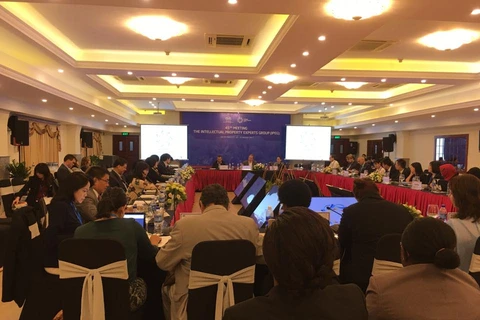
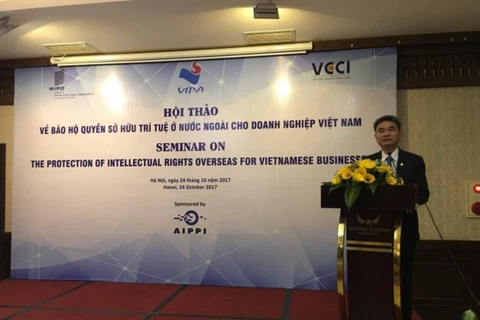
“There needs be an intellectual property court in Vietnam, but we don’t know whenit will be established,” she said at a conference on intellectual propertyenforcement in the digital world held in Hanoi on March 12.

While the prospect of an intellectual property court seems down the road, Quynhsaid that it is essential to have a department within the country’s judicialsystem specialising in intellectual property.

The practice of electronic commerce (e-commerce) is developing rapidly in Vietnam,with total retail revenue of 5 billion USD in 2016, a drastic rise from 2billion USD in 2013 and 1 billion USD in 2012, according to MOST. Forty-ninepercent of enterprises in the country had their own websites, and 32 percent ofthem have established business partnerships with foreign counterparts via theinternet.

Online platforms play a major role in reinforcing e-commerce, including onlineshopping sites and social media platforms. A survey done by the market researchservice Q&Me in 2017 shows that 66 percent of Facebook users in Vietnamhave purchased items over the social media platform, a considerable rise from47 percent in 2016, Quynh said.

[Intellectual property key for start-ups: experts]

Taking advantage of social media platforms – particularly Facebook –to do business makes it harder for inspectors to discover violators ofintellectual property rights, she said.

“Several young people are making tonnes of money out of their online businesseswithout having to have capital, just a few tricks to increase the number of‘fans’ on their Facebook pages,” she said. “But a lot of them sellfake stuff, which is considered an infringement.”

Stronger punishments are needed to regulate the virtual business environment,she said.

Speaking on domain name disputes, Quynh advised that well-known brands, whendiscovering their domain names have been taken by other businesses, shouldcontact those businesses and warn them of copyright infringement before sendinglegal documents and asking administrative agencies to get involved.

“A lot of the times when we conducted inspections, the ‘violators’ did not evenknow they had violated the regulations,” she said.

Speaking at the workshop, Tran Van Tung, Deputy Minister of Science andTechnology, said that the inadequate policy system is the most challengingaspect of intellectual property enforcement in Vietnam.

Apart from well-intentioned firms, many businesses in Vietnam are takingadvantage of the legal loopholes and major brands to sell fake goods anddeliver low-quality services. These firms should receive hefty punishments suchas being taken to court, he added.

“It is of utmost importance to strictly handle infringement and counterfeitacts in the digital environment, otherwise we will discourage innovation,” hesaid. “Intellectual property enforcement is the core of protectinginnovation and strengthening the applications of science and technology to thedevelopment of the country.”-VNA
VNA
See more

UAV Cup PV GAS 2025 looks for solutions to boost the low-altitude economy (Photo: qdnd.vn)

Digital economy helps power breakthrough growth

The application of digital technologies, big data, artificial intelligence, e-commerce and digital platforms is creating new opportunities for businesses and citizens across production, business activities and social governance. Sectors such as e-commerce, digital finance, smart logistics and digital platform-based services are generating significant added value, while online public services, cashless payments, digital education and digital healthcare are increasingly improving quality of life and the transparency and efficiency of state management.

Camera manufacturing at Sunny Opotech Vietnam Co., Ltd. in Yen Binh Industrial Park in Thai Nguyen province. (Photo: VNA)

Resolution No. 57: Vietnam moves to create favourable legal framework for technology transfer

The Ministry of Science and Technology has sought feedback on a draft decree amending the Government's Decree No. 76/2018/ND-CP, aiming to strengthen the legal framework for technology appraisal and transfer, improve support policies for participating entities, and enhance risk management to ensure sustainable development, environmental protection and public health.

A visitor experience the robot receptionist at the Spring Fair 2026. (Photo: VNA)

Glorious Spring Fair 2026: technology underpins product quality

With the Politburo's rollout of Resolution No. 57-NQ/TW on breakthroughs in science, technology, innovation, and national digital transformation, along with Resolution No. 68-NQ/TW on developing the private economic sector, a key focus is on applying scientific and technological advances to produce essential consumer goods.

A large volume of goods of unclear origin is found in An Giang province (Photo: VNA)

PM orders tougher IP enforcement under new decree

The move aims to promptly combat, curb, and minimise IP violations; safeguard the legitimate rights and interests of citizens and businesses; build a transparent and healthy business environment; spread the nation’s image and prestige to advance rapid and sustainable development.

An overview of the seminar (Photo: VNA)

Vietnamese intellectuals in France join hands to advance science, technology at home

Held amid the nationwide efforts to implement the Resolution of the 14th National Party Congress and the Politburo’s Resolution No. 57-NQ/TW on breakthroughs in science, technology, innovation, and national digital transformation, the seminar served not only as an academic forum but also as a platform reflecting the sense of responsibility, intellectual engagement and aspiration to contribute among overseas Vietnamese intellectuals in the nation’s new development era.

The robotics team from Cau Giay Secondary School, Hanoi, performs at the event (Photo: VNA)

STEM Innovation Petrovietnam helps cultivate knowledge in technological era

The programme connected three sites in Hanoi, Nguyen Hue High School in Lao Cai, and Chau Thanh High School in Ho Chi Minh City, bringing together educators, students, representatives of businesses, and industry–energy engineers, and those directly supporting schools in implementing STEM (science, technology, engineering, and mathematics) education in practice.

Top 10 start-ups from Vietnamese universities receive innovation support from Singapore. (Photo: VNA)

Top 10 university start-ups in Vietnam secure innovation backing

The selected projects share a strong technology-driven orientation, particularly in artificial intelligence (AI), digital solutions and advanced materials. Their innovations address large-scale, real-world issues across sectors including healthcare, education, legal services, agriculture, energy, environmental protection and public governance.

Khanh Hoa province is accelerating digital transformation in tandem with building a smart city. (Photo: VNA)

Breakthroughs under Resolution No. 57 affirm leadership in digital era

After one year of implementing the Politburo’s Resolution No. 57-NQ/TW on breakthroughs in science, technology, innovation, and national digital transformation, numerous digital models and knowledge-based initiatives have been rolled out, bringing digital transformation to communities and contributing to the fulfilment of socio-economic development targets.

Assoc. Prof. Dr. Tran Le Hung, lecturer at the ESIEE Paris - an engineering school of University Gustave Eiffel. wins the promising award in the 5th national writing contest on safeguarding Party's ideological foundations in 2025 (Photo: VNA)

Science - technology paves way for “second wave of Doi moi”: expert

Assoc. Prof. Dr. Tran Le Hung, lecturer at the ESIEE Paris - an engineering school of University Gustave Eiffel, said future “Make in Vietnam” science and technology products will not only directly serve domestic demands, improve the people’s livelihoods, and boost labour productivity, but also have the potential to compete in international markets.

Hoang Nguyen Dinh, Vice Chairman of the People’s Committee of Ho Chi Minh City, speaks at the event (Photo: VNA)

Vietnam promotes On-chain financial infrastructure cooperation at Davos 2026

Jointly organised by the municipal People’s Committee, the Centre for the Fourth Industrial Revolution (C4IR) in the city (HCMC C4IR) and the Vietnam International Financial Centre in Ho Chi Minh City (VIFC-HCMC), the event was part of a series of activities showcasing the vision for building VIFC-HCMC, while expanding cooperation with global partners in finance, technology and innovation.

Trio of core drivers of new growth model highlighted at 14th National Party Congress

Trio of core drivers of new growth model highlighted at 14th National Party Congress

Member of the Party Central Committee and Minister of Science and Technology Nguyen Manh Hung emphasised that in moving from middle-income to high-income status, Vietnam must rely on science and technology, innovation, and digital transformation. These three drivers have been expanded and redefined by the Party under a new approach, creating broader development space and unlocking new resources for growth. With this trio, Vietnam has the potential to achieve double-digit growth.