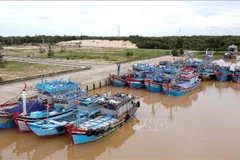
Illustrative photo (Source: VNA)
 Khanh Hoa (VNA) – The central coastal province of Khanh Hoa has seenconsiderable development in recent times, which is partly attributable to thethree sea bays - Nha Trang, Cam Ranh, and Van Phong.
Nha TrangBay has made the city of the same name famous for tourism and as such, becomethe centre of Khanh Hoa province.
Meanwhile,Cam Ranh Bay plays an important role in terms of national defence and security.Furthermore, the northern Cam Ranh peninsula tourism area is also makingstrides towards becoming a national tourism site.
Located inthe north of Khanh Hoa, Van Phong Bay has become a key economic zone of thelocality. However, its impact on local economic development remains limited.
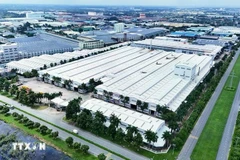
Hoang DinhPhi, head of the management board of the Van Phong economic zone, said the areahas attracted more than 150 investment projects with total registered capitalexceeding 4 billion USD.
Of them, 42projects have specialised in shipbuilding, seaport construction, aquaculture,and tourism services.
The zonecontributes about 4.8 trillion VND (206.4 million USD) to the State budget eachyear, generating stable jobs for over 6,000 labourers, Phi said, citing severaloutstanding projects such as Hyundai Vinashin and the Ninh Thuy industrialpark.
However,most of the projects are located in the south of Van Phong Bay, leaving roomfor potential as the strength of the bay’s northern side remains untapped.
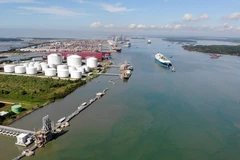
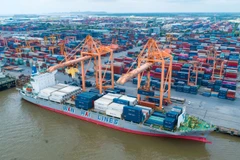
With46,000ha of water surface area and an average depth of 20-30m, Van Phong Bay boastsseveral favourable conditions for the development of international seaports,logistics services, as well as tourism and maritime urban areas ofinternational standards.
Hon Gom peninsulaand the islands of Hon Lon and Diep Son have the potential to house large-scaleleisure and entertainment projects.
The Bac VanPhong (Northern Van Phong) area sits near the intersection of major maritimeroutes – such as Europe-North Asia, Australia-Northeast Asia, and SoutheastAsia-Northeast Asia – and serves as a gateway to the East Sea of the CentralHighlands in particular and the Indochinese Peninsula in general.
For thisreason, the Van Phong economic zone was targeted to become a gateway to the seaand part of cooperation along the East-West and North-South economic corridorsunder Decision No.1353/QD-TTg, dated September 23, 2008.
Acknowledgingthe favourable infrastructure of the Bac Van Phong area in terms of transport,water, electricity, and telecommunications, foreign investors have proposeddeveloping the area into a special administrative-economic zone.
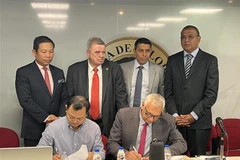
During itsregular meeting in November 2016, the Government agreed on the principles for theestablishment of three special administrative-economic zones, namely in Van Donin the northern province of Quang Ninh, Bac Van Phong in Khanh Hoa, and PhuQuoc in the Mekong Delta province of Kien Giang.
The opinionsof voters, the general public, various organisations, experts, and scientistsare being collected for the draft Law on Special Administrative-Economic Zone.
During its fifthmeeting, the sixth People’s Council of Khanh Hoa province approved a resolutionon a project for the establishment of the Bac Van Phong special administrative-economiczone, which covers the entire Van Ninh district with an area of 111,000ha and apopulation of over 128,000 people.
The zoneprioritises sectors such as IT, electronics, and precision mechanics; seaports;tourism and hotels; and commercial and financial centres.
Chairman ofthe provincial People’s Committee Le Duc Vinh said the zone will require anestimated 53 trillion VND (2.2 billion USD) by 2025 for technicalinfrastructure, 46.5 trillion VND (1.9 billion USD) for social infrastructure,15 trillion VND (645 million USD) for land clearance, and 80 billion VND (3.4million USD) for planning.
The zone ishoped to create breakthroughs in Khanh Hoa’s development.–VNA
VNA