Vietnam’s labour market modernised toward deeper global integration

Through targeted measures, including more job-matching programmes, employment fairs, and job creation loans, the Government has effectively connected provinces rich in human resources with key economic hubs.

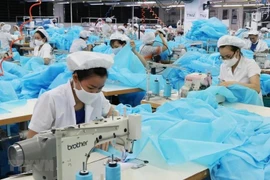
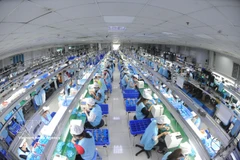
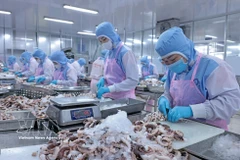
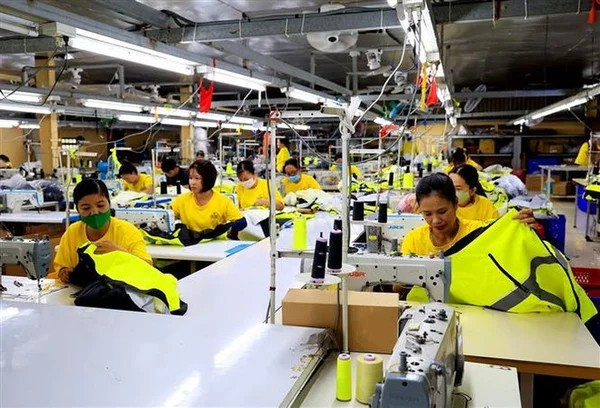
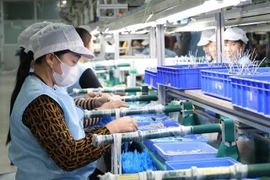
Workers at a textile company in Ho Chi Minh City (Photo: VNA)

Hanoi (VNA) – Vietnam’s labour market has made significant strides, growing in scale and quality as it embraces modernisation, sustainability, and deeper global integration, driven by proactive government policies.

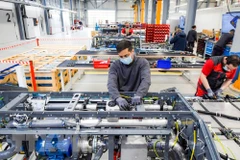
Through targeted measures, including more job-matching programmes, employment fairs, and job creation loans, the Government has effectively connected provinces rich in human resources with key economic hubs. These have ensured a stable workforce for industrial parks, export processing zones, and major economic areas.

According to the National Statistics Office, Vietnam’s labour market in 2024 regained its pre-pandemic momentum. The workforce aged 15 and above reached nearly 53 million, up by over 575,000 from 2023, with 51.9 million employed, a 1.1% increase. The unemployment rate dropped to 2.24%.

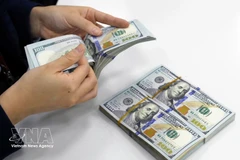
Moreover, over 700,000 Vietnamese workers are employed abroad under contractual agreements, contributing 3.5–4 billion USD in annual remittances.
gp.jpg
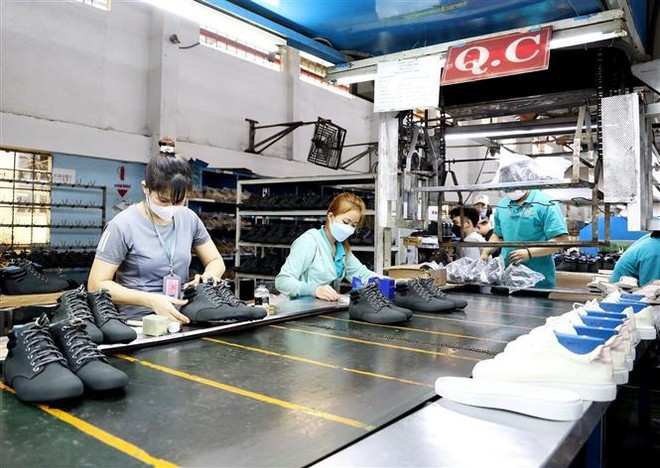
At a footwear company in Ho Chi Minh City (Photo: VNA)

The Party and State are committed to further strengthening the labour market through strategic reforms, including improved coordination of employment, social, and unemployment insurance policies, and accelerated digital transformation. A national labour and employment database, integrated with the population database, is being developed to enhance public employment services.

Vietnam is also refining its legal framework for vocational skills, labour relations, and wage systems to meet domestic and international demands. Robust state oversight ensures labour organisations operate within their mandates, safeguarding political stability and public order.

Looking to 2026–2030, the Government aims to modernise the labour structure by reducing informal employment and expanding sustainable job opportunities. Social policy credit programmes will be scaled up to support vulnerable groups, including the poor, ethnic minorities, people with disabilities, and those impacted by natural disasters, pandemics, or climate change./.
VNA

See more

Hai Phong targets 4.3 billion USD in FDI in 2026 (Photo: VNA)

Hai Phong city targets 4.3 billion USD in FDI in 2026

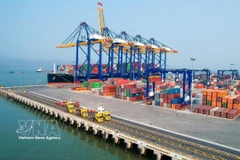
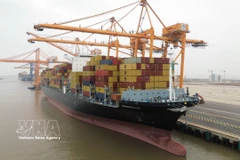
Hai Phong’s investment appeal is underpinned by a rapidly expanding development space, including the Southern Coastal Economic Zone covering more than 20,000 hectares, a planned free trade zone, deep-water ports at Lach Huyen, and 12 industrial parks newly established in 2025.

The relocation of check-in counters aims to better meet the travel needs of residents and visitors. (Photo: VNA)

Vietjet shifts domestic check-in at Tan Son Nhat from January 13

During the recent New Year 2026 holiday peak, Vietjet added 380 flights, equivalent to nearly 78,000 additional seats, on many key domestic routes linking Hanoi and Ho Chi Minh City with destinations such as Vinh, Thanh Hoa, Hai Phong, Da Nang, Phu Quoc, Nha Trang and Da Lat.

Commercial banks are providing approximately 88% of total green credit outstanding in Vietnam. (Photo: nhandan.vn)

Capital sources expanded for sustainable growth

According to the State Bank of Vietnam (SBV), by the end of November 2025, outstanding green credit was estimated at around 750 trillion VND (28.55 billion USD), with an average growth rate exceeding that of overall credit in the economy.

Customers select goods at a supermarket. (Photo: VNA)

Retail market expands sharply, sustainability challenges persist

According to a report on recently released by the Ministry of Industry and Trade’s Agency for Domestic Market Surveillance and Development, the size of the market reached more than 7 quadrillion VND (about 266 billion USD) in 2025, up around 10% compared with 2024.

Oil rigs at the Bach Ho oil field. (Photo: VNA)

Resolution 79: State economy to lead growth

Resolution 79 is described as a “clear action declaration” by the Politburo, saying the state economy is not only responsible for maintaining macroeconomic stability, but must also become the force leading a new growth model that is green and sustainable.

Workers at Garment 10 Corporation produce apparel for export. (Photo: Nhan Dan)

Vietnam leverages export advantages within RCEP region

In 2025, seafood exports to China alone exceeded 2.2 billion USD, up about 33% compared to 2024. Shipments to Japan fetched nearly 1.7 billion USD, a year-on-year increase of 14.6%, while those to the Republic of Korea and Australia grew by 9.6% and 3.2%, respectively.

Certificates of membership in the Vietnam International Financial Centre in Da Nang are awarded at the conference on January 9. (Photo: VNA)

Da Nang continues targeted investment promotion approaches

According to Chairman of the Da Nang People’s Committee Pham Duc An, the city prioritises building sustainable economic ecosystems and focuses on key breakthrough sectors with strong spillover effects, including high technology and digital transformation, logistics, urban infrastructure, finance, processing and manufacturing industries, high-tech agriculture, and the pharmaceutical and medicinal herb industry.

In 2025, Hyundai sales reached 53,229 vehicles across the Vietnamese market. (Illustrative photo: Yonhap/VNA)

Hyundai sales in Vietnam rise almost 23% in December

In 2025, sales reached 53,229 vehicles across the market, a result considered a testament to the efforts by TC Group, Hyundai Thanh Cong, and the entire Hyundai dealership network nationwide amidst a volatile market.

Hydroponic vegetable cultivation model at the High-Tech Agricultural Park (Photo daibieunhandan.vn)

HCM City accelerates shift toward ecological urban agriculture

​The city’s agricultural sector is undergoing a strong transformation, restructuring toward higher value-added and sustainable development. In recent years, the sector has maintained steady growth, with agricultural, forestry and fisheries output rising by an estimated 2.5% annually.