M-commerce to take off in Vietnam

Mobile electronic commerce or m-commerce is soon set to take off in Vietnam thanks to the increasing number of mobile phones and rapid internet development, experts have predicted.
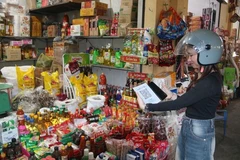
M-commerce to take off in Vietnam ảnh 1A customer browses goods on an online shop (Source: VNA)

Hanoi (VNA) – Mobile electronic commerce or m-commerce is soon set to take off in Vietnam thanks to the increasing number of mobile phones and rapid internet development, experts have predicted.

According to a report by Google Vietnam, mobile devices have driven a major shift in consumer behavior. It said a Vietnamese on average picks up and looks at their mobile phone 150 times a day, or more than 10 times an hour.

Furthermore, more people under 35 now use smartphones than computers.

This has a tremendous impact on m-commerce since users are seeking specific information and content, the company said.

On the sidelines of a recent conference on m-commerce held in HCM City, Nitin Gajria, Vietnam country manager for Google, said he is really optimistic about m-commerce in the country.

“What I am really encouraged by is that the infrastructure is already in place so that it can grow very quickly. Third-generation (3G) coverage is nationwide and phones are getting cheaper.

“Data is already relatively cheap compared to the rest of the markets in the region. So all of these are great conditions for internet penetration to grow quite dramatically very quickly. And that gives me great encouragement for everything that has to do with the internet, including m-commerce.”

According to MasterCard’s latest mobile shopping survey, more than 51 percent of Vietnamese participating in the survey made purchases using their smartphones last year, up from 45.2 percent in 2014.

The survey is based on interviews that took place between October and December last year with 8,500 participants aged 18-64 across 14 markets in Asia-Pacific, including 500 respondents from Vietnam.

The markets include Thailand, China, Japan, the Republic of Korea, Australia, Malaysia, New Zealand, Taiwan, Vietnam, Hong Kong, Indonesia, Singapore, India and the Philippines.

Clothes and fashion accessories, gifts and toys and mobile apps are the most mobile shopping purchases in the country.

The survey also revealed that India topped the region in growth rates , with the number of people shopping on smartphones rising by 29.3 percent from two years ago, followed by Singapore (17.1 percent) and Vietnam (16.8 percent).

Le Xuan Long, marketing director of online marketplace Lazada Vietnam, said, “Every day more and more customers use the internet through mobile phones.”

Technologies are developing and so websites browsed on mobile phones will match mobile applications, he added.

“For Lazada, 60 percent of trading value is through mobile phones. The figure is set to increase to 80 percent by 2020.”

For many companies, m-commerce is a new concept though Vietnamese consumers have indulged in it for long, using their phones every day to access shopping sites, watching advertising videos on YouTube and Facebook and buying products and services.

Demand has shot up but companies do not seem ready with many remaining focused on the desktop. Only a few companies are developing mobile applications.

Lazada said it has developed an App 2.0 version to meet the increasing demand through mobile devices.

Long said the money required to develop the application is not small and thought that is the reason why many companies are reluctant to invest in m-commerce.

But he was optimistic that with pioneers like Lazada coming to the market, others will follow suit and the market will boom.-VNA

VNA

See more

Illustrative image (Photo: VNA)

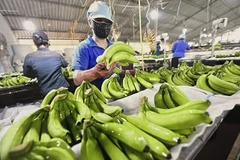
Vietnam targets 1 billion USD in banana exports

Bananas have been identified as a priority product under the Project for the Development of Key Fruit Crops to 2025, with a vision to 2030, approved in October 2022. Under the plan, banana acreage is projected to reach 165,000–175,000ha by 2030, with output of 2.6–3 million tonnes.

Deputy Minister of Foreign Affairs Nguyen Minh Hang (Photo: VNA)

Event connects Vietnamese businesses with African countries

Deputy Foreign Minister Nguyen Minh Hang held that to develop Vietnam – Africa ties more strongly and substantively, it is necessary to promote the engagement of businesses, and that the Government will create favourable conditions for them to enhance fruitful cooperation.

Deputy Prime Minister Ho Duc Phoc (R) and Independent Non-executive Chairman of AIA Mark Tucker at their meeting in Hanoi on December 12. (Photo: VNA)

AIA Group envisions long-term investment, cooperation in Vietnam

Over 25 years of operation in Vietnam, AIA has achieved positive results. Its premium revenue ranks among the top five life insurers, reaching nearly 14.83 trillion VND (563.71 million USD) in 2024 and an estimated 15.73 trillion VND in 2025, equivalent to around 10% of the market share.

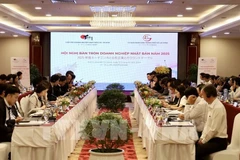
A view of the 2025 Japan business roundtable in HCM City on December 12. (Photo: VNA)

Ho Chi Minh City courts Japanese investment with growth blueprint

Ha underscored the pivotal contributions of Japanese firms, which have long supported local socio-economic progress through major infrastructure projects, industrial zones and workforce training courses. To date, Japanese companies have invested more than 15 billion USD in over 2,200 projects, reflecting sustained confidence and commitment to the market.

Deputy Prime Minister Bui Thanh Son receives Kounlaphanh Vongnathy, Vice President of Phongsupthavy Group, in Hanoi on December 12, 2025. (Photo: VNA)

Lao group urged to deepen energy ties with Vietnam

Deputy Prime Minister Bui Thanh Son has commended Phongsupthavy Group as one of Laos’ leading investors supplying electricity to Vietnam, noting its pledge to ramp up power exports and actively contribute to the implementation of energy cooperation agreements endorsed by senior leaders of the two Parties and States.

An Giang OCOP product booth at the fair (Photo: VNA)

Vietnam–Cambodia OCOP fair expected to boost cross-border trade

The fair offers an opportunity for Vietnamese and Cambodian enterprises to meet and promote their brands and speciality products to both domestic and international visitors, he added, noting that it also serves as a platform for trade connections, helping businesses seek partners, expand distribution networks and access the promising border market.

Vietnamese Ambassador to Argentina and Paraguay Ngo Minh Nguyet (third from left), Paraguayan Minister of the Secretariat of Linguistic Policies Javier Viveros (second from left), and Vietnam's Honorary Consul in Paraguay María Del Carmen Pérez (C) pose for a photo with delegates. (Photo: VNA)

Ample room remains for Vietnam-Paraguay economic ties: Ambassador

Addressing a ceremony marking the 30th anniversary of the establishment of the bilateral diplomatic ties on December 11, Vietnamese Ambassador to Argentina and Paraguay Ngo Minh Nguyet affirmed that Vietnam, one of the fastest-growing economies in Asia, can become a strategic partner to help Paraguay expand its presence in the regional market.

Workers process frozen shrimp for export at the Coastal Fisheries Development Company (COFIDEC), Ho Chi Minh City. (Photo: nhandan.vn)

Vietnamese aquatic products reach new markets

By exploring new markets, diversifying products and prioritising sustainability standards, Vietnamese aquatic products have laid the groundwork for long-term expansion including early steps to build investment partnerships in emerging markets such as Algeria and Cuba.

Export revenue from wood and wooden products is forecast to exceed 18 billion USD in 2025. (Photo: VNA)

Wood, forestry sector targets 25 billion USD in exports

For the 2025–2030 term, Viforest aims to reinforce its role as a hub for innovation, build long-term development plans and expand cooperation with ministries and international partners to support the sector’s green transition.

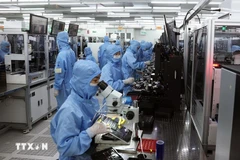
Hanoi targets around 1,200 supporting-industry enterprises. (Photo: thoibaonganhang.vn)

Hanoi shapes supporting-industry ecosystem for its 2035 vision

By 2030, Hanoi targets around 1,200 supporting-industry enterprises, with more than 40% meeting international standards and capable of joining global production networks. By 2035, this is projected to rise to around 1,400, with approximately 45% meeting international standards.