Malaysia reports new COVID-19 cases at workplace

Malaysia has logged 350 new COVID-19 clusters since the start of last December, including 225 related to the workplace, making up 64.3 percent.
Malaysia reports new COVID-19 cases at workplace ảnh 1A woman wearing a protective mask walks on a street in Kuala Lumpur (Photo: Reuters)

Kuala Lumpur (VNA) - Malaysia has logged 350 new COVID-19 clusters since the start of last December, including 225 related to the workplace, making up 64.3 percent.

On January 23 alone, the country reported 11 additional clusters, eight of them at the workplace. 

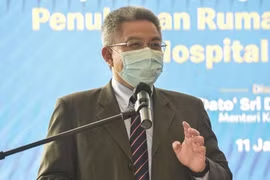
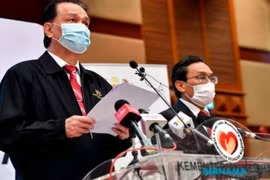
The country's Director-General of Health Noor Hisham said 80 clusters are in manufacturing, 53 in construction and 31 in the services sector. Employers are asked to observe preventive measures to curb the spread of the pandemic.

Since December 1 last year, 112,225 people were tested for COVID-19, and 28,477, or 25.4 percent were positive with the SARS-CoV-2 that caused the disease.

On January 23, Malaysia saw a highest daily infections of 4,275, raising the national tally to 180,455, with a death toll of 667.

Meanwhile, Thailand had 198 new cases on the day, bringing the total number of confirmed cases to 13,500, with 73 fatalities. Among the new infections, there were seven imported ones./
VNA

See more

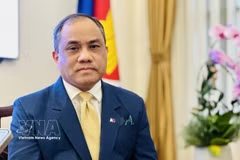
Deputy Minister of Foreign Affairs Dang Hoang Giang. Photo: VNA

Vietnam aims to promote ASEAN unity, resilience and practical cooperation: Deputy FM

Prime Minister Le Minh Hung's attendance at the 49th ASEAN Summit and related summits in Manila, the Philippines, from November 14-17 aims to concretise Vietnam's foreign policy of independence, self-reliance, resilience, multilateralisation and diversification, and reaffirm ASEAN's position as Vietnam's foremost strategic priority in its foreign policy.

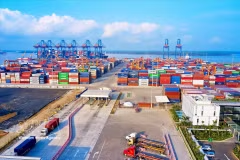
A road is under construction in Dong Nai city, Vietnam. (Photo: VNA)

ADB: Southeast Asia needs 7.1 trillion USD in infrastructure investment by 2040

ADB estimates that the region will need an average of 476 billion USD in infrastructure investment annually during 2026–2040, equivalent to 8.7% of GDP. However, at current investment levels, government budget resources would cover only around 45% of this demand, leaving an annual financing gap of 264 billion USD.

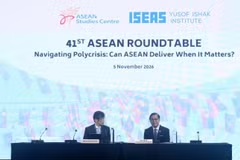
Thai Deputy Prime Minister and Minister of Foreign Affairs Sihasak Phuangketkeow (R) takes part in the Q&A session at the 41st ASEAN Roundtable. (Photo: VNA)

Thailand calls on ASEAN to proactively address polycrisis

Thai Deputy Prime Minister and Minister of Foreign Affairs Sihasak Phuangketkeow noted that no single member state could tackle challenges ranging from major-power competition and economic fragmentation to climate change and energy and food security on its own. Regional cooperation is therefore a strategic imperative, enabling ASEAN not only to overcome crises but also to sustain its development momentum.

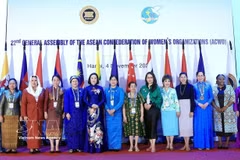
Participants in the 22nd General Assembly of the ASEAN Confederation of Women’s Organisations pose for a group photo. (Photo: VNA)

Women play key role in building united, resilient, sustainable ASEAN Community

Hosted by the Vietnam Women’s Union (VWU), the 22nd ACWO General Assembly marked another milestone in ACWO’s cooperation and development, allowing ASEAN women’s organisations to strengthen solidarity and mutual trust, share experience and identify cooperation priorities for the region’s next stage of development.

Delegates sign an agreement admitting the Timor-Leste Women’s Network Rede Feto as ACWO’s 11th member. (Photo: VNA)

ASEAN Confederation of Women’s Organisations holds Board of Directors meeting in Hanoi

Amid ongoing regional and global changes, which bring both new opportunities and challenges for women, the role of the ASEAN Confederation of Women’s Organisations in connecting organisations and promoting collective action has become increasingly important. This requires continued innovation in its operating methods, stronger ties among members and greater promotion of women's voices and roles in building a united, resilient, inclusive and sustainable ASEAN Community.

Haze in Kuala Lumpur Airport, Malaysia (Photo: VNA)

ASEAN countries step up efforts to combat transboundary haze

ASEAN already has the ASEAN Specialised Meteorological Centre (ASMC), based in Singapore since 1993. The establishment of the ASEAN Coordinating Centre for Transboundary Haze Pollution Control is expected to complement this mechanism by strengthening cooperation among member states and improving the region's response to transboundary haze pollution.

Japanese Minister of National Defence Koizumi Shinjiro (Photo: Xinhua/VNA)

Japan shores up defence ties with ASEAN

Japanese Minister of National Defence Koizumi Shinjiro said members must bridge differences to tackle shared challenges and proposed expanding Japan–ASEAN cooperation with outside partners into AI, unmanned systems and the protection of undersea critical infrastructure.

Speakers at the discussion (Photo: VNA)

ASEAN digital pact key to facilitating cross-border business

At a panel discussion on policy frameworks for the digital economy, held as part of the Autumn Economic Forum 2026 on October 27, speakers said ASEAN needed to ensure national systems could work together while protecting data and facilitating business, rather than impose uniform rules across the region.

Cambodia promotes sport ties in ASEAN

Cambodia promotes sport ties in ASEAN

As part of its commitment to regional development, Cambodia is preparing to host several major events, including the 2028 ASEAN University Games, the 2029 Asian Youth Para Games and the 2031 ASEAN Youth Games.