Mekong sub-region countries share experience in agricultural extension

The fifth meeting of the Mekong Extension Learning Alliance (MELA) opened in Vietnam’s central city of Da Nang on September 11, within the framework of ASEAN cooperation in agricultural training and extension.
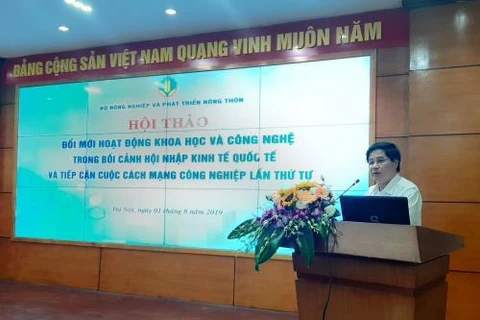
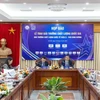
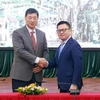
Mekong sub-region countries share experience in agricultural extension ảnh 1At the meeting (Photo: VNA)

DaNang (VNA)
– The fifth meeting of the Mekong Extension LearningAlliance (MELA) opened in Vietnam’s central city of Da Nang on September 11,within the framework of ASEAN cooperation in agricultural training andextension.

The four-day event, held by the National Agricultural Extension Centre underthe Vietnamese Ministry of Agriculture and Rural Development (MARD), bringstogether 60 delegates from five MELA member countries namely Cambodia, Laos,Myanmar, Thailand and Vietnam.

The meeting is meant to exchange information, knowledge and experience inagricultural extension and advisory services in Mekong sub-region countries,along with research in agriculture and rural development.

The participants presented reports on policy implementation and the countries’efforts in promoting smart agriculture adaptive to climate change, greenagriculture, and the development of farmers’ organisations, includingcooperatives.

Nguyen Do Anh Tuan, head of the MARD’s International Cooperation Department,said MELA makes it easier for farmers to access information-technology andinvestment capital to address challenges regarding climate change, naturaldisasters and environment, as well as to expand the market for farm products.

He highlighted the significance of coordination between regional agriculturalextension organisations to food security and safety, animal and plant diseasecontrol and sustainable agro-forestry-fishery development.

The meeting is expected to reach specific solutions to enhance the partnershipamong regional agricultural extension organisations for improving capacity,stepping up technological transfer and agricultural reform in each nation, hesaid.

Initiated in Hanoi in March 2015, MELA has created a network for its membercountries to share knowledge and best practice in agricultural advisory andmarketing services, and sustainable rural development.

The previous four meetings of MELA were held in Laos, Myanmar, Cambodia andThailand./.
VNA

See more

Automated ticketing system is used on the urban railway Cat Linh-Ha Dong line in Hanoi. (Photo: VNA)

Digital transformation powers Hanoi metro expansion

Beyond convenience, stable fares and the elimination of fuel, parking and maintenance costs have made urban rail increasingly attractive. The growing preference for metro travel is also contributing to a greener, more modern urban lifestyle.

Delegates cut the ribbon to inaugurate the operation of electric bus route No. 43. (Photo: VNA)

Hanoi accelerates shift to green buses, targets 100% by 2030

In the 2027–2030 period, the city will accelerate the transition towards the complete phase-out of fossil fuel-powered buses. The share of electric and green energy-fueled buses is projected to reach 79–89% by 2029 and 100% by 2030.

At the second session of the Ho Chi Minh City People’s Council (Photo: VNA)

Ho Chi Minh City greenlights central square, administrative centre in Thu Thiem

The new central city square and administrative centre will create a modern, centralised political-administrative complex for Ho Chi Minh City, designed to house around 8,000 officials, civil servants, and employees. It will also handle daily traffic of 1,500- 2,000 citizens and business representatives through a unified one-stop-shop administrative service system.

A working session at the job fair (Photo: VNA)

Vietnamese students flock to Seoul Job Fair 2026

The second annual Job Fair 2026 was held for Vietnamese students in the Republic of Korea. Organisers pitched it as a straight-up bridge between eager students and bosses hungry for young talent who can actually handle multicultural workplaces.

Defendants at the court (Photo: VNA)

Ho Chi Minh City court opens trial over Agribank lending scandal

The investigation revealed that multiple credit files were incomplete or riddled with inaccurate information, while some pledged assets lacked proper legal standing yet were accepted and grossly overvalued. As a result, the loans became high-risk and largely unrecoverable, leading to losses surpassing 1 trillion VND.

Hanoi introduces 53 electric buses from April 18 (Photo: VNA)

Hanoi to add 53 electric buses from April 18

According to the plan, all buses operating within Ring Road 1 will use green energy by July 1, 2026. The requirement will expand to Ring Road 2 by January 1, 2028, and to Ring Road 3 by 2030.

Illustrative image (Photo: VNA)

National, local traffic safety committees to be dissolved from June 1

Under the dicision, ministries and ministerial-level agencies will assume responsibility for tasks previously performed by the committee, in line with their mandates under the Law on Government Organisation, the Law on Road Traffic Order and Safety, the Law on Roads and other relevant legal frameworks, ensuring that traffic safety and order are maintained without disrupiton.

Visitors explore technology showcases at the exhibition held during the Da Nang Startup and Innovation Festival (SURF 2025). (Photo: VNA)

About 10,000 students expected at National Startup Day 2026

This year marks the rollout of the “Student Startup Support Programme for 2026 – 2035”, approved under Decision No. 336/QD-TTg, which places emphasis on practical outcomes, real products, real testing, real partnerships, and measurable impact.

Hong Quang High School pilots teaching mathematics in English starting from the 2025–2026 academic year. (Photo: VNA)

National foreign language proficiency framework issued

The circular establishes a unified benchmark for foreign language proficiency across the national education system, providing a foundation for curriculum design, teaching, testing, assessment, and certification. It is expected to help learners better map out their language development pathways while enabling educational institutions to improve training quality and strengthen articulation between different levels of education.