Modern trade channels, e-commerce to be further thrive: experts

Modern and online shopping channels recorded strong growth last year and will continue to thrive this year, according to experts.
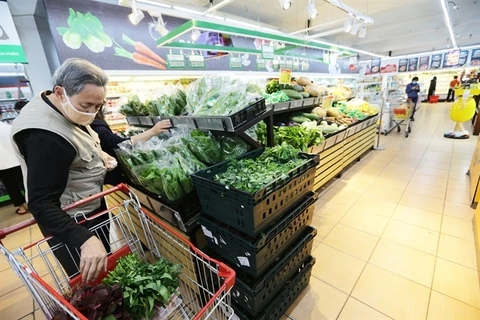
Modern trade channels, e-commerce to be further thrive: experts ảnh 1Illustrative image (Photo: VNA)
Hanoi (VNS/VNA) - Modern and online shopping channels recordedstrong growth last year and will continue to thrive this year, according toexperts.

Le Hoang Long, manager of Nielsen Vietnam’s retail chain consulting, said the COVID-19pandemic has boosted online shopping and more consumers would choose to shoponline even after the pandemic ends.

“The modern trade channel saw strong evolution last year due to new addedchains.”

As of December there were around 8,500 stores nation-wide, including 453supermarkets and 5,566 minimarts with the rest being convenience, health andbeauty, drug, and cash & carry stores, he said.

There is a fierce competition in the retail market, and so each chain has toidentify its strengths to retain competitiveness, he said.

“Supermarkets should embrace the model of shopping associated withentertainment. That is the strength of supermarkets compared to others such asminimarts and convenience stores.”

He said the customer base is changing, with an increase in the number of customersaged between 50 and 65.

“Therefore, supermarkets must make changes in terms of services and goods tomeet the needs and experiences of this emerging customer group.”

According to the Ministry of Industry and Trade, average retail sales and consumerservices revenue per capita increased from 19.3 million VND in 2010 to 51.2million VND in 2019, accounting for 8 percent of GDP.

E-commerce, supported by electronic payment, has grown especially strongly inrecent years, averaging over 27 percent growth, it said.

Nguyen Phuc Khoa, deputy general director of the Saigon Trading Group (Satra),said, “The modern retail market in Vietnam has great potential for development,mainly thanks to its large population size, a high ratio of young people and anaverage annual increase of 10.5 percent in household spending.”

The number of internet users reached 68.17 million last year, with more than145 million mobile devices connected, which would fuel the growth of onlinebuying, he said.

“Vietnam’s retail market has great potential but not everyone can grasp theopportunity.

“Some big brands like Auchan, Parkson and Shop&Go pulled out of the marketcompletely or contracted their network, which shows it is not an easy market.”

He also mentioned other difficulties facing the retail market.

“Commercial infrastructure is developed but is still weak and out of date insome areas. Retail commercial infrastructure such as markets, supermarkets,commercial centres, convenience stores, and specialised stores have increasedrapidly, but are mainly concentrated in cities and towns.

“E-commerce infrastructure has not developed comprehensively, and there is alack of connectivity and support services for e-commerce such as payment andlogistics infrastructure.”

Long said retailers have actively adopted new technologies and tied up withe-commerce platforms and cashless payment solution providers to offer moreconvenience and new services to shoppers.

As a leading consumer retailer, Saigon Co-op would in 2021 continue to embracedigital transformation to adapt to the changing market and consumer behaviour,Nguyen Anh Duc, its general director, said.

Private label products

“Private label products offer a great competitive advantage to retail chains,”Long said, adding that consumers prefer them.

In countries with developed modern trade channels such as the EU, revenues fromprivate label products account for 40 percent while the global average is 16.5percent.

The ratio of private label products in Vietnam remains modest, offeringretailers the opportunity to exploit this segment, he added./.
VNA

See more

Toy production at a Hong Kong-invested factory (Photo: VNA)

Vietnam targets deeper market penetration in Hong Kong in 2026

Vietnam-Hong Kong trade hit 62.3 billion USD in the first 11 months of 2025, soaring 73.1% annually. Vietnamese exports to Hong Kong amounted to 36.8 billion USD, a 90.6% hike, ranking fourth among Hong Kong’s import sources, while imports from Hong Kong stood at 25.5 billion USD, up 52.9% and ranking third.

Vietnam’s start-up market enters restructuring phase

Vietnam’s start-up market enters restructuring phase

In 2026, venture capital inflows into Vietnam’s start-up ecosystem are expected to recover gradually, though in a more selective manner. VinVentures forecasts that capital will focus on start-ups that have survived the rigorous screening of 2024–2025, possess clear business models, strong commercialisation capacity, and the ability to generate real cash flows.

Workers process tra (pangasius) for export (Photo: VNA)

Vietnam–Singapore trade continues to thrive

For the year as a whole, Vietnam retained its position as Singapore’s 10th largest trading partner. Bilateral trade reached a record high of nearly 40 billion SGD, up 26.2% from the previous peak of 31.67 billion SGD recorded in 2024.

Eric Van Vaerenbergh, an energy expert and lecturer at the Brussels Engineering School (ECAM) (Photo: VNA)

Belgian expert optimistic about Vietnam’s economic outlook

Vietnam should move from a growth model based mainly on expanding capital and labour to one driven by productivity improvements. He said that this requires enhancing the quality of the workforce, particularly engineers, technicians, and managers in industrial sectors.

Workers at the VSIP Hai Phong industrial and urban complex, which specialises in producing electronic components for office equipment. (Photo: VNA)

Roadmap aims to improve business climate and boost competitiveness

By the end of 2026, Vietnam aims to rank among the world’s top 50 performers in the United Nations Sustainable Development Goals, advance at least three places in the International Property Rights Index, and climb at least one position in the Global Innovation Index.

Vietnam is strengthening its position in the technology value chain, becoming a major manufacturing hub for complete consumer electronics products. (Photo: VNA)

ESG standards offer opportunities to reposition Vietnam’s electronics firms

The 2025-2027 period will be a critical turning point, as exporters to the European market will be required to strictly comply with ESG standards, including net-zero emissions roadmaps, labour standards, corporate governance and transparency requirements. As a key export sector, the electronics industry is being directly and strongly affected by this shift.

A production line for camera modules and electronic components at the factory of MCNEX VINA Co. Ltd, a Republic of Korean-invested company in Phuc Son Industrial Park, Ninh Binh province. (Photo: VNA)

Science, technology, innovation as engines of economic growth

To ensure that science and technology truly act as a powerful growth engine, experts emphasised the need for the Government to put in place supportive mechanisms and policies that encourage enterprises to invest in research and development, while strengthening cooperation among the State, research institutions and the business sector.

The headquarters of the Ministry of Industry and Trade in Hanoi (Photo: VNA)

PM updates lead roles to drive UKVFTA forward

The Ministry of Industry and Trade (MoIT) is named the lead agency, with overall responsibility for the agreement’s general goals and definitions, trade remedies, non-tariff barriers to trade and investment in renewable energy, competition policies, State-owned enterprises, enterprises with special or exclusive rights and those with designated monopolies, as well as institutional, general and final terms.