Mongolia seeks closer tourism links with Vietnam

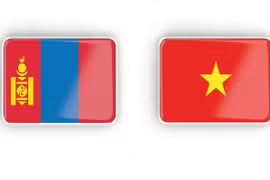
The Mongolian Ministry of Environment and Tourism is holding tourism promotion activities in Vietnam from April 4 to 7 during the first time this landlocked country takes part in the Ho Chi Minh City Tourism Festival.
Mongolia seeks closer tourism links with Vietnam ảnh 1Mongolian artists perform at the pavilion of their country at the HCM City Tourism Festival 2024. (Photo: VNA)
HCM City (VNA) – The Mongolian Ministry of Environment and Tourism is holdingtourism promotion activities in Vietnam from April 4 to 7 during the first timethis landlocked country takes part in the Ho Chi Minh City Tourism Festival.

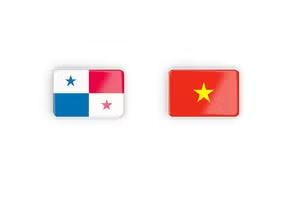
This alsomarks the start of activities to be held on the threshold of the 70th anniversary of the two countries’ diplomatic relations (November 17, 1954 - 2024).

At the festival, a programme named "Go MongoliaRoadshow 2024” is organised to introduce the Mongolian culture, tourism andcuisine; and explore tourism cooperation opportunities between the twocountries.

GalbaaDavkharbayar, Second Secretary of the Mongolian Embassy in Vietnam, said theHCM City Tourism Festival is a chance for his country to introduce its cultureand people to the Vietnamese and help travel businesses of Mongolia seek partnershipswith Vietnamese firms to increase visitors to each other’s markets, thuscontributing to economic ties and friendship between the two countries.

The numbers of Vietnamese visitors to Mongolia andMongolian visitors to Vietnam have been on the rise over the past years, butthat has yet to fully live up to the countries’ huge tourism potential, henoted.

He citedstatistics as showing that more than 2,000 Vietnamese tourists came to Mongoliain 2023, when the number of Mongolian travellers to the Southeast Asian nation topped15,000.

ZolkhuuUlambayar, Director of Mongolian travel company TMD Tourist LLC, perceived thataside from each country’s tourism advantages, the bilateral visa exemption agreement,which came into force on March 7 this year, will also create favourableconditions and good opportunities for businesses to strengthen trade, investmentand tourism ties, as well as people-to-people exchanges.

HCM City is a big tourism centre of Vietnam andalso has a large number of tourists travelling abroad. Given this, an Ulaanbaatar- HCM City air route expected to be opened by Mongolian Airlines this Novemberwill help encourage more Mongolians and Vietnamese to visit each other’scountries, he added./.
VNA
See more

Pu Luong community-based ecotourism site in Thanh Hoa province attracts visitors during National Day holiday. (Photo published by VNA)

Travel firms drive tourist flows, boost tourism value

Travel companies should play a key role in directing tourist flows and linking the tourism value chain, thus enhancing the competitiveness of the tourism sector. They should go beyond selling tours to understand market demand, design products, connect services, organise tourist flows, manage risks and contribute to shaping destination images.

The picturesque scenery outside Phong Nha Cave (Phong Nha-Ke Bang National Park) (Photo published by VNA)

Vietnam steps up tourism promotion on global markets

Experts say that to turn advantages into high-value tourist arrivals, tourism promotion needs to move beyond fragmented activities towards large-scale, long-term campaigns tailored to target markets and closely linked to actual visitor experiences.

Visitors tour Hoi An Ancient Town in Da Nang city. (Photo: VNA)

Vietnam’s tourism targets 12% of GDP by 2030

Resolution 26-NQ/TW targets a direct GDP contribution of 10–12% by 2030, 45–50 million foreign arrivals, 160 million domestic visitors, and total revenue of 80–90 billion USD.

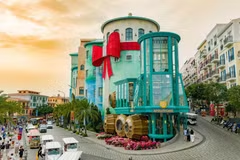
Located on Apollo Square in the heart of Sunset Town, Phu Quoc, Apollo Cafe is a distinctive venue designed by renowned architect Bill Bensley.

Coffee beneath an “upside-down” town: A surreal stop in Phu Quoc

With an entire town recreated on its ceiling, sweeping sunset views and a vantage point for watching fireworks after dark, Apollo Cafe in Phu Quoc offers more than a photogenic backdrop. Designed by Bill Bensley, the venue shows how a café can become an experience travellers deliberately build into their itinerary.

Vietnam is named Asia's Leading Destination for the eighth time and Asia's Leading Heritage Destination for the fourth time at the 2026 World Travel Awards. (Photo: VNA)

Vietnam strengthens tourism profile with WTA 2026 honours

The awards demonstrate that Vietnam's tourism appeal is being recognised across a broad range of areas, from national, urban and heritage destinations to nature-based attractions and tourism products and services, further strengthening the country's presence on the regional and international tourism map

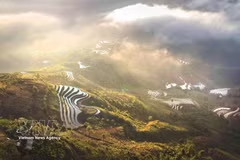
Terraced fields shimmering with water create a picturesque scene in Lang Sang Village, Ta Xua Commune. (Photo: VNA)

Ta Xua named Asia’s leading emerging tourism destination 2026

In recent years, Ta Xua, dubbed "the paradise of clouds", has emerged as one of the mountainous destinations attracting strong interest from young travellers, particularly for its spectacular sea of clouds stretching across the mountains in the northwestern region.

AirAsia highlights Kem Beach as a family-friendly destination, where children can play on the sand while parents enjoy a little more time relaxing by the sea. (Photo: VNA)

AirAsia recommends Phu Quoc as ideal destination for family travel

A familiar low-cost airline among Southeast Asian travellers, AirAsia describes Phu Quoc in its blog guide to travelling with young children as a destination that feels almost tailor-made for families, with beaches for relaxation, leisure attractions and a wide range of activities to engage children of different ages.

Ho Chi Minh City Central Post Office remains a popular attraction for domestic and international tourists. (Photo: VNA)

Ho Chi Minh City wins three top Asian tourism awards in 2026

The 2026 honours add to the city’s impressive streak at international tourism awards. In the 2025 WTA, the southern metropolis took home four titles, including business travel and festival and event destination awards, which it had won for four years from 2022 to 2025.

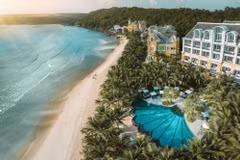
Phu Quoc is building its capacity to host MICE tourism, with international resorts, event venues, world-class shows and an expanding flight network. (Photo: Sunset Town)

Why does Travel + Leisure call Phu Quoc Asia’s next MICE hotspot?

According to the magazine, Phu Quoc was once known primarily for its beaches and relaxed holiday atmosphere. Over the past two years, alongside that appeal, the island has gradually developed its capacity to serve the MICE market, with international resorts, event venues, world-class shows and an expanding flight network.

Every year, from September to October, terraced rice fields in Mu Cang Chai and Pung Luong communes, Lao Cai province, turn a golden yellow, creating a spectacular landscape across the northwestern mountains. (Photo: VNA)

Indigenous culture becomes tourism asset in northern highlands

With growing recognition of indigenous knowledge, customs and cultural values as unique assets, ethnic communities in the northern mountainous region are shifting from simply providing tourism services to becoming creators and owners of tourism products, confidently telling their own cultural stories

Tourists watch the sunset from the Kiss Bridge in Phu Quoc special zone, An Giang province. (Photo published by VNA)

An Giang's tourism sector grows, prepares for APEC 2027

Phu Quoc remains the biggest contributor to An Giang's international arrivals and tourism revenue. The special zone welcomed more than 1.92 million foreign visitors during the nine-month period, accounting for over 99% of all international arrivals in the province.

Wellness tourism is gradually becoming a high-value-added segment, extending international visitors' length of stay in Vietnam. (Photo: VNA)

Vietnam leans on wellness tourism to unlock higher-value segment by 2030

Vietnam has the abundant natural resources, including beaches, forests, mineral springs, mineral mud and a wide range of medicinal plants, backed by a long-lasting traditional medicine and the cultural identity of its ethnic communities. Together, they form the base for wellness tourism products that are both competitive and distinctly Vietnamese.