National steering committee for coronavirus prevention set up
Prime Minister Nguyen Xuan Phuc has decided to establish a national steering committee for prevention and control of the acute respiratory disease caused by a new coronavirus (nCoV).
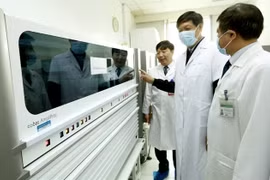
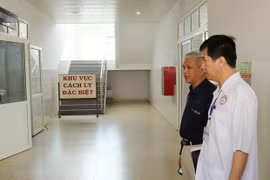
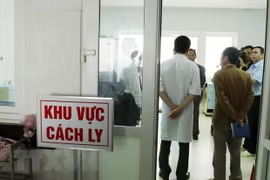
Deputy PM Vu Duc Dam examines the preparedness for quarantining and treating patients infected with coronavirus at the National Hospital of Tropical Diseases (Source: VNA)
Hanoi (VNA) – Prime Minister Nguyen XuanPhuc has decided to establish a national steering committee for prevention andcontrol of the acute respiratory disease caused by a new coronavirus (nCoV).
The committee is headed by Deputy Prime Minister VuDuc Dam, while Deputy Ministers of Health Do Xuan Tuyen and Nguyen Truong Son workas its deputy heads.
The steering committee’s members also include representativesfrom various ministries and agencies. The Ministry of Health is the standingagency of the steering committee.
It is tasked to help the PM instruct and coordinate relevantministries, ministry-level and governmental agencies and localities in thefight against the nCoV-caused acute respiratory disease across the country.
The committee is assigned to direct the coordination between ministries,ministry-level and governmental agencies and bodies of the Party, VietnamFatherland Front and People’s Committees of centrally-run provinces and cities inmobilising resources to participate in and support the implementation of urgentplans launched by the Ministry of Health.
The steering committee is responsible for carrying outand supervising the performance of the PM’s instructions by ministries, sectorsand localities and making daily reports about the development of the disease tothe PM and authorities.
The northern port city of Hai Phong also set up asteering committee for prevention and control of the disease./.
No cases of acute pneumonia, caused by a novel coronavirus (nCoV), have been reported in Vietnam by January 19, according to the Preventive Medicine Department under the Ministry of Health (MoH).
Two Chinese citizens have been quarantined at Ho Chi Minh City-based Cho Ray Hospital after they tested positive to novel coronavirus (nCoV) that caused an acute pneumonia outbreak in Wuhan city, China.
Deputy Prime Minister Vu Duc Dam chaired an urgent meeting in Hanoi on January 24 in response to the acute respiratory disease caused by a novel coronavirus (nCoV) strain.
Prime Minister Nguyen Xuan Phuc has issued an urgent dispatch on preventing the acute respiratory disease caused by a novel coronavirus (nCoV) strain, which is developing complicatedly in China without specific treatment and preventive vaccine yet.
The 17 Vietnamese students and their relatives in Wuhan city, the Chinese province of Hubei, where an acute respiratory disease caused by the novel coronavirus (nCoV) is raging, are currently in stable health and psychological condition, the Vietnamese Embassy in China said on January 26.
Deputy Prime Minister Vu Duc Dam has stressed the need to continue giving top priority to the endemic prevention and fighting, as the nCoV is spreading.
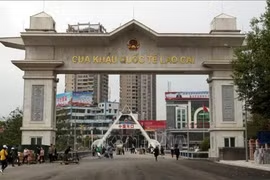
The Department of Culture Sports and Tourism of the northern border province of Lao Cai has issued a document asking the tourism firms operating in the locality to suspend the entry and exit for tourists at the Lao Cai International Border Gate to China’s regions facing the risk of the acute pneumonia disease caused by the nCoV.
In the face of complex developments of the acute respiratory disease caused by the novel coronavirus (nCoV), Prime Minister Nguyen Xuan Phuc chaired an urgent meeting with officials of relevant ministries and sectors in Hanoi on January 27 to discuss countermeasures.
The Ministry of Culture, Sports and Tourism on January 29 asked tourism sectors of localities nationwide to pay special heed to well controlling and keeping close watch on the acute respiratory disease caused by a new coronavirus originated from Wuhan, China (2019-nCoV).
The novel coronavirus (nCoV) outbreak caused certain negative impact on Hanoi’s tourism during the seven-day Lunar New Year holiday (Tet), according to the municipal Department of Tourism.
The Civil Aviation Administration of Vietnam (CAV) has asked airlines to proactively adjust their flight schedules and suspended all flights from coronavirus-affected areas to Vietnam.
The two sides discussed new opportunities for partnership at a recent conference in Hanoi, part of Sweden-Vietnam Health Week 2026, which brings together more than 200 policymakers, healthcare leaders, researchers, medical professionals and business representatives from both countries.
Beyond clinical expertise, service quality also matters. Parents value strict patient triage to minimise cross-infection and attentive guidance from healthcare staff.
Permanent Deputy Minister of Health Vu Manh Ha said ophthalmic techniques, technologies and treatment methods were developing rapidly, while patients were increasingly concerned about vision recovery and quality of life after treatment.
Hospitals managed by the Da Nang Department of Health have been required to stop using paper medical records from November 1, while the facilities under ministries and sectors, as well as private ones, will do so from January 1, 2027.
Statistics from the municipal Department of Health showed that, as of November 9, more than 9.53 million people had undergone health examinations and screening or had their health records updated, representing 74.6% of the city's population.
Plastic surgery has long been associated with procedures for women, but men also seek treatment for abdominal fat, enlarged breasts and age-related changes around the eyes and face. The American Society of Plastic Surgeons (ASPS) includes liposuction, gynecomastia surgery and eyelid surgery among procedures performed on male patients.
Ambassador Nguyen Le Thanh called on Vietnamese and Danish partners to identify priority areas and promote research and training programmes, knowledge transfer and technology application in line with Politburo's Resolution No. 57-NQ/TW on breakthroughs in science – technology development, innovation and national digital transformation.
The country's abundant medicinal resources provide a cornerstone for leveraging the strengths of traditional medicine and expanding opportunities to develop high-value medicinal products.
Dr. Huynh Minh Chin, Deputy Director of the department, said rising elderly care needs are putting pressure on traditional family-based care, as older people increasingly face multiple chronic illnesses, mobility problems, malnutrition, dementia and depression, requiring continuous support and closer coordination among hospitals, grassroots healthcare facilities, families and social support institutions.
Demand for healthcare, better quality of life and physical and mental well-being has grown in recent years, making wellness tourism an increasingly valuable market segment that can extend visitors' stays, boost spending and stimulate related sectors.
The city recorded more than 44,000 cases from the beginning of the year, up over 65% year-on-year, along with five deaths and more than 1,600 outbreaks, according to the municipal Department of Health.
Vietnamese Ambassador Nguyen Minh Vu said the programme has been jointly organised by the embassy and the hospital annually in various Cambodian localities to provide healthcare support to disadvantaged households and contribute to the Cambodian Government’s efforts to improve public health. The initiative also reflects close cooperation in healthcare and the strong bonds between the people of Vietnam and Cambodia.
The Ministry of Health, in coordination with the Ministry of Public Security, is tasked with completing the integration of electronic health records into the VNeID system for 100% of the population before June 30, 2027, according to a notice issued by the Party Central Committee’s Office.
Standing Deputy Minister of Health Vu Manh Ha said that the 2006 Law on Donation, Removal and Transplantation of Human Tissues and Organs and Donation and Removal of Cadavers has established an important legal framework, contributing to the development of tissue and organ transplantation in Vietnam.
Recent developments in Hanoi and other localities highlight efforts to develop specialised treatment, standardise professional practices and apply artificial intelligence (AI) and advanced medical techniques, towards a more modern healthcare system.
Hanoi-based Bach Mai Hospital has become the first healthcare facility in Vietnam to earn the “Advanced Stroke Centre” certification from the World Stroke Organisation (WSO).
An official of Ho Chi Minh City said the city's specialised hospitals, skilled workforce and modern medical capabilities provide a strong foundation for developing services in specialised treatment, dentistry, assisted reproduction, cosmetic procedures and health check-ups.


The country now has 34 transplant centres capable of performing heart, liver, lung, kidney and cornea transplants. Beyond single-organ procedures, Vietnam has also mastered multi-organ and domino transplant techniques.