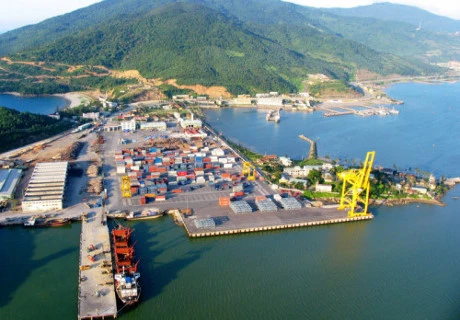
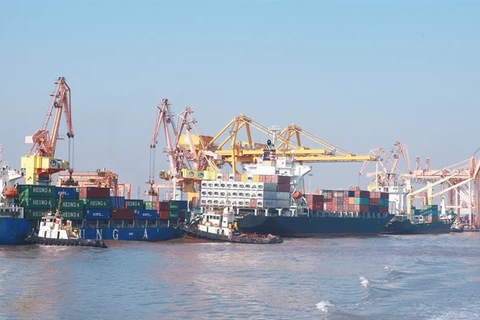
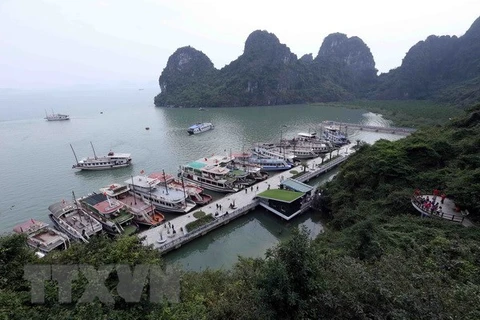
Illustrative image (Source: Internet)
 Hanoi (VNS/VNA) - Although there have been some positive signs in recent years, Vietnam’s sea transport sector still face difficulties with many enterprises suffering heavy losses. The maritime industry is proposing support mechanisms to help the sector out of its stagnant state.
In 2018, Vietnam National Shipping Lines (Vinalines) recorded strong growth in sea transport volume with an increase of more than 13 percent, reaching 24.3 million tonnes. This figure shows solid growth from when sea transport hit its floor a few years ago.
However, Acting General Director of Vinalines Nguyen Canh Tinh said the sector still faced challenges because, due to shipping supply surpluses, freight rates were only one-tenth of what they were in 2008.
The Philippines and Malaysia, traditional destinations for Vietnamese shipping fleets, have low profit margins. For routes with higher margins such as the Republic of Korea, Japan and North China, many Vietnamese ships did not meet the strict requirements to enter the ports, Tinh said. This made it difficult to access these higher-value markets.
Vu Duc Ngo, Director of Vu Gia Tam Trading and Transport Co., Ltd, said that since 2009, shipping activities suffered heavy losses.
According to Trinh The Cuong, head of Shipping and Maritime Services under the Vietnam Maritime Administration (VMA), the total volume of transport carried out by Vietnam’s fleets in 2018 was more than 144 million tonnes, an increase of nearly 11 percent year-on-year, accounting for 55.6 percent of the total turnover of all modes of transport.
However, Cuong said the structure of Vietnam’s shipping fleet was not reasonable. While general cargo ships and bulk cargo ships accounted for more than 70 percent of the total tonnage, container ships only accounted for 3.6 percent (41 ships).
In order to support shipping enterprises, VMA is asking the Ministry of Transport to propose the Government develop supporting policies and exempt shipping companies with large and modern fleets from taxes.
VMA will build commodity and transport trading floors to make use of cargo ships on domestic routes.
The Ministry of Transport will also propose to the Government a number of policies to facilitate shipping enterprises in the country. These include lending shipping enterprises investment capital, upgrading fleets from development investment funds, exempting import taxes for supplies and equipment to repair ships that Vietnam has not yet produced, reducing corporate income taxes and import taxes on ships and eliminating personal income tax on salaries of officers and crew members working on seagoing vessels in inland transport.-VNS/VNA
In 2018, Vietnam National Shipping Lines (Vinalines) recorded strong growth in sea transport volume with an increase of more than 13 percent, reaching 24.3 million tonnes. This figure shows solid growth from when sea transport hit its floor a few years ago.
However, Acting General Director of Vinalines Nguyen Canh Tinh said the sector still faced challenges because, due to shipping supply surpluses, freight rates were only one-tenth of what they were in 2008.
The Philippines and Malaysia, traditional destinations for Vietnamese shipping fleets, have low profit margins. For routes with higher margins such as the Republic of Korea, Japan and North China, many Vietnamese ships did not meet the strict requirements to enter the ports, Tinh said. This made it difficult to access these higher-value markets.
Vu Duc Ngo, Director of Vu Gia Tam Trading and Transport Co., Ltd, said that since 2009, shipping activities suffered heavy losses.
According to Trinh The Cuong, head of Shipping and Maritime Services under the Vietnam Maritime Administration (VMA), the total volume of transport carried out by Vietnam’s fleets in 2018 was more than 144 million tonnes, an increase of nearly 11 percent year-on-year, accounting for 55.6 percent of the total turnover of all modes of transport.
However, Cuong said the structure of Vietnam’s shipping fleet was not reasonable. While general cargo ships and bulk cargo ships accounted for more than 70 percent of the total tonnage, container ships only accounted for 3.6 percent (41 ships).
In order to support shipping enterprises, VMA is asking the Ministry of Transport to propose the Government develop supporting policies and exempt shipping companies with large and modern fleets from taxes.
VMA will build commodity and transport trading floors to make use of cargo ships on domestic routes.
The Ministry of Transport will also propose to the Government a number of policies to facilitate shipping enterprises in the country. These include lending shipping enterprises investment capital, upgrading fleets from development investment funds, exempting import taxes for supplies and equipment to repair ships that Vietnam has not yet produced, reducing corporate income taxes and import taxes on ships and eliminating personal income tax on salaries of officers and crew members working on seagoing vessels in inland transport.-VNS/VNA
VNA