Over the past four decades of Doi moi (Renewal), Vietnam’s healthcare sector has made remarkable progress, and is now well positioned to achieve further breakthroughs by harnessing science, technology and innovation to improve public health care in the new era, according to experts from the Vietnam Union of Science and Technology Associations (VUSTA).
Vinmec Smart City Hospital in Hanoi announced it has successfully applied CAR-T cell therapy for the first time to treat a 28-year-old female patient suffering from systemic lupus erythematosus with severe kidney damage.
According to the municipal Department of Health, as of July 20, a total of 732,873 residents had undergone periodic check-ups and had electronic health records established. The figure reflects encouraging initial results from the citywide campaign launched by the department and underscores local authorities' commitment to implementing one of the largest community healthcare programmes ever undertaken in the southern metropolis.
The campaign, launched on July 16, aims to ensure that all residents receive health examinations, have electronic health records and benefit from continuous health management.
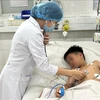
The health condition of the last patient receiving treatment following the deadly boat capsize off the Phu Quoc special one in An Giang province has shown positive signs of improvement after three more days of intensive care, Cho Ray Hospital in Ho Chi Minh City said on July 16.
Upon arrival at Cho Ray Hospital, the patient remained in critical condition. However, doctors reported encouraging signs, with both haemodynamic parameters and blood oxygen levels showing improvement.
The surgery was completed in just 65 minutes, the shortest operation time among all heart transplants carried out at the Ho Chi Minh City University of Medicine and Pharmacy.
The draft strategy aims to position Vietnam as a trusted healthcare destination in Southeast Asia by 2030 and eventually among Asia's leading medical tourism hubs. The plan marks a shift from viewing medical tourism as an untapped opportunity to making it a national development priority.
Hospital Director Dr. Pham Thanh Viet said that immediately after receiving news of the accident, the hospital deployed doctors who had been working at Phu Quoc Hospital to Sun Group International Hospital to help provide emergency treatment and intensive care for two critically injured patients.
The Ministry of Health and the French Embassy co-hosted the Vietnam–France High-Level Conference on next-generation vaccine technologies in Hanoi on July 9.
Under the agreement, Sanofi will transfer technology to VNVC to manufacture selected high-demand vaccines for children and adults at VNVC Vaccine and Bioproduct Plant. The first next-generation vaccines produced in Vietnam are expected to roll off production lines in 2028.
An increasing number of international families are choosing Vietnam for infertility treatment, embarking on journeys to parenthood that transcend geographical distance and differences in nationality.
The PM stressed that throughout the country’s development process, people have consistently been regarded as the centre, the driving force, the objective and the most important resource for national development. Sustainable and rapid development requires not only a healthy, knowledgeable and skilled population but also a modern, equitable, efficient, sustainable and accessible healthcare system.
According to the municipal Department of Health, developing gateway hospitals is a key pillar of the city's strategy to establish a regional specialised healthcare system. The network is designed to permanently relieve overcrowding at major downtown hospitals while strengthening strong inter-regional emergency care and treatment network.
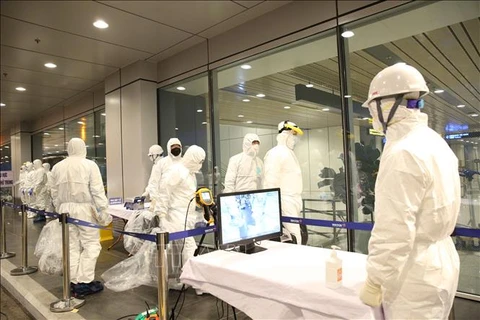
The Ministry of Health has moved to dispel confusion over new border health declaration rules set to take effect on July 1, stressing that declarations will not be mandatory for all travellers and that no online declaration portal is currently in use.
According to the World Health Organisation (WHO), non-communicable diseases (NCDs), including cardiovascular, diabetes, cancer, and chronic respiratory diseases, account for nearly 80% of all deaths in Vietnam, making them one of the country's most pressing healthcare challenges
Achieving universal health check-ups in 2026 will lay the foundation for a new healthcare model in which every resident has an electronic health record, receives regular screenings, benefits from lifelong health management and gains access to early intervention through primary healthcare services.
Deputy Prime Minister Nguyen Van Thang praised the hospital’s shift to a multi-campus model with unified professional standards, governance, training, research, service culture, and digital transformation.
With this sensor, people living with diabetes can see their glucose readings and receive alerts automatically on their readers when their glucose reaches levels that are either too low or too high.
Heatwaves are affecting many localities nationwide, with temperatures commonly ranging from 36 to 40 degrees Celsius and even higher in some areas.