No new community transmissions recorded, WHO extols Vietnam’s efforts ​

Vietnam is currently the country with the second lowest ratio of COVID-19 infection cases among the total population in the Western Pacific region, with three cases per one million people, according to the World Health Organisation (WHO).

Hanoi (VNA) – Vietnam is currently the country with the second lowest ratio of COVID-19 infection cases among the total population in the Western Pacific region, with three cases per one million people, according to the World Health Organisation (WHO).

No new community transmissions recorded, WHO extols Vietnam’s efforts ​ ảnh 1

A quick test of COVID-19 (Photo: Vietnam News Agency)

On the afternoon of April 21, the Ministry of Health confirmed that there were no new COVID-19 cases, marking the sixth consecutive day free of new community infections.

To date, the tally has remained at 268, including 160 imported that were quarantined upon arrival.

More than 75,790 people having close contact or entering from pandemic-hit areas have been quarantined at hospitals, concentrated quarantine establishments, homes or accommodations.

On the same day, one patient treated at Cu Chi field hospital in southern Ho Chi Minh City officially recovered from the disease, according to the National Steering Committee for COVID-19 Prevention and Control’s treatment subcommittee.

The subcommittee reported that 12 tested negative for the SARS-CoV-2 once and eight tested negative twice.

WHO: Vietnam effective in COVID-19 fight

The WHO in the Western Pacific region held a virtual press conference on the morning of April 21. The aim was to inform the developments of COVID-19 in the region as well as the WHO response measures and scenarios that countries might encounter in the future.

Takeshi Kasai, Director of the WHO in the region, said that the pandemic occurred in 22 nations with 132,438 infections, including 5,648 deaths as of April 20.

He expressed his concerns over the complicated developments of the disease in some hotspots in the region, such as Japan and Singapore, while speaking highly of efforts by some nations, including Vietnam.

He shared difficulties that regional countries and people are facing, adding that lockdown measures have proven effective, and people should be ready to adapt to a new lifestyle during the COVID-19 crisis.

“As we move forward in this difficult time, our lives, our health systems and approaches to stopping transmission must continue to adapt and evolve, along with the epidemic”, he said, adding that at least until a vaccine or very effective treatment is found, this process will need to become our “new normal”. 

Vietnam has shown effective, drastic and synchronous leadership across many levels of government, from the Prime Minister and ministers to localities, through COVID-19 prevention and control, he said.

The official advised Vietnam to carefully consider how to start removing restrictions, recommending that all restrictions should not be lifted at the same time.

Vietnam’s COVID-19 test kits meet European standards

Phan Quoc Viet, director of the Viet A Technology Corporation, said today that the British Department of Health and Social Care has granted the CE marking and Certificate of Free Sale (CFS) to Vietnam’s coronavirus test kits, meeting in the European Union standards.

The test kits were produced by the Vietnam Military Medical Academy and the Viet A Technology Corporation.

Although the UK officially left the European Union on January 31, 2020, the EU Pharmaceutical Law will still apply to the UK until December 31, 2020. This means any product that receives the CE marking from any member state of the bloc can be sold in other EU member states.

Viet disclosed that, after being given the certificate, the product had been exclusively ordered by many partners for distribution in the UK, India, Mexico, the United States and several other European countries.

Currently, the only method in the world recognised by WHO as the "gold standard" for detecting SARS-CoV-2 is Real-time PCR. This method is also used by the Vietnam Military Medical Academy and the Viet A company.

Currently, Viet A's production capacity is about 10,000 sets per day. If required, the company can triple its capacity to meet domestic demand, exports, and international assistance./.
VNA

See more

The DAV asks pharmacy producers and distributors to increase medicine supply capacity during Tet to meet increasing demand (Photo: VNA)

Measures rolled out to ensure adequate medicine supply during Tet

Accordingly, provincial and municipal health departments are required to direct hospitals, centres for disease control and health care facilities to urgently develop plans and carry out medicine procurement to ensure sufficient supply, absolutely avoiding shortages. Medicines must meet quality standards and be sold at reasonable prices, with no sudden price increases allowed.

Military doctors conduct ultrasound examinations for residents in Dong Dang town, Cao Loc district, Lang Son province. (Photo: VNA)

Resolution 72 opens path to a modern, sustainable healthcare system

To build a resilient healthcare system capable of meeting the challenges of ageing, emerging diseases and rising expectations for quality care, Vietnam must continue to strengthen primary and preventive care, invest in human resources, accelerate digitalisation and big data development, and refine healthcare financing mechanisms.

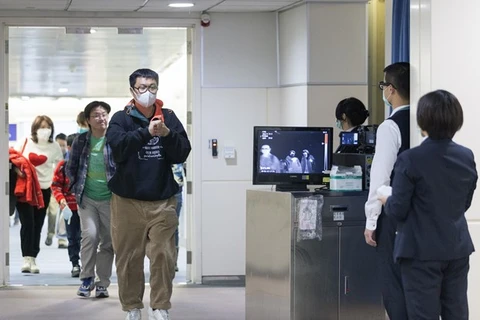
Vietnam steps up Nipah virus prevention at border gates (Photo: suckhoedoisong.vn)

Vietnam tightens Nipah virus prevention at border gates

Local authorities have been instructed to strengthen disease prevention and control measures at border gates, medical facilities and in the community, stay updated with global disease information, and closely monitor inbound travellers.

Nipah virus infection is designated a Group A infectious disease, with reported fatality rates of between 40 and 75%. (Photo: moh.gov.vn)

Health sector steps up preparedness against Nipah virus disease

Nipah virus infection is designated a Group A infectious disease, with reported fatality rates of between 40 and 75%. At present, no vaccine or specific antiviral treatment is available. The virus is mainly transmitted from animals to humans or through contact with contaminated food and objects, and can also spread between people via direct contact with bodily fluids and secretions of infected patients.

Member of the Party Central Committee and Minister of Health Dao Hong Lan (Photo: VNA)

Health minister highlights comprehensive, people-centred healthcare orientation

Member of the Party Central Committee and Minister of Health Dao Hong Lan said the Politburo's Resolution No. 72 provides a breakthrough orientation for the protection, care and improvement of the people’s health. It places the people’s health at the centre of all healthcare policies and services, while aiming to address long-standing bottlenecks in the health sector that have yet to be fundamentally resolved.

Elderly people do morning exercises in the Hoan Kiem Lake area in Hanoi. (Photo: VNA)

Strategic roadmap for healthier future

As Vietnam’s population ages rapidly, Dr Angela Pratt, WHO Representative in Vietnam, identified two strategic priorities: strengthening primary healthcare and developing a formal long-term care system. These measures are essential not only for healthy ageing, but also as long-term investments with wide-ranging socio-economic returns.

Professor Dr Tran Van Thuan, Deputy Minister of Health. (File photo: VNA)

More than 300 medical staff assigned to serve 14th National Party Congress

Deputy Minister of Health Tran Van Thuan called on experts and healthcare workers to uphold a strong sense of responsibility, professionalism and expertise to ensure that medical services for the 14th National Party Congress are delivered safely, effectively and with the highest level of care.

Health check-up offered to citizens in Gia Lai province. (Photo: VNA)

Health ministry maps out three phases for hospital fee exemption

Health insurance participants from near-poor households and those aged 75 and above who are receiving social pension allowances will be entitled to 100% coverage of medical examination and treatment costs within the scope of health insurance benefits.

A patient pays hospital fees using cashless transactions (Photo: qdnd.vn)

Hanoi aims for modern healthcare system

Hanoi's health sector will continue to expand the comprehensive use of digital technology in professional practices to improve management efficiency and service quality, aiming to develop a modern, transparent, and people-centred healthcare system.