Northern Vietnam reports highest number of death from rabies

Northern Vietnam remains the region with the highest number of death from rabies, accounting for 80 percent of the country’s mortality, deputy director of the Health Ministry’s Department of Preventive Medicine Dang Quang Tan told a meeting in Hanoi on August 6.
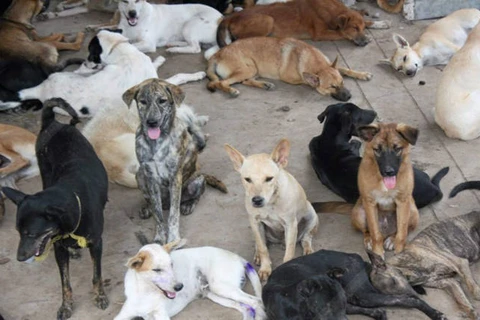
Northern Vietnam reports highest number of death from rabies ảnh 1Illustrative image (Photo: VNA)

Hanoi (VNA) – Northern Vietnam remains the region with the highest number of deathfrom rabies, accounting for 80 percent of the country’s mortality, deputy director of the HealthMinistry’s Department of Preventive Medicine Dang Quang Tan told a meeting inHanoi on August 6.

A meeting onstrengthening intersectoral approaches for rabies prevention and control inhigh-risk provinces in the north of Vietnam was held by the Department ofPreventive Medicine and the National Institute of Hygiene and Epidemiology(NIHE) in partnership with the Department of Animal Health under the Ministryof Agriculture and Rural Development, the World Health Organisation (WHO) andOne Health.

It gatheredrepresentatives of 18 northern cities and provinces which recorded a highnumber of death from rabies from 2018 – 2019, including Hoa Binh, Lao Cai,Thanh Hoa, Bac Giang, Thai Nguyen, Vinh Phuc, Phu Tho, Nghe An, Son La, Dien Bien, Tuyen Quang, YenBai, Ha Giang, Lai Chau, Lang Son, HaiPhong, Hai Duong and Hanoi.

The delegatesdiscussed the role of stakeholders from the central to local levels inpreventing rabies, experience of each locality and challenges in rabiesprevention today. They pointed out that Vietnam has failed to sustainablyreduce the number of fatalities from rabies and effectively supervise domestic dogs. At the same time, the rabies vaccination rate in dogs inmany localities remained low while people living in remote areas have limitedaccess to rabies vaccine.

Tan saidrabies is a dangerous infectious disease with a very high mortality rate and most deaths from rabies occurbecause people aren’t aware of the consequences and don’t go to get vaccinatedafter being bitten. Most falities happen in rural areas where dogs are oftenlet roam free and not vaccinated, he added.

He went on to say that the country has beenmaking efforts to control rabies and seen a decrease in the number of deathfrom rabies for three consecutive years from 2015 – 2017. However, the numberof fatalities increased again lastyear, rising to 103 from 74 in 2017, he noted.

In the firsthalf of 2019, the country reported 46 deaths from rabies in 24 cities and provinces with SonLa recoding six cases, the highestnumber.

According tothe NIHE, rabies is the main cause of the most deaths from infectious diseasesin Vietnam. About half a million people get vaccinated as a preventive measurefrom rabies but in reality, the number of people bitten by animals is muchhigher.

The instituteemphasised that vaccination is the only way to prevent human mortality fromrabies.–VNA
VNA

See more

Medical staff at Cho Ray Hospital in Ho Chi Minh City cares for and treat the victim. (Photo published by VNA)

Last survivor of Phu Quoc boat capsize shows signs of recovery

The health condition of the last patient receiving treatment following the deadly boat capsize off the Phu Quoc special one in An Giang province has shown positive signs of improvement after three more days of intensive care, Cho Ray Hospital in Ho Chi Minh City said on July 16.

The number of foreign tourists coming to Ho Chi Minh City for travel combined with medical check-ups is increasing. (Photo: VNA)

Vietnam looks to unlock medical tourism potential with national strategy

The draft strategy aims to position Vietnam as a trusted healthcare destination in Southeast Asia by 2030 and eventually among Asia's leading medical tourism hubs. The plan marks a shift from viewing medical tourism as an untapped opportunity to making it a national development priority.

Delegates at the conference. (Photo: VNA)

Vietnam to produce first homegrown next-generation vaccines from 2028

Under the agreement, Sanofi will transfer technology to VNVC to manufacture selected high-demand vaccines for children and adults at VNVC Vaccine and Bioproduct Plant. The first next-generation vaccines produced in Vietnam are expected to roll off production lines in 2028.

Eric and Alysha joyfully welcome their baby through Mini IVF after more than 10 years of waiting. (Photo: Hong Ngoc Phuc Truong Minh General Hospital)

Vietnam - a destination for journeys to parenthood

An increasing number of international families are choosing Vietnam for infertility treatment, embarking on journeys to parenthood that transcend geographical distance and differences in nationality.

Prime Minister Le Minh Hung delivers remarks at the inauguration ceremony for Viet Duc University Hospital's second campus in Ninh Binh province. (Photo: VNA)

PM urges modern restructuring of healthcare network

The PM stressed that throughout the country’s development process, people have consistently been regarded as the centre, the driving force, the objective and the most important resource for national development. Sustainable and rapid development requires not only a healthy, knowledgeable and skilled population but also a modern, equitable, efficient, sustainable and accessible healthcare system.

Thu Duc General Hospital, with a capacity of 1,000 beds, was inaugurated and put into operation in April 2025 (Photo: VNA)

Ho Chi Minh City moves to expand robotic surgery to gateway hospitals

According to the municipal Department of Health, developing gateway hospitals is a key pillar of the city's strategy to establish a regional specialised healthcare system. The network is designed to permanently relieve overcrowding at major downtown hospitals while strengthening strong inter-regional emergency care and treatment network.

Doctors conduct health screenings for children in Tru Van Tho commune, Ho Chi Minh City. (Photo :VNA)

Ho Chi Minh City moves closer to universal health check-ups

Achieving universal health check-ups in 2026 will lay the foundation for a new healthcare model in which every resident has an electronic health record, receives regular screenings, benefits from lifelong health management and gains access to early intervention through primary healthcare services.