📝OP-ED: No limits of Internet, social network use in Vietnam

Freedom of the press and opinions and the use of social networks in Vietnam are in line with the development of the world and the region as well as the development of the country in recent times.
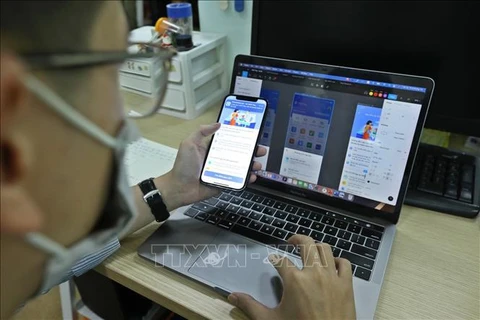
📝OP-ED: No limits of Internet, social network use in Vietnam ảnh 1
Hanoi (VNA) - Freedom of the press and opinions and the use of social networks in Vietnam are in line withthe development of the world and the region as well as the development of thecountry in recent times.

Every year, the US-based Freedom House publishes a report onInternet freedom in more than 60 countries around the world. In particular,this organisation has repeatedly classified Vietnam in the group of countrieswithout Internet freedom. This is an unbiased assessment that does not reflectwhat is actually happening in Vietnam, according to Lieutenant General, Prof.Dr. Nguyen Xuan Yem, Director of the Centre for Non-Traditional Security at theVietnam National University, Hanoi.

📝OP-ED: No limits of Internet, social network use in Vietnam ảnh 2Illustrative image (Photo: Internet)
Since 2020, Vietnam has focused resources on the preventionand control of the COVID-19 pandemic. On e-newspapers, and especially socialnetworks, there are many opinions, initiatives, thoughts and aspirations thatall the classes of people have sent to Party and State leaders. The leaders havereally acquired these opinions so that the COVID-19 prevention and controlpolicies are promptly adjusted to become more perfect.

Yem emphasised that everyone can see the freedomto express opinions and to use social networks in Vietnam. If someone saysVietnam “prevents or strangles citizenship”, it is completelyunrealistic.

According to him, Vietnam is considered as one of thecountries with the highest Internet usage and development speed in the world.After over 20 years the Internet first came to the country in 1997, Vietnam countsmore than 60 million Internet users, of which Facebook alone has nearly 50million users. The State also creates favourable conditions to form some of itsown social networks or links between Vietnam and other countries, for example Zalo, Viber, and Zingme. That shows social networks are very popular inVietnam.

In the context of social distancing imposed to fight thepandemic, the Party and State created maximum conditions for the people to use theInternet and social networks to serve working and learning. Far-flung areashave also been facilitated to gain access to the Internet, notably reflectedthrough the “Song va May tinh cho em” (Telecommunications services andcomputers for students) to assist students’ online learning during the COVID-19pandemic.

Regarding national security, Yem said that theworld is paying more attention to the cyberspace, along with the nationalsovereignty related to political institutions, land, airspace and waters.

Each country, including Vietnam, has established sovereigntyover its cyberspace, he stressed.

📝OP-ED: No limits of Internet, social network use in Vietnam ảnh 3(Photo: VNA)
The Law on Cyber Security and the Law on Information Safetyof Vietnam clearly define that any act of using social networks to violate thecountry's national cyberspace sovereignty will be handled in accordance withregulations, from criminal to administrative sanctions. Yem said that citizenshave the right to express their opinions and aspirations on social networks.However, it must be ensured that such opinions do not infringe upon theinterests of the State, the society, and citizens, including their owninterests.

At present, information on the cyberspace is sometimes disturbed and used for malicious purposes.

Therefore, the officer stressed the importance ofcontrolling the use of social networks and expanding the coverage of mainstream newsso as to prevent fake one.

It is necessary for each individual to screen information bythemselves to keep them away from wrongful and fake news, he added.

Speaking at a conference in late 2021, Nguyen Thanh Lam,Director of the Ministry of Information and Communications (MIC)’ Authority ofPress, said that it is urgent to have codes of conduct for usingsocial networks and managing public relations, calling for strengthening the specialised system for handling public relations, legal issues and media crises in each sector and locality.

According to him, Vietnam now has 850 print and online newsagencies, 67 radio and television stations and thousands of news websites, withmore than 20,000 licensed journalists. This is not to say about tens of millions of social network accounts,including 50 million Facebook users.

With a multimedia world today, nothing can be hidden, hesaid, adding that anyone can be a source of information with just a socialnetwork account and a smartphone. Any actions or behaviours of individuals andorganisations can be seen via posts, comments, photos and live videos on socialmedia and turned into media crises, he noted./.
VNA

See more

NA Chairman Tran Thanh Man inspects a constituency in Dong Nai province. (Photo: VNA)

Dong Nai works to ensure workers cast vote on Election Day

With the utmost regard for citizens’ electoral rights and responsibilities, and in a spirit of creating optimal conditions for workers, especially those employed in industrial parks and non-state enterprises, the provincial leader has requested that no overtime be scheduled during voting hours.

Zambia's Minister of Agriculture Reuben Mtolo Phiri (first, left), learns about the OM19 rice variety grown at Tien Thuan cooperative in Thanh Quoi commune,, Can Tho city (Photo: VNA)

Can Tho shares agricultural transformation experience with Zambia

Rice production remains Can Tho’s key industry. Alongside maintaining production, Can Tho has encouraged value chain linkages among farmers, cooperatives and businesses, while accelerating the application of science and technology, mechanisation and digital transformation in farming.

Staff members of the Hanoi Public Administrative Service Centre handle administrative procedures for local residents. (Photo: VNA)

Hanoi: 95% of administrative procedures to be handled from home

The plan targets that at least 80% of administrative procedures under the city’s authority will be provided as fully online public services, while more than 95% of applications will be received and processed entirely online. By June 30, 2026, about 80% of administrative procedures are expected to be restructured based on integrated data systems, with the figure rising to 95% by the end of the year.

Delegates at the SEAN Future Forum NextGen Workshop 2026 held in Jakarta, Indonesia on March 9 (Photo: VNA)

Vietnam contributes youth perspectives to AFF NextGen initiative

The ambassador expressed confidence that fresh perspectives, innovative thinking and lessons drawn from the workshop will be proposed to AFF 2026, representing the voice of the younger generation in shaping ASEAN’s future in line with their aspirations.

A young volunteer donates blood during the 2026 Red Sunday programme. (Photo: VNA)

Nearly 5,000 people join blood donation campaign in Ho Chi Minh City

According to health authorities, Vietnam collected nearly 1.75 million units of blood in 2025, with 98% from volunteer donors, equivalent to around 1.75% of the population participating in blood donation. Large-scale campaigns such as Red Sunday have played a key role in achieving these results.

More than 30 kilogrammes of various drugs trafficked from Cambodia to HCM City were seized in a police operation in March 2025. (Photo: VNA)

Ho Chi Minh City aims to become drug free by 2030

Every commune, ward or residential area in Ho Chi Minh City is expected to meet official drug-free standards by the end of 2029, while schools, hospitals, government offices, businesses and social organisations across the city are to remain free of drug activity.