📝 OP-ED: Party inspections enhanced to avert violations from spilling

Inspection and supervision are always taken as a crucial part of Party building, a leadership function and a task of the entire Party, which have been stepped up over the past time.

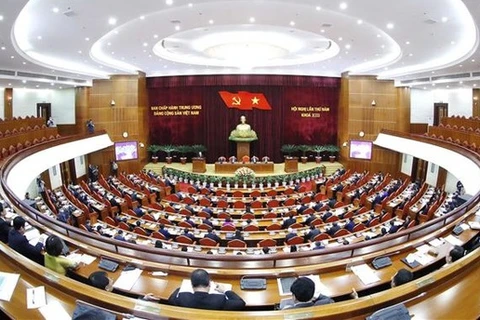
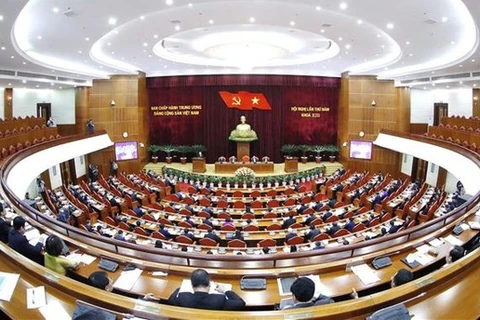
📝 OP-ED: Party inspections enhanced to avert violations from spilling ảnh 1

Hanoi (VNA) – Inspection and supervision are always taken as a crucial part of Party building, a leadership function and a task of the entire Party, which have been stepped up over the past time.

The work has brought about marked results, contributing to detecting and handling violations. Therefore, one of the key tasks set for 2022 is to conduct inspections when there are signs of violations in order to deal with wrongdoings by Party organisations and members, preventing the negative phenomena from spilling from distance and at an early date, as prescribed in the Party Central Committee’s Regulation No. 22-QD/TW dated July 28, 2021, on the Party’s inspection, supervision and discipline.

📝 OP-ED: Party inspections enhanced to avert violations from spilling ảnh 2
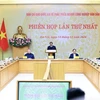
A meeting of the Party Central Committee's Inspection Commission (Photo: VNA)

Serious violations should be handled strictly and in a timely manner as a deterrence for others, thus contributing to raising the prestige of the Party and State agencies, spurring socio-economic development, and building a pure and strong Party.

In 2021 – the first year of the 13th tenure, all-level inspection commissions looked into signs of violations at 3,005 Party organisations and of 8,982 members. A total of 1,757 organisations and 6,695 members were found to have committed wrongdoings, of whom 194 collectives and 3,465 individuals were disciplined.

The commissions also proposed the Party Central Committee, the Politburo and the Secretariat impose disciplinary measures against six Party organisations and 20 members, and asked Party organisations at the lower levels to enforce disciplinary measures on many organisations and members.

In the first quarter of this year alone, the commissions proactively fulfilled their tasks in accordance with regulations in the Party’s Statutes, as well as those assigned by Party committees, focusing on inspections over signs of violations. The work has been done in a timely and serious manner, and with strong determination.

Chairman of the Party Central Committee’s Inspection Commission Tran Cam Tu said inspection commissions in localities and units looked closely at signs of violations among 297 Party organisations and 921 members.

Currently, 20 teams from the Inspection Commission, up nearly three times year-on-year, are performing the task. They have also asked Party committees and inspection commissions in all the 63 cities and provinces to engage in these efforts, he added.

According to the official, the inspections target violations of Party regulations and the State’s laws on the management and use of finance, public assets, land and natural resources, the implementation of research projects, investment and the procurement of medical equipment during the COVID-19 fight, and the stock market.

All-level Party committees implemented disciplines against 32 Party organisations and 1,953 members. Meanwhile, the Secretariat handed down disciplinary measures on three Party organisations and nine members. All-level inspection commissions disciplined 26 organisations and 1,017 members.

The Inspection Commission imposed disciplines on five organisations and 21 members, and gave timely conclusions on many cases of public concern, helping to tackle the root causes of violations.

📝 OP-ED: Party inspections enhanced to avert violations from spilling ảnh 3
Party General Secretary Nguyen Phu Trong speaks at the meeting of the Standing Board of the Central Steering Committee on Anti-Corruption. (Photo: VNA)

At a recent meeting on the fight against corruption and other negative phenomena held by the Standing Board of the Central Steering Committee on Anti-Corruption, Party General Secretary Nguyen Phu Trong, who is also head of the committee, stressed that lessons drawn from the combat match the reality, theory and guidelines.

It is necessary to stay a step ahead in Party inspections, he said, adding that the inspection commissions can conduct their work anytime they detect signs of violations.

The good experience that Party discipline comes first, followed by administrative and criminal punishments, should be duplicated, the Party leader noted.

Speaking at another meeting, Tu emphasised that Party inspection, supervision and discipline need to be enhanced in the time ahead, saying inspection must be conducted as soon as the signs of violations are detected, with a focus on the spheres, areas and positions from which corruption and other negative phenomena can easily sprout.

The task has also been included in the Politburo’s newly-issued Conclusion No. 34-KL/TW on the Party inspection and supervision strategy by 2030, under which the Politburo asked for inspections over phenomena of degradation in political thought, morality and lifestyle, as well as issues of public concern.

Violations by Party organisations and members must be handled strictly and in a timely, comprehensive manner, it said./.

VNA

See more

Vietnamese Ambassador to Venezuela Vu Trung My speaks at the event (Photo: VNA)

President Ho Chi Minh’s enduring legacy highlighted at Venezuela commemoration

Vice President of the United Socialist Party of Venezuela (PSUV) Jesús Faria expressed deep admiration for President Ho Chi Minh and Vietnam’s indomitable struggle for national independence. He described President Ho Chi Minh as an immortal symbol of 20th-century national liberation movements, whose legacy continues to inspire leftist parties, progressive movements, and peoples across Latin America, including Venezuela.

Standing Vice Chairman of the municipal People’s Committee Nguyen Loc Ha (R) and EU Ambassador to Vietnam Julien Guerrier. (Photo: VNA)

Ho Chi Minh City, EU boast ample room for sustainable development cooperation

Since the establishment of their diplomatic ties in 1990, Vietnam and the EU have deepened the bilateral ties into one of the bloc’s most dynamic and in-depth partnerships with an ASEAN member, Ha noted, adding that the relationship entered a new chapter in January when the President of European Council’s visit upgraded it to a Comprehensive Strategic Partnership.

Deputy Minister of Foreign Affairs Nguyen Minh Hang speaks at a discussion session on reforming multilateral systems and global governance, held on May 15, 2026, as part of the expanded BRICS Foreign Ministers’ Meeting in India. (Photo: VNA)

Vietnam ready to strengthen BRICS connection with Asia-Pacific

Hang called on countries to act responsibly in accordance with international law and the UN Charter; respect the independence, sovereignty and territorial integrity of states; refrain from using or threatening to use force; and settle disputes peacefully through dialogue. She also underscored the importance of ensuring security, safety and freedom of navigation through straits in line with international law, including the 1982 United Nations Convention on the Law of the Sea (UNCLOS).

Vietnamese Minister of Foreign Affairs Le Hoai Trung (centre), DPRK Vice Minister Pak of Foreign Affairs Sang Gil (left), and Vietnamese Ambassador to the DPRK Le Ba Vinh cut the ribbon to open the exhibition. (Photo: VNA)

Photo exhibition highlights Vietnam–DPRK relations

Visitors at the exhibition were moved by historical photographs dating back nearly 70 years, including images of the founding leader of the DPRK Kim Il Sung personally welcoming President Ho Chi Minh and a CPV delegation at Pyongyang’s Sunan International Airport during their visit to the DPRK from July 8–12, 1957. In return, the DPRK leader paid an official visit to Vietnam from November 27 to December 3, 1958.

Illustrative image (Photo: VNA)

Deputy PM calls for substantive assessment of two-tier local administration operations

Chairing a meeting on the development of a scheme to review the first-year operations of the political system’s organisational apparatus and the two-tier local administration model, Tra emphasised that the review must comprehensively and objectively evaluate the nationwide implementation of administrative unit restructuring and the operation of the new local administration model.

Vietnamese Ambassador to Russia Dang Minh Khoi (right) and First Deputy Chairman of the Federation Council of Russia Andrey Yatskin at their meeting in Moscow on May 14. (Photo: VNA)

Key directions for Vietnam–Russia cooperation in 2026

Vietnamese Ambassador to Russia Dang Minh Khoi had a working session with a delegation from the Russian Federation Council led by First Deputy Chairman Andrey Yatskin, in Moscow on May 14, discussing the expansion of multifaceted cooperation in 2026.

Officials from Cao Bang province of Vietnam and Baise city in the Guangxi Zhuang Autonomous Region of China hold talks on May 15. (Photo: VNA)

Cao Bang, China’s Baise city eye to boost all-around cooperation

Cao Bang province of Vietnam and Baise city in the Guangxi Zhuang Autonomous Region of China are exploring a “red tourism” route linking Pac Bo and Meng Mo (China) to promote revolutionary tradition education and strengthen bilateral friendship. They are also stepping up cooperation in human resource development through training exchanges and efforts to improve workforce quality.

Atsaphangthong Siphandone (centre), Secretary of the Vientiane Party Committee and Chairman of the municipal People’s Council, speaks at the working session. (Photo: VNA)

Ho Chi Minh City, Vientiane strengthen cooperation for 2026–2030

Under the MoU, the two sides will strengthen cooperation in politics – diplomacy, security – defence, legal and judicial affairs, economic affairs, education, culture and society, cooperation among mass organisations and socio-political organisations, and development support.

Politburo member and Minister of Foreign Affairs Le Hoai Trung (left) meets with Jo Yong Won, Chairman of the Standing Committee of the Supreme People's Assembly (SPA) and Chairman of the SPA of the Democratic People's Republic of Korea, in Pyongyang on May 15. (Photo: VNA)

Vietnam wishes to unceasingly develop ties with DPRK: Foreign Minister

Jo Yong Won, Chairman of the Standing Committee of the Supreme People's Assembly (SPA) and Chairman of the SPA of the Democratic People's Republic of Korea (DPRK), expressed confidence that under the leadership of the CPV, headed by General Secretary and President Lam, Vietnam will successfully achieve the strategic goals set forth at the 14th National Party Congress.

New Hungarian Prime Minister Peter Magyar (front) at the swearing-in ceremony of the new Government in Budapest on May 12, 2026. (Photo: Xinhua/VNA)

Congratulations to newly-elected Hungarian leaders

Prime Minister Le Minh Hung and National Assembly Chairman Tran Thanh Man on May 15 sent messages of congratulations to Magyar Péter and Forsthoffer Ágnes on their election as Prime Minister and Speaker of the National Assembly of Hungary, respectively.

Ministers and deputy ministers from BRICS member and partner countries pose for a group photo while attending the Expanded BRICS Foreign Ministers' Meeting in India on May 14. (Photo: VNA)

Vietnam proposes key cooperation orientations at BRICS Foreign Ministers' Meeting

Deputy Foreign Minister Nguyen Minh Hang shared Vietnam’s approach to building an independent and self-reliant economy linked to deep international integration, while proposing several key areas for enhanced cooperation between BRICS and partner countries at the Expanded BRICS Foreign Ministers' Meeting that opened on May 14 in India.

Dr Anatoly Sokolov from the Oriental Research Institute under the Russian Academy of Sciences in an interview with the Vietnam News Agency (VNA)'s correspondent in Russia. (Photo: VNA)

President Ho Chi Minh’s experience in Soviet Union crucial to Vietnam’s revolution: Russian scholar

The Russian scholar emphasised that Ho Chi Minh’s years in the Soviet Union provided him with essential experience in organising the masses and conducting political work for revolutionary purposes. This knowledge proved crucial when he later successfully led the August Revolution in 1945, establishing the Democratic Republic of Vietnam - the first people’s democratic state in Southeast Asia - without relying on external assistance. The victory became a powerful inspiration for national liberation movements across colonised countries worldwide, he added