Hanoi (VNA) – Directive No. 27-CT/TW, which has recently been issued by the Politburo regarding the enhancement of the Party’s leadership over thrift practice and wastefulness prevention, has received strong support from public opinion to effectively fight wastefulness at its root, an evil that is as harmful to society as corruption.
The policy to encourage thriftiness and prevent wastefulness is not a new one. President Ho Chi Minh once affirmed that frugality is one of the virtuous qualities of a revolutionary.
“Corruption is harmful, but wastefulness is sometimes even more harmful. It is more harmful than corruption because it is more common,” the late leader had said.
Over the years, thrift practices and wastefulness combat have received great attention from the Party and State. The 6th National Party Congress defined the way for comprehensive national reform with economic reform being the core, during which thrift practices and wastefulness control is a significant part. The Party has considered frugality as a major policy that must be applied in all production, construction and consumption activities.
In 1987, the Council of Ministers issued a decision on thorough frugality practicing. In 1993, the 9th National Assembly adopted a resolution on thrift practices and wastefulness and corruption prevention. In 1998, the 10th National Assembly Standing Committee released an ordinance on thrift practices and wastefulness combat. The same year, the Government issued a decree specifying the implementation of the ordinance.
In 2005, the 11th National Assembly passed the Law on Thrift Practice and Anti-Wastefulness. The 3rd session of the 10th Party Central Committee released a resolution on strengthening the Party’s leadership over corruption and wastefulness prevention and control.

The efforts have produced positive changes. A report from the National Assembly's supervision team over the implementation of policies and laws on thrift practices and wastefulness combat in the 2016-2021 showed that the policies have resulted in more effective mobilisation and use of human, material and financial resources, tightened management and use of state budget and other state resources, along with more streamlined state apparatus and substantial administrative reform.
Resources for many stagnant projects have been revoked, including nearly 100,000 hectares of land, while many economic cases causing serious losses of state capital and assets have been strictly handled.
However, in reality, thrift practice and wastefulness combat activities have still seen a lot of shortcomings and limitations, according to the report, citing an incomplete report from ministries, sectors and localities showing that in 2016, there were 1,448 projects lagged behind schedule. The figure was 1,962 projects in 2021, including important national projects and key projects.
Wastefulness has been found in the social life and become common in many areas and many localities, causing a waste of thousands of billions of VND.
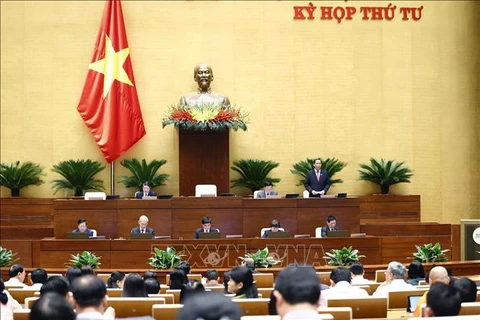
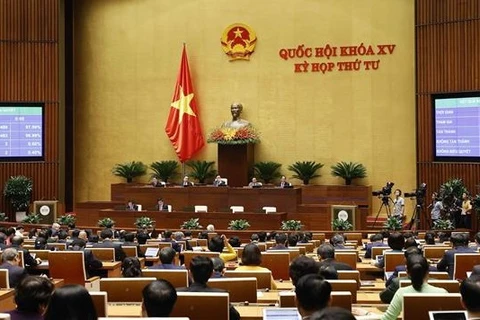
At a meeting with voters on the threshold of the 5th session of the 15th National Assembly, NA Chairman Vuong Dinh Hue stressed that wastefulness even causes greater losses than corruption.

Wastefulness is clearly causing unpredictable consequences and creating invisible barriers in socio-economic development. More seriously, wastefulness and corruption are threats to efforts to turn Vietnam into a developed and high-income country by 2045 as set by the 13th National Party Congress’s resolution.
This is the reason that the Politburo has issued Directive 27-CT/TW, in which the Politburo underlined the need to consider frugality as the behavioural culture of every official, Party member, public servant and every citizen, especially leaders and managing officials.
Through the directive, the Politburo asked for special attention to areas prone to loss, waste, and negativity such as bidding, auction, management and use of land, resources, credit, and asset management, public investment, the use of state capital and assets in enterprises.
Particularly, with the issuance of Directive 27, the Politburo emphasised the need to thoroughly deal with problems in key national projects, projects using ODA, and inefficient BOT and BT projects that cause great losses, as well as weak commercial banks and halted projects, thus revoking assets to serve socio-economic development.
With the directive, wastefulness is expected to be stopped at the root./.