Over 90 percent of students nationwide have returned to school: ministry

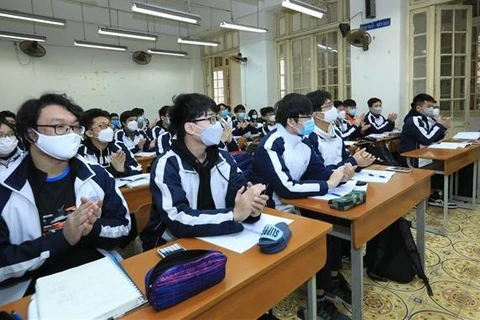
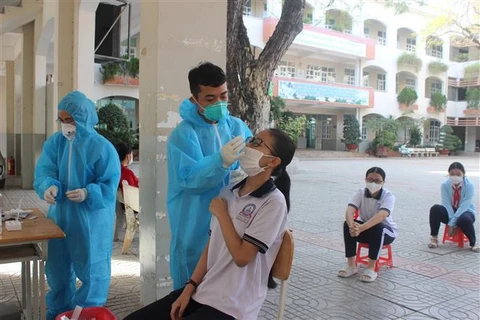
Up to 93.71 percent of the students from preschool to high school levels nationwide had come back to school as of February 14, after a long hiatus due to the COVID-19 pandemic.
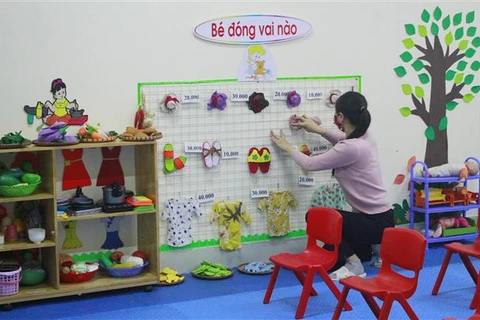
Over 90 percent of students nationwide have returned to school: ministry ảnh 1Children play at a kindergarten in Kien Giang province. (Photo: VNA)
Hanoi (VNA) - Upto 93.71 percent of the students from preschool to high school levelsnationwide had come back to school as of February 14, after a long hiatus due tothe COVID-19 pandemic.

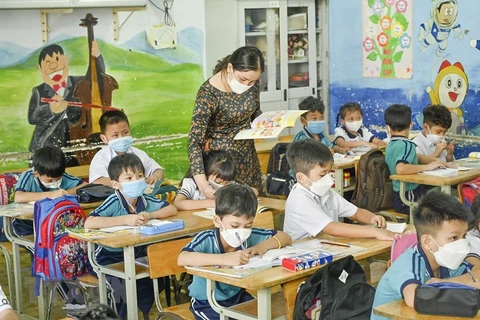
The Ministry of Education andTraining (MoET) reported 85.71 percent of the kindergarten children havereturned to school. The rate stood at 93.65 percent among primary school pupils,94.41 percent among junior high school students, and 99 percent among seniorhigh school ones.

It added that all the provincesand cities have made plans on school reopening in February.

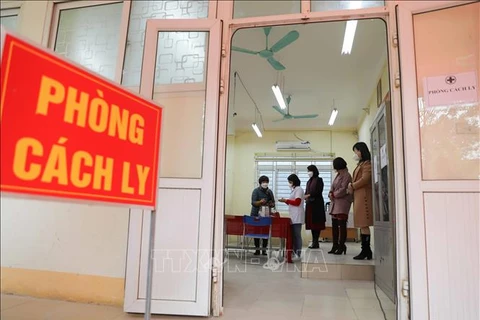
As of February 14, nine localities hadn’t reopened kindergartens, namely Hau Giang, Tra Vinh, HungYen, Vinh Long, Hanoi, Phu Yen, Da Nang, An Giang, and Tien Giang.

Meanwhile, primary schoolstudents in Hau Giang, An Giang, Da Nang, and Tien Giang hadn’treturned to face-to-face learning.

All the 63 provinces andcities have resumed in-person teaching and learning for junior and senior highschool students.

The MoET noted 100 percent ofthe tertiary education establishments have also devised reopening plans.

All the localities and their educationand training departments have built and applied pandemic safety criteria forface-to-face learning. They have prepared flexible teaching plans in adaptationto the COVID-19 situation. Besides, infrastructure has also been geared up forwelcoming students back, according to the ministry./.
VNA
See more

The copyright crackdown is broadly viewed as an inevitable step in Vietnam’s cultural industry development. (Illustrative photo: VNA)

Healthy digital content market in the making

The sharper crackdown is rapidly redrawing how online entertainment is distributed and consumed, while gradually reshaping public awareness and responsibility toward copyright protection.

A view of Place Ho Chi Minh in Persan, France. (Photo: VNA)

Place preserving memories of President Ho Chi Minh in France

Although there is little publicly available documentation confirming exactly when Place Ho Chi Minh was established, French urban historians suggest that most streets and public spaces named after the Vietnamese leader in France emerged between the 1960s and 1980s, during the height of anti-war movements and solidarity campaigns supporting Vietnam across working-class towns and left-leaning suburbs around Paris.

Vietnamese Ambassador to Bangladesh Nguyen Manh Cuong speaks at the seminar. (Photo: VNA)

President Ho Chi Minh’s thought on national unity remains relevant today

President Ho Chi Minh's ideology of national unity continues to carry profound significance amid growing global challenges, including conflicts, social divisions and economic instability. His message of solidarity, consensus and placing national interests above sectional differences remains a valuable lesson for many developing nations.

Assoc. Prof. Dr. Nguyen Duc Son presents the decision establishing the Vietnamese Language Proficiency Test Council in Japan to a representative of the Vietnam Studies Centre in Japan. (Photo: VNA)

Japan hosts first standardised Vietnamese language proficiency test

As bilateral ties between Vietnam and Japan continue to expand, demand for Vietnamese language learning in Japan has also grown rapidly among OVs, educational institutions, businesses and Japanese people interested in Vietnam. Against this backdrop, the introduction of a standardised proficiency test is expected to provide an official and widely recognised benchmark for Vietnamese language skills.

The “I Love My Fatherland" Journey 2026 kicks off in Nghe An province on May 16. (Photo: VNA)

"I Love My Fatherland” journey features diverse activities

The “I Love My Fatherland” journey will span seven stages across historical and cultural sites and “red addresses” nationwide. There will be a combination of education on traditions, field-based programmes, and digital communications.