Pangolin born at Quang Nam rescue centre

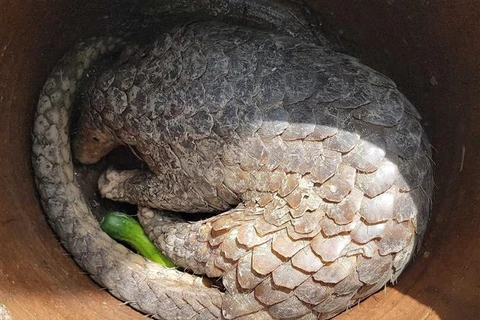
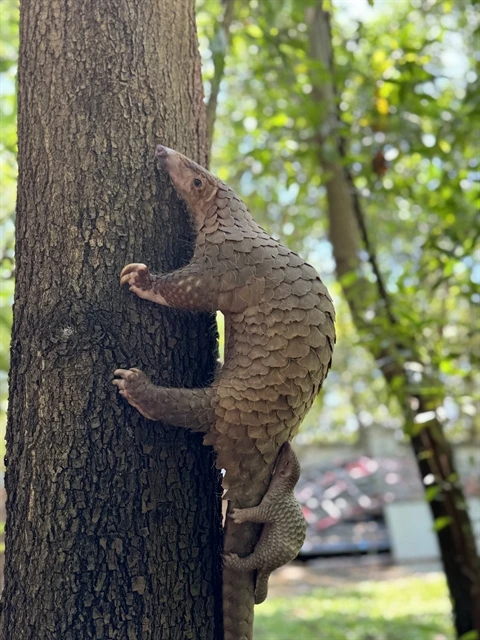
A pangolin was successfully born by a rescued mother Sunda Pangolin (Manis Javanica) – one year after the mother pangolin was rescued and cared at capture breeding at the rescue central of Vinpearl River Safari South Hoi An in the central province of Quang Nam.

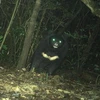
A pangolin mother and its new born are seen living in the rescue central of Vinpearl River Safari South Hội An in Quảng Nam Province. It's the second time a rescued pangolin mother successfully giving birth at captured habitat. — (Photo courtesy of Vinpearl River Safari South Hội An)

Quang Nam (VNS/VNA) - A pangolin was born by a rescued mother Sunda Pangolin (Manis Javanica) – one year after the mother pangolin was rescued and cared at capture breeding at the rescue central of Vinpearl River Safari South Hoi An in the central province of Quang Nam.

The centre said the pangolin mother, which was rescued from a wildlife trafficking case in Tien Phuoc district on December 13, 2023, has been given medical care and nutrition in half wild habitat at the centre before giving birth to a newborn pangolin on May 13.

It’s the second time the new born pangolin was safely produced by a rescued mother at the centre since the first case on January 22, 2023, the centre added.

It said the first pangolin mother was saved by police force of Nam Giang district on August 25, 2022, from an illegal trade case.

The two new born pangolins at the rescue centre promote the efforts made by staffs and experts and raising hopes for trafficked endangered wildlife animals in central Vietnam.

The two mother pangolins were listed as Critically Endangered in the IUCN Red List.

Quang Nam province has been recognised as a successful protection and conservation of ecosystems, wild species, and rare genetic resources in Vietnam.

The province has established eight conservation areas including a part of the Bach Ma National Park, the Song Thanh National Park, the Sao La (Pseudoryx nghetinhensis) Species and Habitat Conservation Area, the Elephant Species and Habitat Conservation Area, the Ngoc Linh Nature Reserve, the My Son Cultural and Historical Landscape Protection Area, the Cham islands-Hoi An world biosphere Reserve and the Ba Na-Nui Chua Nature Reserve.

The province is promoting 2024 as the year of Biodiversity Restoration action plan, and has been building the Nature and Biodiversity Conservation Plan for 2021-30, with a vision towards 2025.

Last month, the coastal province introduced the first ever biodiversity museum in Tam Ky city, showing more than 3,700 photos and 1,200 specimens of flora and fauna found in the locality.

Vice Director of the Quang Nam Department of Natural Resources and Environment Le Thuy Trinh said that the launching of the museum is necessary and meaningful, aiming to promote the values of biodiversity and the richness of rare, endemic, and typical flora and fauna species in the province./.
VNA

See more

This May marks the third time the country’s largest wildlife bird photography competition has been held. (Photo: Vietnam BirdRace 2026 organising committee)

Vietnam BirdRace 2026 to attract hundreds of photographers worldwide

Participating teams, each comprising three to four members, are tasked with photographing as many wild bird species as possible within the official competition period. While artistic quality is not mandatory, images must be clear enough for species identification, ensuring authenticity and avoiding any disturbance to natural habitats.

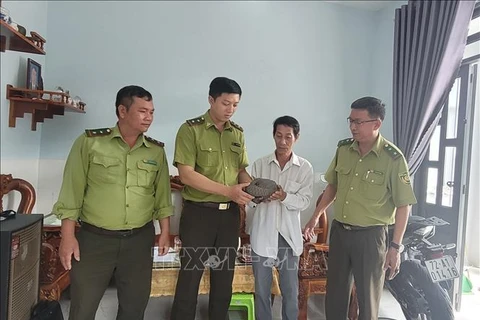
Quang Tri recently received two endangered pangolins from local resident. (Photo published by VNA)

Two pangolins handed over to authorities in Quang Tri

At around 8:30 pm on April 12, Le Thanh Tung, a resident of Thuong Nghia hamlet in Cam Lo commune, and his friend spotted the two pangolins, weighing over 4 kg, while working near the Cam Lo–La Son Expressway.

A view of Phong Nha - Ke Bang National Park in Da Nang city (Photo: VNA)

Phong Nha – Ke Bang: untapped biological treasure in Truong Son mountains

Unlike ecosystems where species inventories are largely complete, Phong Nha–Ke Bang National Park remains scientifically “open,” with each survey revealing new findings. Recent studies - from local research projects to international collaborations - have recorded additional bird species and identified the rare parasitic plant Sapria himalayana, which only survives in intact primary forests.

The interface of Vietnam Weather KTTV mobile application (Photo: baochinhphu,vn)

Application of dangerous weather warning introduced

All unusual weather events, from widespread thunderstorms, lightning strikes, landslides, flash floods, tropical depressions to strong winds at sea, are continuously updated from official data sources of the NCMHF and meteorological stations and prominently displayed on the main interface.

An overview of the kick-off meeting for the “Sustainable Management of Substances Controlled by the Montreal Protocol” project (Photo: VNA)

Vietnam launches 13 mln USD project to phase out ozone-depleting substances

Funded by the Multilateral Fund for the Implementation of the Montreal Protocol and implemented through the World Bank (WB) and the United Nations Environment Programme (UNEP), the project aims to help Vietnam meet its international commitments in managing and phasing out controlled substances. It will run from 2026 to 2031 with a total budget of over 13 million USD.

Tram Chim National Park and the Mekong Conservancy Foundation (MCF) organise the workshop on sustainable restoration of wetland ecosystems in the Mekong Delta on March 24. (Photo: VNA)

Solutions sought to restore Mekong Delta wetland ecosystems

Experts at the workshop described wetlands as the “ecological heart” of the Mekong Delta, playing a vital role in water storage and regulation, climate moderation, carbon sequestration, biodiversity conservation, and livelihoods for millions of people through aquaculture, agriculture, and ecotourism. These ecosystems also help reduce disaster risks and enhance climate resilience.