Party chief urges merged Can Tho city to proactively set strategic breakthroughs

The merger of Can Tho, and Soc Trang and Hau Giang, along with restructuring of the administrative apparatus and perfecting a two-tier governance model, presents a historic opportunity to “redesign” a more streamlined, smarter, and better-connected governance system.

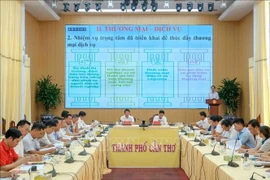
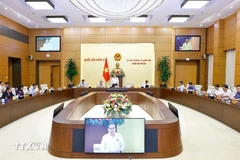
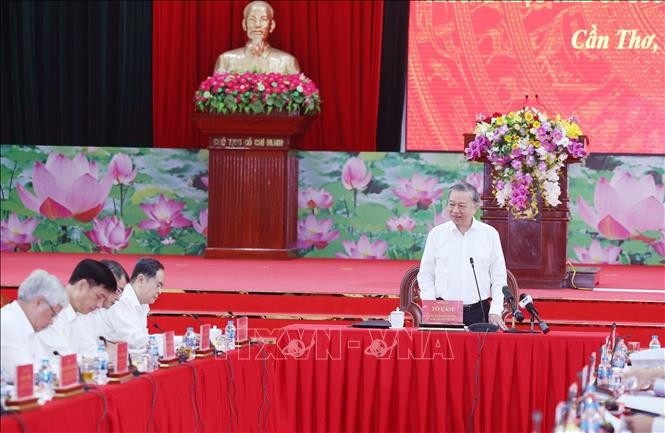
Party General Secretary To Lam speaks at a working session with the Standing Boards of the Party Committees of Can Tho, and Soc Trang and Hau Giang provinces on June 4 in Can Tho. (Photo: VNA)

Can Tho (VNA) – The Mekong Delta city of Can Tho must proactively set strategic breakthroughs following the merger, paving the way for rapid and sustainable development, stated Party General Secretary To Lam at a working session with the Standing Boards of the Party Committees of Can Tho, and Soc Trang and Hau Giang provinces on June 4 in Can Tho.

In his remarks, the Party chief stressed that the socio-economic development planning for the newly merged Can Tho city must go beyond merely combining the existing strengths of the three localities, focusing on creating new value chains based on their complementary advantages, with infrastructure connectivity, digital transformation, green economy, and circular economy serving as pillars for sustainable development.
The city should swiftly establish itself as a dynamic growth engine at the heart of the southwestern subregion, a key hub for trade and a driving force for regional development.
to-lam-5.jpg
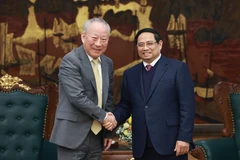
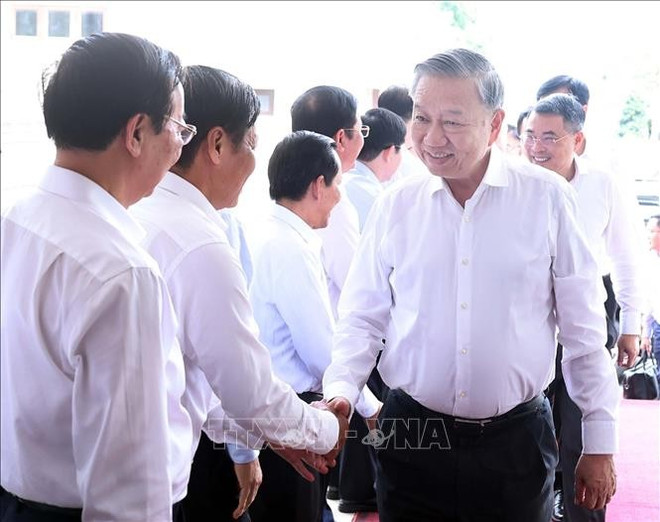
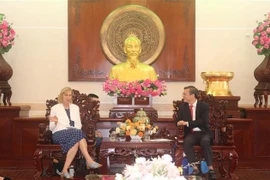
Party General Secretary To Lam shakes hands with delegates at the working session. (Photo: VNA)

He stressed that the three pillars — institutional reform, comprehensive infrastructure development, and improving the quality of human resources - must be concretised with practical action programmes closely aligned with practical requirements and the spirit of recent key Resolutions issued by the Politburo.

Can Tho must proactively transform itself from merely a major administrative centre into a regional hub for knowledge-based economy, innovation, logistics, education, health care, and finance, becoming a magnet for new development resources by fostering flexible institutions, building modern infrastructure, and promoting a dynamic investment environment.

He urged the new city must take the lead in implementing strategic breakthroughs related to developing regional and international connectivity infrastructure, promoting comprehensive digital transformation, training and attracting high-quality human resources, as well as promoting the development of the private sector and innovative startups.

Lam said the merger of the three localities into a new and expanded Can Tho city is expected to create favourable conditions for stronger linkage in economic, cultural, and social development, adding that this aims to streamline administrative apparatus, enhance the effectiveness of state governance, and capitalise on economies of scale and the unique strengths of each locality.

It will significantly expand development space and bring together the key advantages of timing, geography, and connectivity—creating the necessary momentum for the Mekong Delta region to advance, he noted.

He highlighted the distinct strengths of each locality, saying that their unification of the three localities will allow them to complement and amplify each other’s strengths, forming a more diverse, adaptive, and sustainable economic structure.

The merger also paves the way for restructuring development space based on a new growth axis —from the central urban area of Can Tho to the industrial and hi-tech agricultural belt in Hau Giang, extending to coastal regions, seaports, and the sea, island and eco-cultural tourism zones in Soc Trang, he stressed, noting that this development axis will foster stronger internal linkages, reduce the fragmentation of resources, and enable the planning of large-scale and high-impact projects.

The Party leader ordered the Party committees and authorities of the localities, and the entire political system to thoroughly grasp the key guiding principles in implementing the merger and streamlining administrative apparatus, laying the foundation for rapid and sustainable development in the years ahead.

The merger, along with restructuring of the administrative apparatus and perfecting a two-tier governance model, presents a historic opportunity to “redesign” a more streamlined, smarter, and better-connected governance system to overcome long-standing bottlenecks caused by administrative fragmentation, scattered development, and local competition, he said./.
VNA

See more

Politburo member, Standing member of the Party Central Committee’s Secretariat Tran Cam Tu attends the rehearsal. (Photo: VNA)

Security forces stage rehearsal for 14th National Party Congress

The People’s Public Security forces have been praised for their core role in closely working with the army and relevant ministries and agencies, with success in thwarting hostile plots at an early stage, drastically combating fake news and disinformation surrounding the 14th National Party Congress.

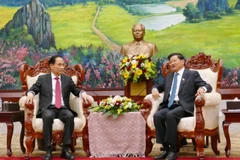
Senior Lieutenant General Le Quoc Hung (L), member of the Communist Party of Vietnam (CPV) Central Committee and Deputy Minister of Public Security, and General Vilay Lakhamfong, Politburo member and permanent member of the Secretariat of the Lao People’s Revolutionary Party (LPRP) Central Committee. (Photo: VNA)

Deputy Minister of Public Security congratulates Lao officials following succesful 12th National Party Congress

Deputy Minister of Public Security Senior Lieutenant General Le Quoc Hungconveyed the warmest congratulations of the Central Public Security Party Committee, the Ministry of Public Security leadership, and the Vietnamese People’s Public Security Forces to Lakhamfong and other Lao public security leaders on the congress’s success and their election to key leadership positions for the new term.

A session of the National Assembly Standing Committee. (Photo: VNA)

NA Standing Committee's key work agenda for 2026 approved

A major focus will be preparations for the election of deputies to the 16th NA and to People’s Councils at all levels for the 2026–2031 term. The NASC will coordinate with the National Election Council, the Government, the Vietnam Fatherland Front Central Committee, and relevant agencies and organisations to continue implementing the election plan, organise oversight of the electoral process, and carry out its duties and powers as prescribed.

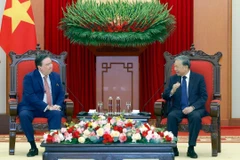
Party General Secretary To Lam receives US Ambassador Marc Evans Knapper in Hanoi on January 9, 2026. (Photo: VNA)

Party leader receives outgoing US Ambassador

Vietnam always values its relationship with the US and looks forward to continuing close cooperation with the US government to deepen bilateral relations based on mutual respect for each other’s independence, sovereignty, territorial integrity, and political institutions, contributing positively to peace, stability, cooperation, and development regionally and globally.

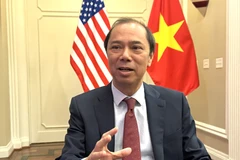
Vietnamese Ambassador to the US Nguyen Quoc Dung (Photo: VNA)

Foreign affairs contribute to enhancing Vietnam’s international standing: Diplomat

Foreign affairs played an important role in maintaining a peaceful and stable international and regional environment; expanding friendships and partnerships without creating adversaries; deepening international integration to attract and effectively utilise external resources for development, including markets, investment, science and technology, and human resources training; and promoting the image of a confident, resilient Vietnam actively contributing to global affairs, Vietnamese Ambassador to the US Nguyen Quoc Dung highlighted.

Deputy Minister of Finance Nguyen Duc Chi (standing) addresses the press conference (Photo: VNA)

Solid grounds for double-digit growth in 2026: Press conference

Speaking at the Government’s regular press conference on January 8, Deputy Minister of Finance Nguyen Duc Chi said that the solutions include further improving institutions and legal frameworks to remove bottlenecks and shift governance from control to facilitation; mobilising and efficiently allocating development resources, with public investment playing a leading role.

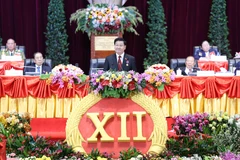
General Secretary of the Lao People's Revolutionary Party Central Committee Thongloun Sisoulith delivers a closing speech at the 12th National Congress of the Lao People's Revolutionary Party. (Photo: VNA)

Vietnamese Party chief congratulates Lao counterpart on re-election

General Secretary Lam firmly believed that, under the leadership of the LPRP Central Committee and the important role played by comrade Thongloun, the Lao Party and people would successfully fulfil the goals set out by the 12th Party Congress, building a peaceful, independent, democratic, unified and prosperous Laos.

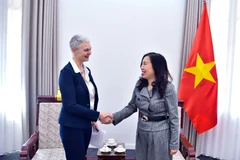
Deputy Minister of Foreign Affairs Le Thi Thu Hang (right) and Norwegian Ambassador to Vietnam Hilde Solbakken (Photo: VNA)

Vietnam, Norway step up cooperation in green transition, circular economy

The Deputy Minister highly appreciated the efforts of Solbakken and the Norwegian Embassy in promoting the bilateral ties, and agreed that the two sides should further leverage each other’s strengths and needs to open up new cooperation opportunities, particularly in green transition, circular economy and climate change response.