Hanoi (VNA) - Leveraging the mega-port of Chancay in Peru as an optimal logistics solution, Vietnam can boost import-export turnover with Latin American partners, especially in the industrial and energy sectors.
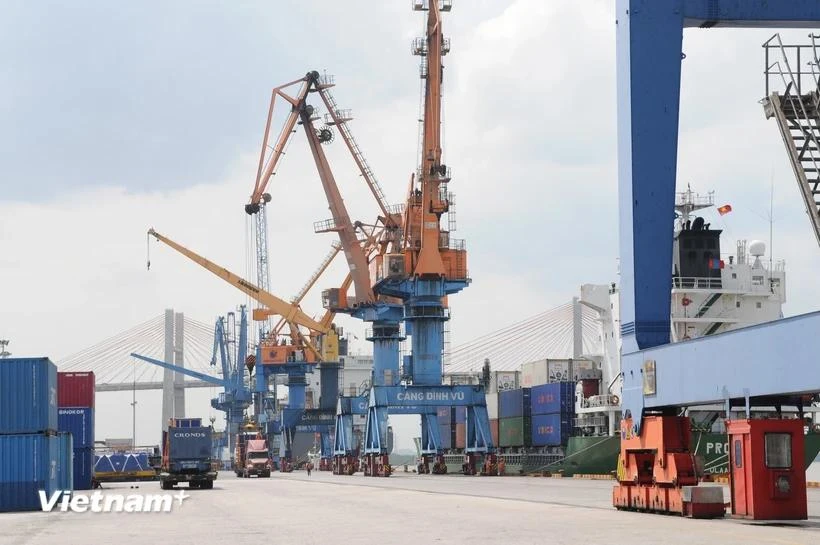
The 3.5 billion USD mega-port, set to be completed this year and expected to become a key logistics hub in Latin America, will open new opportunities for Vietnam's logistics industry by enhancing maritime transport connections and facilitating trade between the two regions.
According to the European-American Market Department under the Ministry of Industry and Trade (MoIT), with strengthened maritime connections and trade capabilities between the two regions, logistics enterprises in Vietnam can explore collaboration opportunities with Latin American partners to establish new shipping routes, thus opening up investment opportunities and improving the quality of logistics infrastructure and services.
Located north of Peru's Lima capital, along the Pacific coast, the super port has a strategically advantageous position for facilitating international trade connections. Designed to handle 1.5 million TEUs annually, Chancay is poised to play a vital role in boosting economic and trade relations between the Southeast Asian nation and its Latin American peers.
Commencing in 2020 and expected to be completed in 2024, the mega-port is anticipated to become a leading logistics hub in Latin America. This port is being developed not only to meet Peru's domestic demands but also to expand its influence as a logistics gateway connecting countries in the region, such as Brazil, Chile, and Argentina, with Asian markets. This initiative is hoped to boost trade and economic ties between Latin America and the Asia-Pacific region.
In the future, the Chancay mega-port will enable Latin American countries to export key products, such as farm produce, minerals, and petroleum, to Asia, while importing technological products and consumer goods from Asian countries. It can serve as a direct trade bridge, reducing reliance on lengthy shipping routes across the Atlantic or North America, thus contributing to promoting regional economic growth.
Leveraging the mega-port as an optimal logistics solution, Vietnam could significantly increase its import-export turnover with Latin American partners, especially in sectors such as industry, agricultural goods, and energy. As a result, Chancay is expected to become a crucial link for economic and trade relations between Vietnam and Peru in particular and Latin America in general. The former will be better positioned to capitalise on existing trade agreements with countries in the region, including the Comprehensive and Progressive Agreement for Trans-Pacific Partnership (CPTPP), Vietnam-Chile and Vietnam-Cuba free trade agreements.
Vietnam's import-export turnover with Latin American countries reached 20.6 billion USD last year. Its major exports to the region include farm produce, garments-textiles, footwear, processed foods, wood products, electronics, and components. Meanwhile, Vietnam primarily imports raw materials, agricultural products, wood, garment accessories, and animal feed.
With new maritime routes connecting Chancay and Vietnam, Vietnamese businesses can optimise both time and transport costs. It is estimated that the port could reduce shipping times from the country to Latin America by up to 30%, or even 50%, which could help firms involved save up to 20% in logistics costs compared to traditional routes. This would enable Vietnam to export key products like textiles, electronics, and agricultural goods (such as rice and coffee) to and import minerals, agricultural products, and petroleum from Latin American countries at more competitive costs.
According to the European-American Market Department, Chancay will play an important role in strengthening economic and trade relations between Vietnam and Latin American countries. Forecasts suggest that trade between Vietnam and Latin America could grow by up to 10% on a yearly basis, provided that improvements in logistics and transport connections are made./.