Phu Yen taps craft village tourism to revive Quang Duc pottery

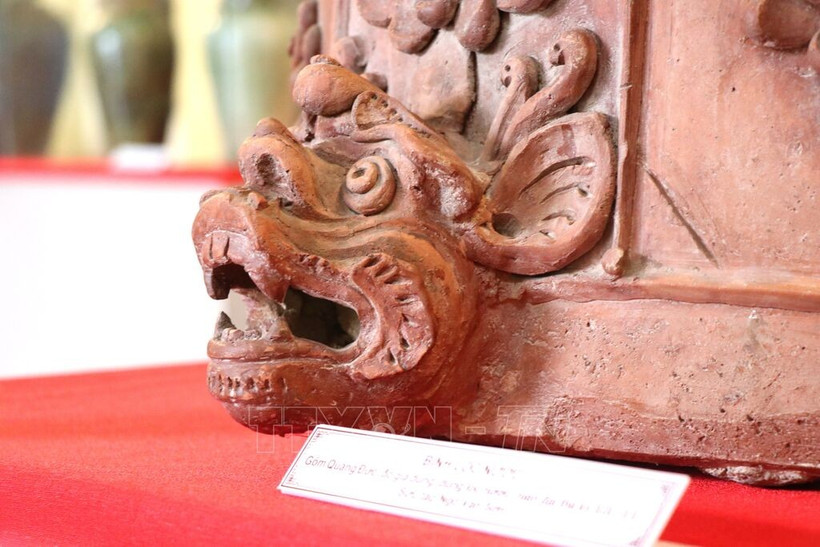
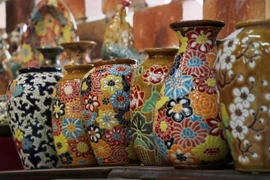
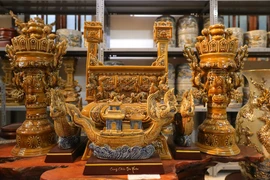
Quang Duc pottery is known for its wide range of forms, including wine bottles, jars, lime pots, vases, plant pots, incense burners and candle stands. Decorative motifs are equally rich, featuring mythical creatures, pastoral scenes, floral patterns, deer, peacocks, bats and more.

A decorative motif on an ancient Quang Duc ceramic piece. (Photo: VNA)

Phu Yen (VNA) – Quang Duc ancient ceramics are among Phu Yen’s most notable cultural heritages. The south-central province has hosted seminars, exhibitions, and research projects to fully assess their value and propose preservation and tourism development strategies linked to traditional craft villages.

A distinctive craft tradition

Dating back to the late 17th and early 18th centuries, Quang Duc pottery is an ancient ceramic tradition unique to Phu Yen. The craft originated in a village located near the lower basin of Cai River, close to the former provincial capital of An Tho, now part of An Thach commune in Tuy An district.

The area's favourable access to clay and water transport made it a thriving hub for pottery production and trade. In its heyday, Quang Duc pottery was widely used not only within Phu Yen province but also in other provinces in the central region and the Central Highlands.

According to Associate Prof. Dr. Tran Tan Van, former Director of the Institute of Geosciences and Mineral Resources under the Ministry of Agriculture and Environment, the local clay deposits play an important part in shaping the Quang Duc pottery tradition. During surveys for the proposed Phu Yen Geopark, many international experts visited the village and examined museum and private collections. They identified Quang Duc pottery as a potential cultural highlight for the geopark.

Raw materials for the craft, including clay and firewood, are sourced from neighbouring areas, such as An Dinh commune, O Loan lagoon, and the Cai River's upper reaches.

Associate Prof. Dr. Dang Van Thang, a member of the National Council for Antiquities Appraisal under the Ministry of Culture, Sports and Tourism, described Quang Duc ceramics as unique compared to other traditional Vietnamese pottery. The craft comprises three main types, each representing a different stage in the village's production history.

Quang Duc pottery is known for its wide range of forms, including wine bottles, jars, lime pots, vases, plant pots, incense burners and candle stands. Decorative motifs are equally rich, featuring mythical creatures, pastoral scenes, floral patterns, deer, peacocks, bats and more.

Tran Thanh Hung, Deputy Head of the provincial Party Committee’s Board for Information, Education and Mass Mobilisation, and Chairman of the Phu Yen UNESCO Club for the Study and Preservation of Antiquities, said Quang Duc ceramics are valued for their distinctive shaping and glazing techniques. He noted their early domestic and international recognition, with the signature shell glazing setting them apart.
125331-vna-potal-phu-yen-bao-ton-va-phat-huy-gia-tri-gom-quang-duc-gan-du-lich-lang-nghe-8063846.jpg
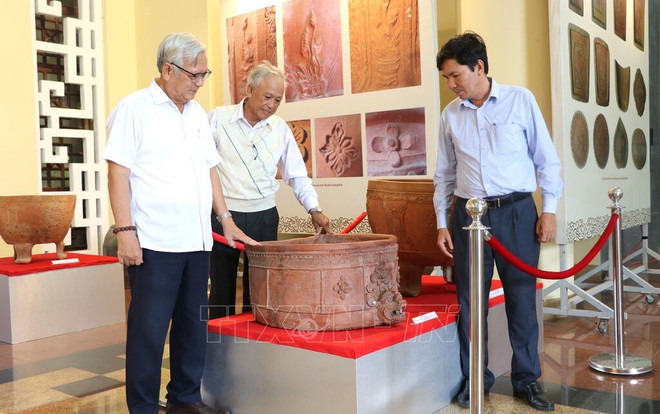
An exhibition of the traditional Quang Duc pottery village at the Phu Yen Provincial Museum. (Photo: VNA)

Revival linked with tourism development

Since the mid-20th century, the Quang Duc pottery tradition has gradually faded due to various social and economic factors. Many technical secrets were lost, and no potters or kilns remain in the village today.

Elderly residents in An Thach commune recall that several families used to share a kiln, while wealthier households maintained their own. By 1965, the craft ceased due to war-related displacement. It briefly resumed after 1975, but by 1983, declining demand, dwindling clay resources and firewood shortages led to its abandonment.

Tran Xuan Quang, a local resident, expressed pride in his community's rich ceramic heritage, hoping that the village can revive the trade, connect it with tourism, and create sustainable livelihoods.Recognising the cultural value of Quang Duc pottery, local authorities and private collectors have made significant efforts over the years to collect, preserve and promote its legacy.

The themed exhibition of Quang Duc pottery is currently being held at the Phu Yen Museum from May 30 to July 30. The display features around 150 ceramic artefacts from the museum and private collections, along with some 120 photographs showcasing the village’s location, past pottery-making activities, notable items, and decorative details.

Nguyen Le Vu, Deputy Director of the Phu Yen provincial Department of Culture, Sports and Tourism, said the province is implementing various initiatives as part of its tourism development plan for 2025–2030, with a vision to 2050. This includes exhibitions, workshops and research projects aimed at reassessing the cultural value of Quang Duc ceramics and identifying ways to integrate the craft into local tourism.

He emphasised that reviving the Quang Duc pottery village could diversify the province’s tourism products, better utilise its cultural heritage resources, and contribute to local socio-economic development./.
VNA

See more

An Ao Dai show held in Prague, the Czech Republic, in May 2026 (Photo: VNA)

Vietnam culture, cuisine showcased in Czech Republic

The festival featured more than 20 booths offering traditional Vietnamese dishes, including "pho" and spring rolls, alongside activities promoting Ao Dai (Vietnamese traditonal long dress). One of the highlights was the presentation of complimentary Ao Dai to Czech residents and international visitors.

The Nguyen Dynasty (1802-1945) imperial throne, a recognised national treasure of Vietnam, officially returns to public display at Thai Hoa Palace in Hue Imperial Citadel on June 4 (Photo: VNA)

Nguyen Dynasty throne returns to Hue Imperial Citadel after restoration

The throne has been reinstated at its original central position inside Thai Hoa Palace, the ceremonial heart of the former imperial court. Its return has attracted significant interest from visitors and heritage enthusiasts eager to see one of Vietnam’s most important royal artefacts back on display.

People join the “Ho Van Lantern Festival Night” programme at the special national relic site of the Van Mieu–Quoc Tu Giam (Temple of Literature) in Hanoi. (Photo: VNA)

Night-time economy drives growth of Hanoi’s cultural industries

Under the Politburo’s Resolution No. 80-NQ/TW on the development of Vietnamese culture, Hanoi has been given fresh opportunities to leverage its cultural, historical, tourism and creative assets. The city’s recently approved project on developing the night-time economy for 2026–2030, with a vision to 2045, is expected to create momentum for cultural industry growth while enhancing Hanoi’s standing as a creative and modern city with a distinctive identity.

Efforts made to preserve, promote values of Non Nuoc Cao Bang Global Geopark

Efforts made to preserve, promote values of Non Nuoc Cao Bang Global Geopark

First recognised by UNESCO on April 12, 2018, the Non Nuoc Cao Bang Global Geopark in the northern province of Cao Bang is a land shaped by more than 500 million years of geological history. Covering over 3,683 sq.km and encompassing all or part of 36 communes and wards, the geopark is home to numerous scenic landscapes, as well as historical and cultural sites of exceptional value.

Scenic views of Da Nang featured in the film "Love in Vietnam" (Photo: VNA)

Da Nang Asian Film Festival 2026 set to launch with expanded international focus

Through this coordinated effort, Da Nang aims to establish DANAFF not only as an annual film event but also as a distinctive cultural landmark, helping position the city as a reputable destination for regional film and cultural events and enhancing its international profile, Vice Chairwoman of the municipal People’s Committee Nguyen Thi Anh Thi, said.

Co Bo Temple in Thanh Hoa province (Photo: nhandan.vn)

Thanh Hoa taps spiritual heritage to boost cultural tourism

Experts have called for stronger implementation of heritage management regulations under the Cultural Heritage Law, clearer responsibilities for site management boards and stricter action against activities that distort cultural traditions.

Ambassador Do Hung Viet, Vietnam's Permanent Representative to the United Nations, and his spouse introduce Vietnamese dishes to visitors at the 2026 UN International Bazaar in New York on June 3. (Photo: VNA)

Vietnam leaves strong impression at 2026 UN International Bazaar

A wide range of traditional handicrafts reflecting Vietnam’s rich cultural heritage, including ceramics, lacquerware, silk products, brocade textiles and other items, attracted considerable attention from visitors. Many products sold out early in the day.

Former political prisoner Le Tu Cam is moved as she views a portrait of herself, digitally restored from archival photographs and crafted from lotus leaves, on display at the Con Dao Museum. (Photo: VNA)

Digital innovation breathes new life into Vietnam’s museums

Technology is similarly enriching exhibitions at the Vietnam Women’s Museum in Hanoi. Wartime letters, a typewriter and other artefacts linked to former Vice President Nguyen Thi Binh have been digitally integrated with collections held at the War Remnants Museum in Ho Chi Minh City. Through projection mapping, 3D displays and a virtual reality recreation of the Paris Peace Agreement, visitors can engage more deeply with the life and achievements of one of Vietnam’s most prominent diplomats.

At the award ceremony of the Da Nang Asian Film Festival 2025. (Photo: VNA)

Da Nang Asian Film Festival 2026: Bridging Asia and the world

The festival is expected to bring together around 900 artists, producers and film professionals from Vietnam and abroad, including more than 200 international guests. This marks the largest edition since DANAFF was first launched in 2023, highlighting its growing appeal within the film industry.

Performance showcasing excerpts from the Pon Poong festival of the Muong ethnic community in Thanh Hoa province. (Photo: VNA)

Vietnam’s culture development in digital era

Under the Politburo's Resolution No. 80-NQ/TW, issued on January 7, 2026, culture is defined as the spiritual foundation of society, an important endogenous resource, a driver of socio-economic development and a source of national soft power. In the new era, cultural values are expected to permeate all aspects of life, serving as a foundation, resource, catalyst and regulatory force for the country’s rapid and sustainable development.