Construction material industry's revenue to reach 47 billion USD

Despite significant domestic demand due to low housing rates and incomplete infrastructure, Vietnam's construction materials industry faces challenges, according to insiders.

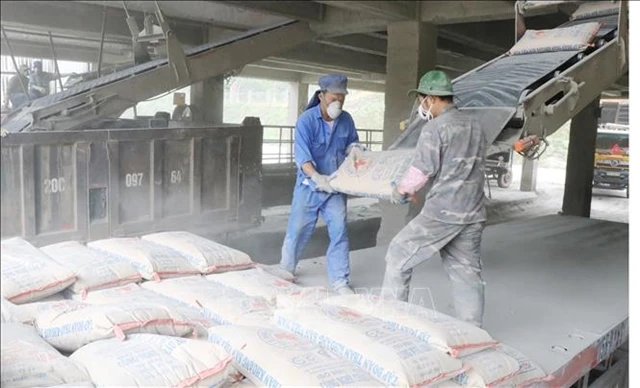
Workers load cement bags on a truck at a factory. (Photo: VNA)

Hanoi (VNS/VNA) - Despite significant domestic demand due to low housing rates and incomplete infrastructure, Vietnam's construction materials industry faces challenges, according to insiders.

At a recent seminar on the development of Vietnam’s modern and sustainable construction material sector on November 9, Le Trung Thanh, Director of the Department of Building Materials at the Ministry of Construction, revealed that the industry generated around 47 billion USD annually, contributing 11% to the national GDP.

According to Thanh, the domestic demand for construction materials remains substantial due to low housing areas nationwide, with the urbanisation rate at around 43% and incomplete infrastructure in transport and energy sectors. These factors provide a significant room for development in the construction material industry.

However, in recent years, the Vietnamese construction material industry has encountered numerous challenges.

Both consumption and revenue have decreased, posing risks of production stagnation and business disruptions for enterprises, potentially leading to job losses and impacting socio-economic development.

Nguyen Quang Hiep, Director of the Institute of Building Materials, pointed out that many production sectors primarily invested in small to medium scales, particularly in areas such as brick and tile manufacturing, fired clay, unfired bricks, stone extraction and construction sand.

Consequently, the application of science and technology in production faced significant challenges.

The production of materials in Vietnam relied heavily on input factors like mineral resources, technology, energy and capital. The balance between supply and demand for various product types was inadequate, resulting in overstocking and underutilisation of business production capacity, he added.

However, the utilisation of alternative raw materials, promoting economic circularity in construction material production, had not received sufficient attention and appropriate investment.

Hiệp highlighted the importance of the government and enterprises continuing to enhance management, apply science and technology and focus on developing new environmentally friendly high-performance construction materials.

Quach Huu Thuan, Deputy General Director of Viglacera, said that the integration of technology, innovation and creativity remained the consistent guiding principle.

This approach is the key to Viglacera's successful and powerful brand, according to Thuan.

Viglacera is currently seen as a pioneering domestic enterprise in innovation and creativity in the field of construction material production. By consistently investing in cutting-edge global technologies and focusing on green technologies and products, it aims to become a top choice when penetrating demanding markets like Europe, North America and the Middle East.

However, in the current fiercely competitive landscape, Thuan believed that the government and relevant ministries need to establish robust policies to support consumption and encourage the use of new high-tech products.

This includes setting up technical barriers for imports and ensuring fair treatment similar to other countries. Additionally, updating technical regulations, standards, and timely price notifications for new product lines are essential to facilitate usage in national projects.

Meanwhile, Thanh also sees the current challenges in the construction materials industry as an opportunity to assess the capabilities and efficiency of enterprises and products.

To enhance productivity, quality, and competitiveness in both domestic and international markets, it requires efforts in technology application, marketing, and environmental protection from all stakeholders./.

VNA
See more

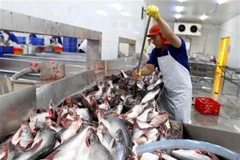
Workers process tra (pangasius) for export (Photo: VNA)

Vietnam–Singapore trade continues to thrive

For the year as a whole, Vietnam retained its position as Singapore’s 10th largest trading partner. Bilateral trade reached a record high of nearly 40 billion SGD, up 26.2% from the previous peak of 31.67 billion SGD recorded in 2024.

Eric Van Vaerenbergh, an energy expert and lecturer at the Brussels Engineering School (ECAM) (Photo: VNA)

Belgian expert optimistic about Vietnam’s economic outlook

Vietnam should move from a growth model based mainly on expanding capital and labour to one driven by productivity improvements. He said that this requires enhancing the quality of the workforce, particularly engineers, technicians, and managers in industrial sectors.

Workers at the VSIP Hai Phong industrial and urban complex, which specialises in producing electronic components for office equipment. (Photo: VNA)

Roadmap aims to improve business climate and boost competitiveness

By the end of 2026, Vietnam aims to rank among the world’s top 50 performers in the United Nations Sustainable Development Goals, advance at least three places in the International Property Rights Index, and climb at least one position in the Global Innovation Index.

Vietnam is strengthening its position in the technology value chain, becoming a major manufacturing hub for complete consumer electronics products. (Photo: VNA)

ESG standards offer opportunities to reposition Vietnam’s electronics firms

The 2025-2027 period will be a critical turning point, as exporters to the European market will be required to strictly comply with ESG standards, including net-zero emissions roadmaps, labour standards, corporate governance and transparency requirements. As a key export sector, the electronics industry is being directly and strongly affected by this shift.

A production line for camera modules and electronic components at the factory of MCNEX VINA Co. Ltd, a Republic of Korean-invested company in Phuc Son Industrial Park, Ninh Binh province. (Photo: VNA)

Science, technology, innovation as engines of economic growth

To ensure that science and technology truly act as a powerful growth engine, experts emphasised the need for the Government to put in place supportive mechanisms and policies that encourage enterprises to invest in research and development, while strengthening cooperation among the State, research institutions and the business sector.

The headquarters of the Ministry of Industry and Trade in Hanoi (Photo: VNA)

PM updates lead roles to drive UKVFTA forward

The Ministry of Industry and Trade (MoIT) is named the lead agency, with overall responsibility for the agreement’s general goals and definitions, trade remedies, non-tariff barriers to trade and investment in renewable energy, competition policies, State-owned enterprises, enterprises with special or exclusive rights and those with designated monopolies, as well as institutional, general and final terms.

Vietravel Airlines is taking measures to enhance service quality and optimise operations amid high travel demand during Tet. (Photo: VNA)

Vietravel Airlines to add new route serving Lunar New Year travel peak

During the peak period of the Lunar New Year (Tet) festival in 2026, Vietravel Airlines plans to operate six – eight flights daily on the Ho Chi Minh City – Hanoi route, three flights daily on the Ho Chi Minh City – Da Nang and Ho Chi Minh City – Vinh routes; and two flights daily on the Ho Chi Minh City – Quy Nhon route.

The completion of Can Tho - Ca Mau expressway has helped shorten travel time from Can Tho to Ca Mau to just one hour and a half (Photo: VNA)

Can Tho–Ca Mau expressway fully opens from January 19

The new section, together with the Can Tho–Hau Giang segment that has been operating smoothly since late December last year, has completed the entire 110.85-km route. With total investment exceeding 27.52 trillion VND (1.04 billion USD), the four-lane expressway is built to modern standards and serves as a key transport artery linking major economic and political centres, industrial zones and seaports in the southwestern region.