Vietnam reduces CFC consumption following Montreal Protocol

Vietnam has significantly reduced its consumption of three ozone-depleting substances since joining the Montreal Protocol on Substances that Deplete the Ozone Layer in January 1994.
Vietnam reduces CFC consumption following Montreal Protocol ảnh 1A workshop in northern Nam Dinh province discusses measures to eliminate chemicals harmful to ozone (Photo: VNA)

Vietnam has significantly reduced its consumption of three ozone-depleting substances – Chlorofluorocarbons (CFCs), Hydro-chlorofluorocarbons (HCFCs) and Halon – since joining the Montreal Protocol on Substances that Deplete the Ozone Layer in January 1994.

Some 3.6 tonnes of CFC-11 in the textile industry, 5.8 tonnes of CFC-12 automotive air-conditioning and 40 tonnes of CFC in residential and commercial air-conditioning have been cut down annually, announced the Ministry of Environment and Natural Resources on the occasion of the International Day for the Preservation of the Ozone Layer (September 16).

The ministry banned the import of CFCs on January 1, 2010 and plans to stop HCFCs consumption in Vietnam by 2030.

The Montreal Protocol on Substances that Deplete the Ozone Layer is an international treaty designed to protect the ozone layer by phasing out the production of a number of substances believed to be responsible for ozone depletion.

It came into force on January 1989 and has been ratified by 197 parties, including 196 states and the European Union, making them one of the first universally ratified treaties in the United Nation’s history.-VNA


VNA

See more

At a ceremony to donate 100,000 trees to the Naval Region 4 (Photo: HANE)

Tree planting programme spreads green momentum in islands

The Ho Chi Minh City Association for Conservation of Nature and Environment (HANE) on January 11 announced 10 outstanding green programmes and activities carried out in 2025, including a programme to plant 1 million trees in Vietnam’s island areas.

Lam Dong releases hundreds of wild animals into the wild. (Photo: VNA)

Lam Dong releases hundreds of wild animals back into the wild

According to the Ta Dung National Park Management Board, the park has for years served as a trusted destination for authorities and residents to hand over and release wildlife. Such actions not only contribute to biodiversity conservation but also help reduce illegal hunting and captivity of wild animals.

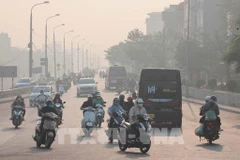
According to the Hanoi Department of Agriculture and Environment, air quality index (AQI) readings have at times reached poor and very poor levels. (Photo: VNA)

Hanoi targets 20% reduction in PM2.5 levels

Hanoi has affirmed its commitment not to trade environmental protection for economic growth. The city is moving to establish low-emission zones (LEZs) as a core measure to control emissions and promote green, sustainable urban development.

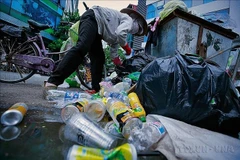
A waste collection area. (Photo: VNA)

Ca Mau approves investment policy for waste-to-energy plant

The waste-to-energy plant is planned for construction in Dat Moi commune, covering a total area of about 20 hectares. It will have a waste treatment capacity of approximately 600 tonnes of household waste per day and a power generation capacity of 6MW.

Ice coats the summit of Fansipan in the northern province of Lao Cai in the early morning of December 25. (Photo: Published by VNA)

Peak Fansipan blanketed in ice on Christmas Day

With temperatures hovering between 1 and 3 degrees Celsius, frost and ice covered the summit area, creating an ideal condition for tourists eager to admire icy scenery, clouds and experience a Christmas atmosphere amid a sea of cold mist.

Illustrative image (Photo: nhandan.vn)

20 trailblazing companies in national green ESG rankings honoured

In 2025-2026, the “For a Green National Environment” programme will pivot around six tasks that merge expertise with broad social outreach, including targeted communications, "Journey to Net Zero" conferences and trainings, ESG surveys and announcements, a "National Green Ambassador" contest, a "Green Fashion" design competition, and the rollout of "National Green Station" models focused on zero-waste living.