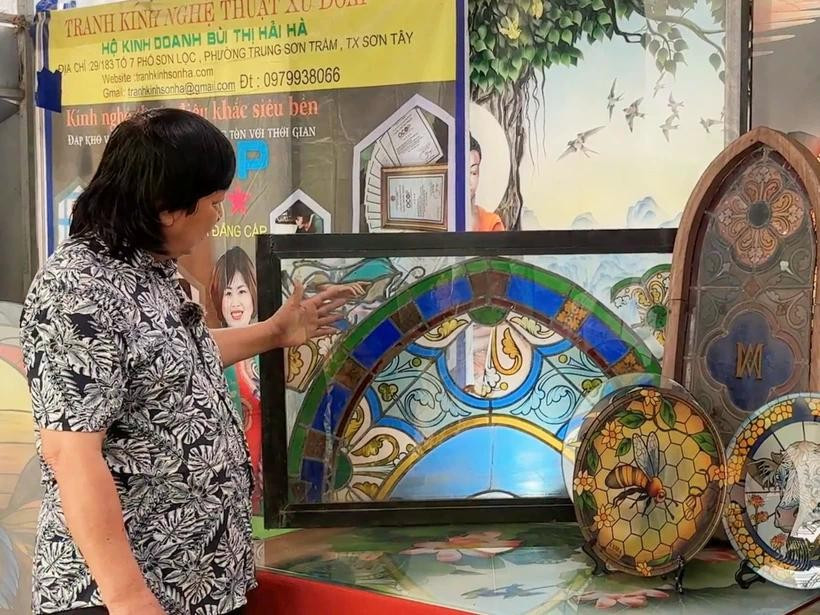
Hanoi (VNA) – Pham Hong Vinh, a seasoned craftsman from Son Tay township, Hanoi, originally worked in ceramics. In the 1990s, he developed a glass grinding technique that led to the creation of artistic glass painting.
Over the past three decades, the creator has tirelessly refined and popularised this craft, making it an increasingly popular part of Vietnam’s artistic landscape.
The craft of glass engraving
According to Vinh, glass art has long been established in Europe, while in Vietnam, it has been known for some decades and primarily used in church decorations. As a pioneer in Vietnam’s painted glass industry, the artisan did not simply replicate existing techniques but instead innovated his own style. His Vinh Coba-branded products blend sculpture, painting, and industrial craftsmanship, transforming sheets of glass into three-dimensional relief artworks.
Unlike traditional painted glass, Vinh’s products incorporate ceramic glaze, which is fired at high temperatures to enhance durability, making them as much as ten times stronger than regular glass. This technique ensures longevity, vibrant colours, and resistance to weathering. Additionally, the transparency of the glass allows light to pass through, creating mesmerising visual effects that make his works suitable for both modern and classical architectural applications, from interiors to exteriors.
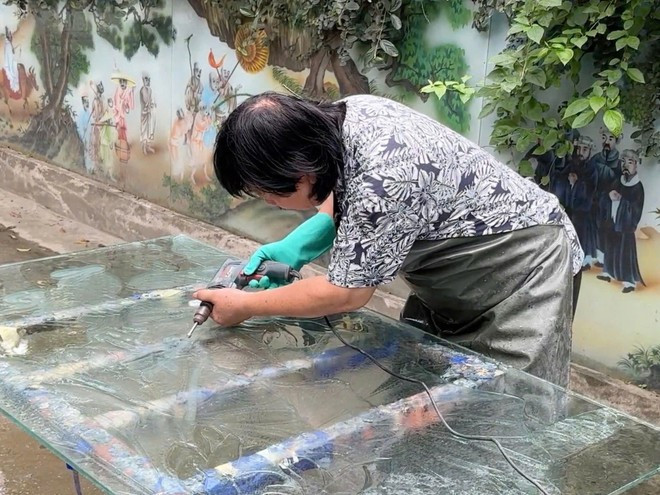
“Artistic painted glass is a fusion of the artisan’s meticulous craftsmanship, a keen sense of colour, and an understanding of depth in sculpture,” said the artisan.
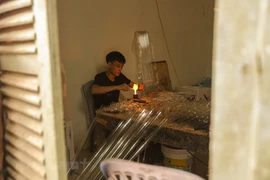
Creating a Vinh Coba products involves an intricate eight-step process, beginning with design and digital rendering. This is followed by computerised cutting, stencil application, sandblasting, fine detailing, painting, and finally, kiln firing at 700 degrees Celsius. This intense heat ensures the colours adhere firmly and remain unfaded over time. Each stage enhances the depth and fluidity of the final piece.
According to Vinh, the painting and colouring process is the key factor. This technique requires a deep understanding of fine art, adherence to principles of perspective and light contrast, and the ability to work with a "reverse" mindset – painting without directly seeing the underlying image. The painter must memorise every intricate detail of the artwork. The colouring stage is particularly complex and demands intense concentration, as even a single misplaced drop of paint would lead to the removal of the entire layer for repainting, or, in some cases, discarding the piece and starting anew.
Infusing national identity into glass art
Beyond craftsmanship, Vinh’s painted glass reflects Vietnam’s rich cultural heritage. His artworks depict traditional symbols, folklore, and historical landmarks.
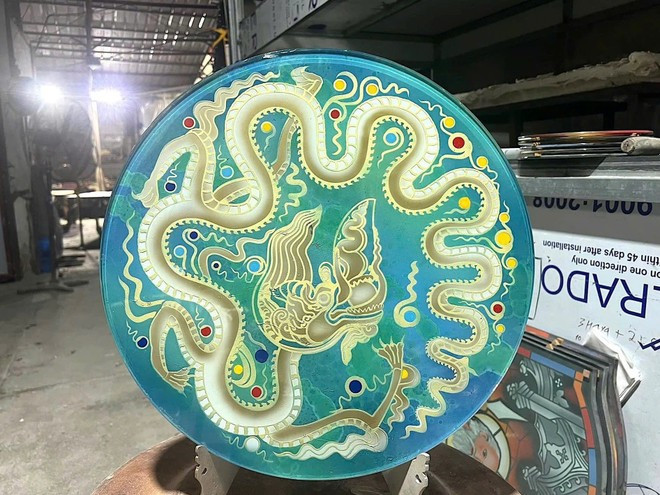
Vinh said through a fresh lens, he wants to capture Vietnam’s landscapes, architecture, and way of life in glass paintings, preserving the nation’s cultural soul and fostering love for the homeland. He has depicted mythological motifs like the Ly Dynasty dragon, which symbolises the nation’s aspirations for independence and freedom. He has also illustrated Hanoi’s iconic sites such as the Turtle Tower, Sword Lake, and Ngoc Son Temple.
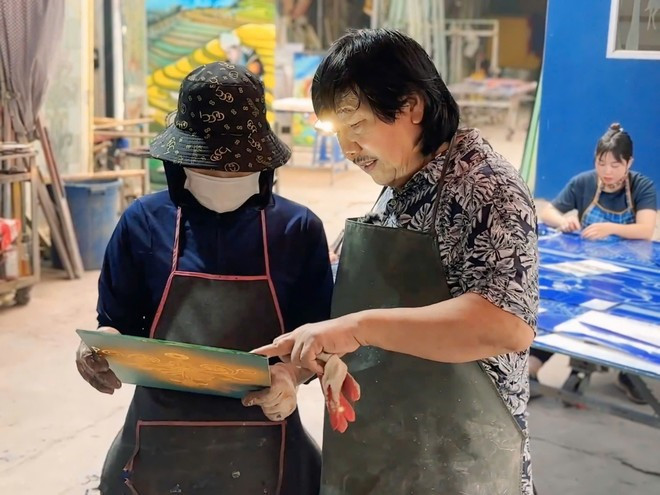
After 35 years of dedication, Vinh Coba glass has earned recognition nationwide and is featured in numerous cultural projects. Looking ahead, its founder aspires to introduce his art to the global stage, showcasing Vietnam’s artistic prowess to an international audience.
However, he remains concerned about the craft’s sustainability, as few young artisans are taking up the trade. His greatest ambition is to integrate painted glass into educational institutions, inspiring talented young artists, designers, and architects to carry forward this art form and establish its place on the world map./.