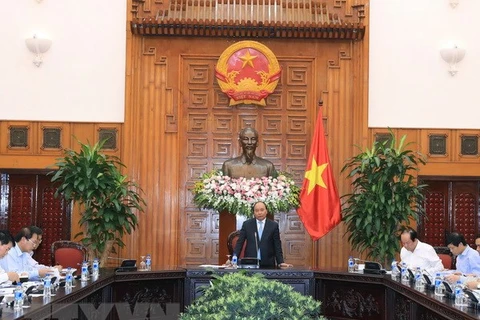
Prime Minister Nguyen Xuan Phuc (Source: VNA)
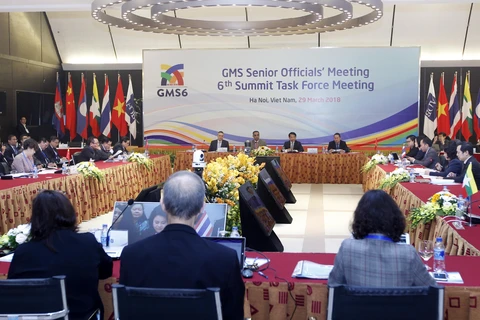
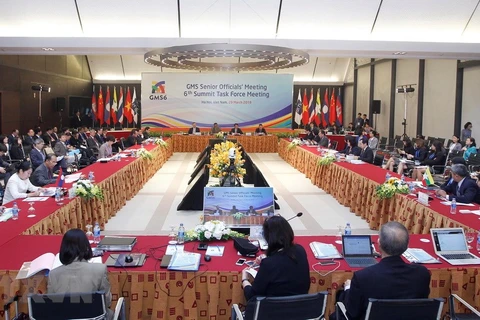
 Hanoi (VNA) – Prime Minister Nguyen Xuan Phuc has written an article entitled “Mekong – the River of cooperation and development” ahead of the sixth Greater Mekong Sub-Region Summit (GMS-6) and the 10th Cambodia-Laos-Vietnam Development Triangle Summit (CLV-10) scheduled for March 29-31 in Hanoi.
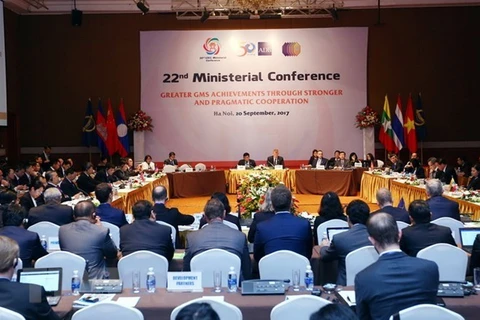
As multilateral external events of top significance in the country, the events will gather leaders from Cambodia, China, Laos, Myanmar, Thailand, and Vietnam.
On the occasion, Vietnam initiated holding the first GMS Business Summit which has been welcomed by the GMS member countries and the Asia Development Bank, the World Bank and ASEAN. More than 2,000 businesspeople at home and abroad lined up for the summit, equivalent to the APEC CEO Summit 2017, he said.
GMS was established in 1992 as an initiative of the Asian Development Bank (ADB). The GMS Programme is the most complete cooperation programme that involves Vietnam, Laos, Cambodia, Thailand, Myanmar, and China (Yunnan and Guangxi provinces) with an aim to facilitate mutually-beneficial economic ties and turn Mekong into a rapid and prosperous region in Southeast Asia.
Other cooperation mechanisms were also established such as the CLV Development Triangle, the Cambodia – Laos – Myanmar – Vietnam (CLMV) and the Ayeyawady-Chao Phraya-Mekong Economic Cooperation Strategy among Thailand, Myanmar, Cambodia, Laos and Vietnam, towards narrowing the development gap, facilitating regional economic integration and strengthening joint efforts against common challenges.
Within GMS cooperation framework, countries and development partners raised nearly 21 billion USD for socio-economic development projects in six member nations. Japan provided an aid of roughly 13 billion USD for the Mekong countries for the 2009 – 2015 period and disbursed around 6.5 billion USD for 2016-2018.
The US funded 50 million USD for the Lower Mekong Initiative for 2013-2015 and committed 1.25 million USD to the launch of the Sustainable Infrastructure Partnership Programme for 2016-2018.
India offered an annual grant of 1 million USD to the Project Development Fund and provided more scholarships for the Mekong countries. The Republic of Korea (RoK) vows to donate 1 million USD to the Mekong – RoK Cooperation Fund and plans to raise it to 2 million USD in the near future.
Recently, China planned to invest nearly 10 billion USD in the GMS area, especially in north-south transport connectivity projects. The country also committed 300 million USD to the Mekong – Lancang Cooperation Special Fund and many preferential loans and credit.
The PM described the Mekong region as a direct “security and development space” of Vietnam, saying it, apart from contributing to creating a peaceful and favourable environment in the region, has also contributed to the stability and development of Vietnam.
Mekong cooperation mechanisms have helped Vietnam attract resources from development partners to boost growth and regional connectivity, particularly in border areas. As of December 2017, connectivity projects within the GMS framework in Vietnam were worth nearly 6 billion USD, or about 30 percent of the total.
The Ho Chi Minh City – Moc Bai route, Hai Van tunnel, upgraded Da Nang seaport, the second international Mekong bridge linking Thailand – Laos – Vietnam roads with the East Sea, the Kunming – Hai Phong corridor, the longest Noi Bai – Lao Cai highway and many other projects have brought practical benefits to the Vietnamese people within the Mekong cooperation framework.
A number of important cooperation agreements and master development plans were signed, contributing to promoting trade and investment among member nations. Socio-cultural programmes have stepped up people-to-people exchanges and raised mutual understanding among people.
Mekong cooperation frameworks have created dialogue channels with Mekong river basin countries and attracted financial and technical support in the use and sustainable management of Mekong River water resources from development partners.
Apart from the Mekong River Commission channel, Vietnam also partnered with countries to protect the environment and water resources security.
Recognizing the importance of the Mekong region, Vietnam has been participating proactively and actively in all Mekong cooperation frameworks.
In trade and investment, Vietnam has joined activities to facilitate trade and investment within the GMS framework, including the Strategic Framework for Action on Trade Facilitation and Investment with focus on simplifying customs procedures, harmonising regulations on hygiene standards to cut inspection time at border gates, improving the capacity of supplying logistics services and simplifying visa procedures for businesspeople in the region.
Vietnam and GMS member countries have completed the signing of protocols and annexes of the GMS Cross-Border Transport and Trade Facilitation Programme (GMS CBTA), signed a Memorandum of Understanding on the early harvest of the GMS CBTA. The one stop shop inspection model was launched at Lao Bao – Densavan border gate between Vietnam and Laos in 2015. Vietnam is negotiating a similar pilot model at Moc Bai – Ba Vet border with Cambodia.
In environment and water resources management, Vietnam together with Mekong River Commission countries worked to meet requirements and completed procedures to share data, monitor the use of water, maintain the flow of the Mekong River mainstream to materialise the Mekong Agreement and specify responsibilities of the member countries for protecting Mekong River water resources.
Within ACMECS framework, Vietnam was the first country to initiate establishing a working group on the environment, and devise the Action Plan and co-chair the group. The country also played the role of directing environment coordination within the Lower Mekong – US framework, actively joined the initiative “A Decade towards the Green Mekong” within the Mekong – Japan framework, and water resources cooperation within the Mekong – Lancang framework.
The country actively built the framework strategy on GMS environment protection and an environment information and monitoring system, reduce poverty, and manage the environment in remote and mountainous areas.
In education and training, Vietnam sent hundreds of officials and cadres to training courses in the fields of infrastructure management, project design and appraisal, trade policy and education management, leadership in management. The country built the strategic framework and Action Plan on Developing GMS Human Resources for the 2009-2021 and 2013 – 2017 periods.
Vietnam has welcomed many Lao and Cambodian officials and students to Tay Nguyen University and helped build boarding schools in the Lao province of Sekong and the Cambodian province of Ratanakiri.
Vietnam also built a CLMV scholarship fund to offer hundreds of scholarships to Cambodia, Laos and Myanmar, one of the first 58 projects with outstanding results within CLMV mechanism.
The country has made contributions to GMS development cooperation via holding conferences and seminars, devising important documents, and promoting initiatives and financial support. Vietnam successfully held the seventh ACMECS Summit and the eighth CLMV meeting in October 2016, the second Mekong – Japan Summit, the third Mekong – Japan Foreign Ministers’ Meeting, and the second Lower Mekong – US Ministerial Meeting in 2010.
Vietnam and CLV countries reviewed and built the master plan on development triangle till 2020 and a portal in Vietnamese, English, Lao and Khmer languages. Vietnam assisted Laos and Cambodia in building several major roads linking with border provinces, border markets and inspection stations.
Vietnamese firms poured upwards 3.8 billion USD into more than 100 projects in Laos and Cambodia.
With the stature heightened and experience in development and global integration accumulated over nearly the past three decades, the joining of Mekong cooperation has enabled Vietnam to have better conditions for its socio-economic development and for the sake of peace, cooperation and development in the region, the PM concluded. -VNA
VNA