Quang Ninh uses over 100 ships welcoming group of 4,500 Indian tourists

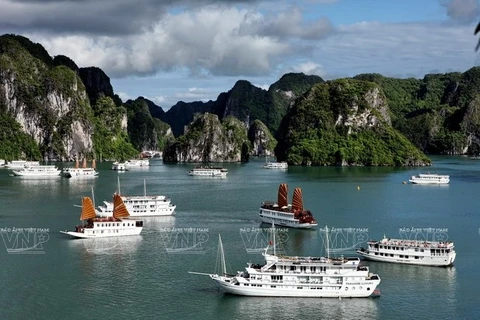
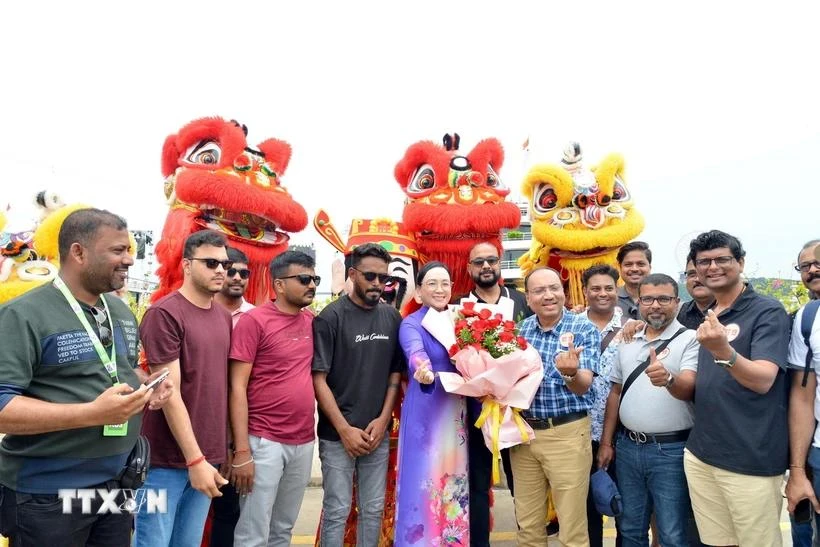
The first nearly 1,400 of a group of 4,500 Indian tourists visited Ha Long Bay, a UNESCO-recognised World Natural Heritage Site, in the northern province of Quang Ninh on August 29.

Indian tourists welcomed in Quang Ninh (Photo: VNA)

Quang Ninh (VNA) - The first nearly 1,400 of a group of 4,500 Indian tourists visited Ha Long Bay, a UNESCO-recognised World Natural Heritage Site, in the northern province of Quang Ninh on August 29.

According to Vietravel, the travel agency responsible for guiding the Indian tourists, this first group toured Ha Long Bay on 33 ships.

The relevant units plan to deploy over 100 ships to accommodate all 4,500 tourists with the remainders visiting the bay from now to September 6.

Nguyen Huyen Anh, Director of the provincial Department of Tourism, said that this is the largest group of Indian tourists ever to visit Ha Long Bay.

Quang Ninh aims to provide a warm welcome and make a strong impression on the visitors, she said, adding that this presents a great opportunity for the locality to attract international tourists in general, and Indian tourists in particular.

The tourists are employees from Sun Pharmaceutical Industries Limited, the fourth largest pharmaceutical corporation in the world.

The group is divided into small packs traveling for five days in Hanoi, Quang Ninh and Ninh Binh province, from August 27 to September 7.

They do not stay over-night in Quang Ninh and Ninh Binh, but spend all four nights in the capital city organising activities such as conferences, seminars, and gala dinner./.
VNA

See more

News website news.ru reports that the number of Russian visitors to Vietnam could reach a historic record of 1.5 million in 2026. (Photo: VNA)

Russian arrivals to Vietnam forecast to reach record high

Russian arrivals to Vietnam surpassed 1 million in the first eight months of 2026, representing a remarkable 165.7% increase year-on-year. This was the highest growth rate among Vietnam’s major international tourist markets.

Secretary of the Party Central Committee and Deputy Prime Minister Pham Thi Thanh Tra speaks at the conference. (Photo: VNA)

Vietnam moves to make tourism a true new growth driver

Resolution No. 26-NQ/TW, issued on August 22, sets out a new vision, with a focus on fundamentally renewing the mindset, methods and approaches to tourism development and governance, shifting from quantity to quality and increasing the sector’s contribution to the national economy.

Tourists visit Golden Bridge in Da Nang city in the rainy season. (Photo: hanoimoi.vn)

Turning rainy season into tourism opportunity

Seasonality has long been a challenge for Vietnam’s tourism industry. In many localities, tourism peaks in summer but visitor numbers fall during the rainy months. Destinations are now seeking to restructure their tourism ecosystems and develop products that can operate year-round.

A pot of Mi Quang (Quang noodles). (Photo: VNA)

Da Nang promotes distinctive cuisine as key tourism attraction

As travellers increasingly seek authentic local experiences, the central coastal city of Da Nang is stepping up efforts to integrate cuisine into tourism itineraries, linking culinary promotion with destination branding and cultural preservation.

Flower vendors form a distinctive feature of Hanoi’s autumn. (Photo: VNA)

Hanoi builds four-season tourism appeal

Hanoi’s tourism events are increasingly designed to inspire exploration beyond individual festivals. At the Hanoi Tourism Gift Festival, for instance, visitors can make handicrafts with artisans, explore destinations through virtual reality and discover new tours and tourism stimulus programmes.

A view of the Lo Lo Chai community tourism village in Tuyen Quang province (Photo: VNA)

Vietnam taps community tourism potential for sustainable development

The tourism market is shifting from sightseeing towards living and connecting with destinations. Visitors increasingly seek authentic and locally rooted experiences, interaction with local people, culture and nature, as well as small-group and personalised trips with limited environmental impact and clear benefits for communities.

Delegates press the button to launch the “Phong Nha – Hue Ancient Capital: World Heritage Journey” tourist train. (Photo: VNA)

Tourist train linking Phong Nha and Hue heritage sites launched

The 190-km route runs between Hue, Dong Ha, My Trach, Dong Hoi and Tho Loc stations, giving travellers access to destinations including the Complex of Hue Monuments, Quang Tri Ancient Citadel, Vinh Moc Tunnels, Hien Luong–Ben Hai historical site and Phong Nha-Ke Bang National Park.

International tourists visit Hoi An Ancient Town in Da Nang city. (Photo: VNA)

Tourism ready for National Day holiday, eyes year-end acceleration

A range of cultural and artistic activities will be held during the holiday. In Da Nang, the “Hoi An Memories” show will present its “Flag Hat” version from August 26 to September 2. Phu Quoc will host the “The Memory of Flowers” exhibition, while Thanh Hoa will organise the Sam Son Kite Festival 2026 from August 30 to September 1.

Businesses introduce their tourism products at the 20th International Travel Expo Ho Chi Minh City. (Photo: VNA)

Vietnam ready to create new momentum for regional, global MICE tourism

Vietnam has consistently identified tourism as a spearhead economic sector, Deputy PM Pham Thi Thanh Tra stressed, adding that in the new development era, with the need for rapid and sustainable growth and a stronger national position, MICE should be positioned as a strategic tourism product, targeting high-quality visitors while generating additional momentum for trade and investment and enhancing national competitiveness.

Officials at the 7th ACMECS Tourism Ministers’ Meeting in Ho Chi Minh City on August 27 (Photo: VNA)

ACMECS strengthens tourism ties, promotes “Five Countries, One Destination”

The newly adopted joint action plan on ACMECS tourism cooperation for 2026–2028 focuses on five key pillars: improving connectivity and facilitating travel; promoting digital transformation and smart tourism; developing ecotourism, community-based and cultural tourism; enhancing tourism security and safety; and developing human resources.