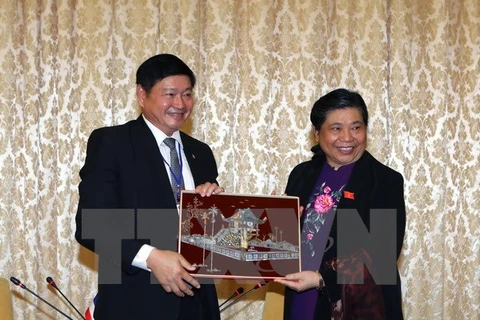
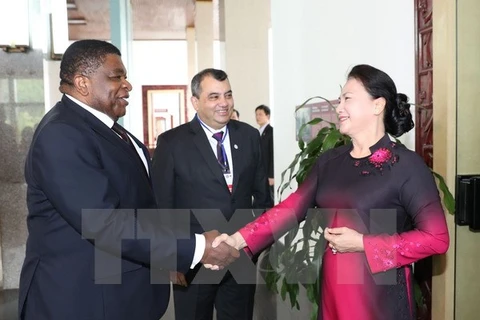
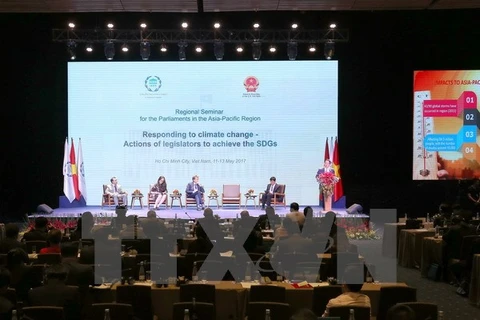
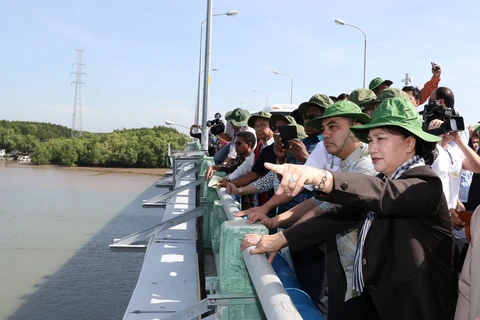
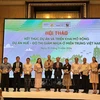
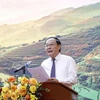
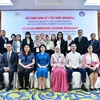
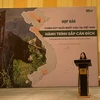
At the event (Source: daibieunhandan.vn)
Addressing the closing ceremony, Vice Chairwoman of Vietnam’s National Assembly Tong Thi Phong summarized the main contents of the event which underlines climate change as one of the biggest threats to sustainable development, especially in the Asian-Pacific region.
Participants discussed measures to promote the role of lawmakers in tackling environmental changes and implementing national commitments to realize the UN Sustainable Development Goals (SDGs) with the spirit “no one is left behind”.
They stressed the role of the IPU in boosting the integration of SGDs into law-building programmes as well as examining and deciding important issues relating to the field.
Phong said a self-assessment toolkit built by the IPU and the United Nations Development Programme (UNDP) was launched at the event with comprehensive and specific criteria to help legislatures evaluate their progress and quality of implementing commitments to achieve SDGs.
She called on countries to strengthen coordination with the UN agencies to increase the capacity of legislators in accelerating the implementation of SDGs.
Participants also spared time elaborating the impacts of climate change on the public health and food security.
They proposed legislatures provide more assistance for needy people and such vulnerable groups as women and children.
Phong suggested intensifying inspection and ensuring the distribution of budget and necessary financial resources to implement national commitments to obtain SDGs, while encouraging international organizations and developed countries to support developing ones.
Secretary General of the IPU Martin Chungong urged legislatures to strengthen solidarity and cooperation towards SDGs.
Later, Nguyen Van Giau, Chairman of the Vietnam National Assembly’s Committee for External Relations hosted a press conference informing the outcomes of the symposium. He remarked that the event was a success, looking to foster the law-making body’s role in pushing actions to respond to climate change to realize sustainable development goals.
The IPU symposium took place in HCM City from May 11-13 with three plenary sessions, focusing discussions on the role of legislatures in realizing SDGs and the mobilization of financial resources for these goals. It gathered 200 delegates from parliaments in 22 Asian-Pacific countries, and representatives from international organizations.-VNA
Phong suggested intensifying inspection and ensuring the distribution of budget and necessary financial resources to implement national commitments to obtain SDGs, while encouraging international organizations and developed countries to support developing ones.
Secretary General of the IPU Martin Chungong urged legislatures to strengthen solidarity and cooperation towards SDGs.
Later, Nguyen Van Giau, Chairman of the Vietnam National Assembly’s Committee for External Relations hosted a press conference informing the outcomes of the symposium. He remarked that the event was a success, looking to foster the law-making body’s role in pushing actions to respond to climate change to realize sustainable development goals.
The IPU symposium took place in HCM City from May 11-13 with three plenary sessions, focusing discussions on the role of legislatures in realizing SDGs and the mobilization of financial resources for these goals. It gathered 200 delegates from parliaments in 22 Asian-Pacific countries, and representatives from international organizations.-VNA
VNA